Business
Eliyan raises $145 million to tackle AI chip data bottlenecks
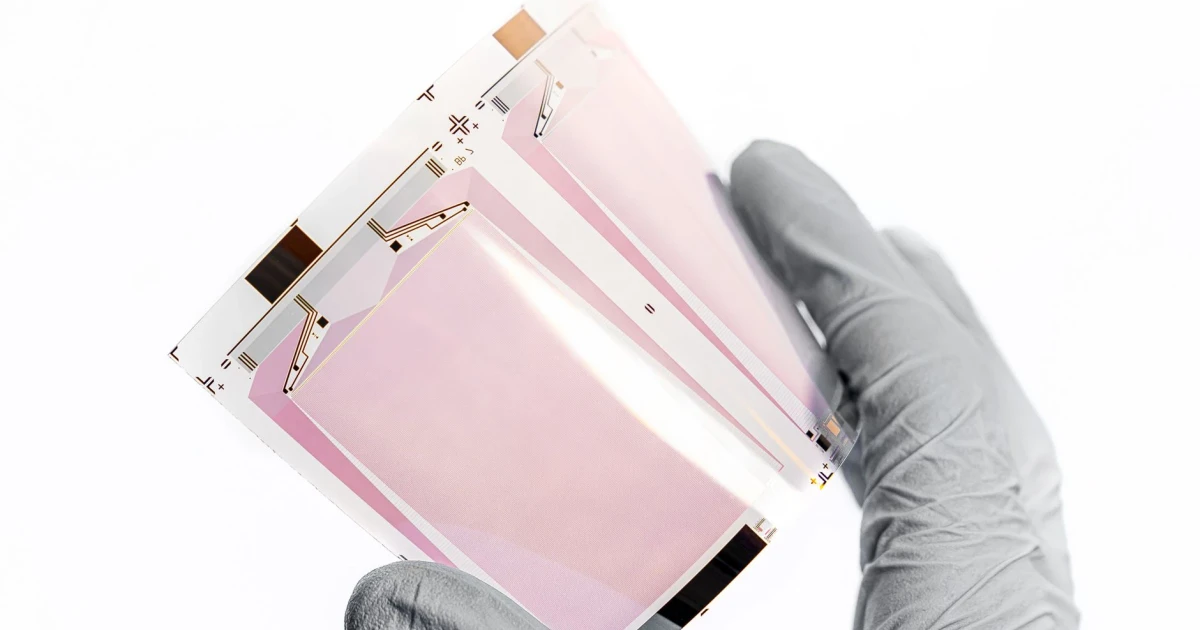
Eliyan raised $145 million at a $1 billion valuation as investors kept backing the hardware that moves data between AI chips. The money goes to a problem that has become central to AI economics: even the fastest accelerators lose efficiency if they cannot exchange information quickly enough across racks, servers and data-center clusters.
The Santa Clara, Calif.-based startup is focused on die-to-die interconnects, the links that let chiplets and memory components communicate with low latency and high bandwidth. Eliyan says founder and chief executive Ramin Farjadrad developed its breakthrough architecture in 2016, and the company now markets the NuLink D2D PHY as a platform that supports BoW and UCIe standards alongside proprietary simultaneous bidirectional, or SBD, designs. That puts Eliyan in the middle of a wider race that also includes advanced packaging, optical links and other attempts to remove the bottlenecks that slow AI systems and drive up power and cooling costs.
The company has been building that pitch for several years. On August 12, 2024, Eliyan said a strategic investment from VentureTech Alliance pushed its total funding above $100 million. On January 28, 2026, it said it secured another $50 million in strategic investments from hyperscalers and AI infrastructure providers. Before that, Eliyan closed a $60 million Series B round co-led by Samsung Catalyst Fund and Tiger Global Management, after an earlier $40 million Series A.

The latest valuation suggests investors see more than a niche chip supplier. The money is flowing toward the infrastructure layer around AI, where bandwidth and latency can matter as much as raw processing power. For cloud operators and enterprise customers, the difference shows up in how many expensive compute cycles are wasted when a model has to wait for data to move.
Eliyan has also been broadening its product set beyond the original die-to-die pitch. On July 24, 2026, it introduced NuLink-XD, a 224G PAM4 SerDes, and on October 14, 2025, it showcased chiplet interconnect and memory innovations at the Open Compute Project Global Summit. Those moves point to a company trying to address not only chip-to-chip communication, but also the wider memory and server links that determine whether large AI clusters run efficiently at scale.
The $145 million round is a fresh test of that thesis. If Eliyan can turn standards-based interconnect design into a meaningful performance and power advantage, it could become part of the plumbing that shapes U.S. AI competitiveness. If not, it will join a crowded field of richly valued bets on the next constraint to ease in a market still searching for the cheapest way to scale intelligence.
Sources
- [1]reuters.com
- [2]eliyan.com
- [3]sdxcentral.com
- [4]intelcapital.com