Business
Embraer sees Eve electric air taxi unit reaching $1.5 billion sales

Embraer is asking investors to look past the slow grind of certification and see a much larger prize: annual revenue of $1 billion to $1.5 billion from Eve, its electric air taxi subsidiary, once production ramps up. The forecast turns Eve into a credibility test for the electric aircraft industry, where promises of quiet, low-emission short-hop travel have often outrun the hard realities of regulation, infrastructure and customer adoption.
Chief Executive Francisco Gomes Neto delivered the estimate on June 9 in São José dos Campos, Brazil, and made clear that the outcome depends on how the market develops. That framing matters. Embraer is not treating Eve as a guaranteed windfall, but as a business that could become meaningful if urban air mobility moves from pilot projects to a real transportation market.
Eve is still in development, but it has been stacking up milestones. The company said it completed the first flight of its uncrewed full-scale eVTOL prototype on Dec. 19, 2025 at Embraer’s test facility in Gavião Peixoto, in São Paulo state. By April 9, 2026, Eve said it had logged 50 successful test flights and more than two hours of flight time. On March 25, 2026, the company said it had flown the prototype for authorities, a step it described as part of its certification campaign. By May 21, 2026, Eve said it had completed hover and low-speed flights, moving closer to transition testing.
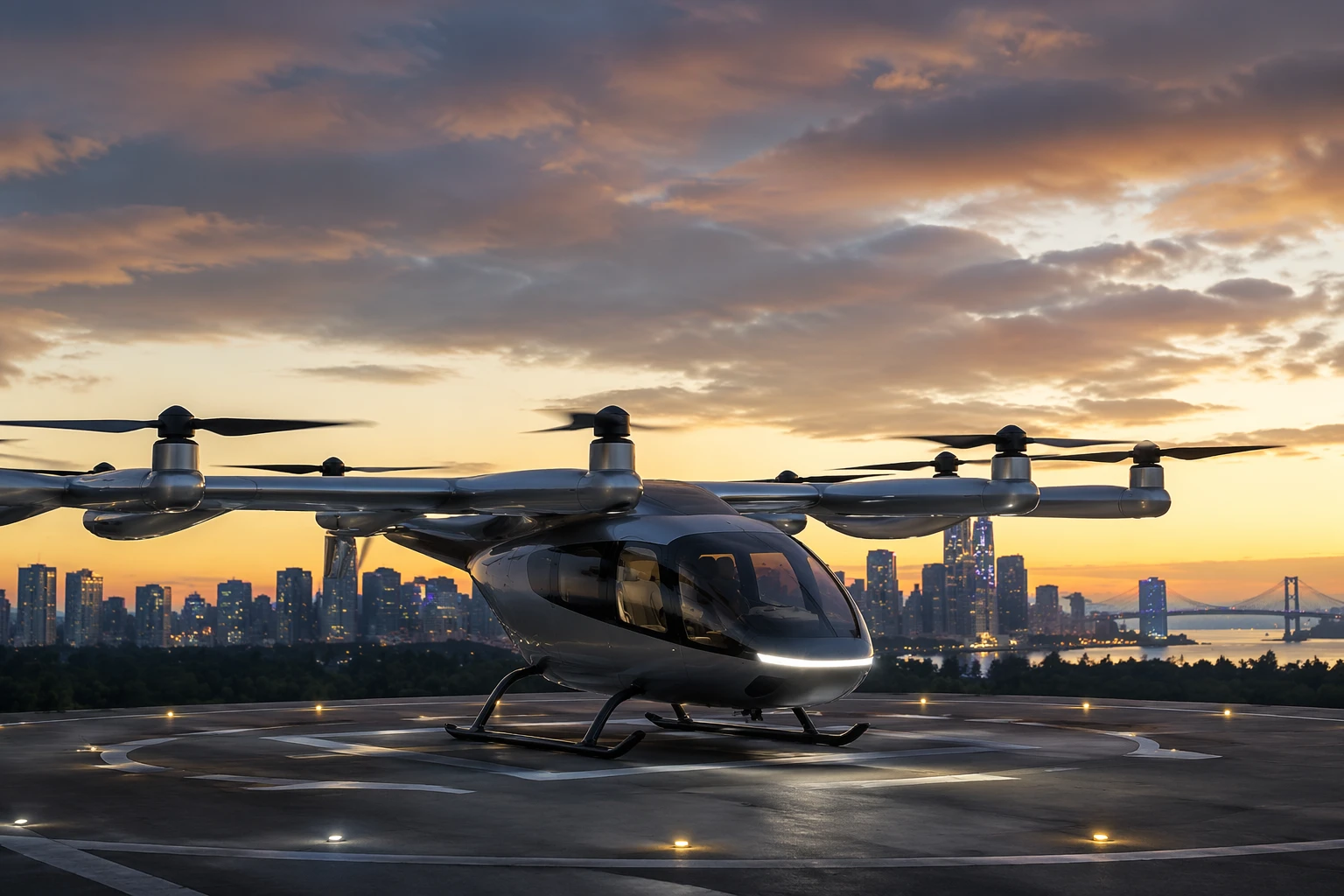
The aircraft itself is meant for the urban air mobility market: Eve says it is 100% electric, designed for a range of 60 miles, or 100 kilometers, and built around a human-centered layout intended to reduce noise. That positioning puts the subsidiary at the center of Embraer’s long-term strategy, even as the planemaker continues to rely on its commercial, executive and defense businesses for today’s revenue.
Commercial traction is beginning to appear. On Feb. 3, 2026, AirX signed a binding order with Eve for up to 50 eVTOL aircraft, including a firm order for two and options for 48 more. Eve also said on Jan. 20, 2026 that it secured $150 million in financing to speed development, after previously saying it received $40 million in debt from Brazil’s BNDES in December 2025 and additional funding tied to the U.S. Export-Import Bank and Private Export Funding Corporation.
The broader market still carries a long runway and plenty of risk. Some aerospace companies have slowed or paused air-taxi programs, but Eve has kept moving with testing and partnerships, including work announced in March with Alt Air and Skyports Infrastructure for Australia. A market report valued the urban air mobility sector at $2.16 billion in 2026 and projected growth to $16.27 billion by 2035, a reminder of why Embraer is willing to put a large number on Eve now, even if the path to getting there remains anything but certain.
Sources
- [1]money.usnews.com
- [2]msn.com
- [3]eveairmobility.com
- [4]ir.eveairmobility.com
- [5]embraer.com
- [6]status.embraer.com