Engineered Magnetic Films Mimic Graphene's Electron Waves
Researchers have developed magnetic films that emulate graphene’s unique massless electron waves, opening new pathways in material science.

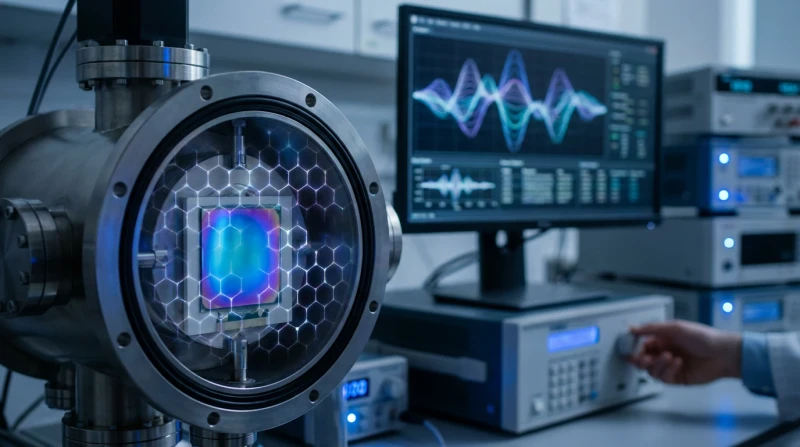
Engineers have successfully designed magnetic films that replicate the remarkable electronic properties of graphene, specifically its massless electron wave equations. This breakthrough, reported by Phys.org, could pave the way for advanced materials with novel electronic and magnetic functionalities, potentially impacting fields ranging from quantum computing to next-generation electronics.
Understanding Graphene’s Unique Properties
Graphene, a single layer of carbon atoms arranged in a honeycomb lattice, has captivated scientists since its discovery due to its exceptional electronic characteristics. In graphene, electrons behave as if they are massless, moving according to the equations of massless Dirac fermions. This leads to high electron mobility, unusual quantum effects, and a host of potential applications in electronics and materials science.
Breakthrough in Engineered Magnetic Films
According to Phys.org, engineers have now realized a synthetic structure—an engineered magnetic film—that can be tuned to follow the same wave equations governing electrons in graphene. This means that, within these magnetic films, electrons move and interact as if they are massless, much like in graphene. Researchers achieved this by carefully designing the arrangement and properties of magnetic layers and boundaries within the films.
- The engineered films demonstrate electronic properties closely matching those of graphene, including high conductivity and the potential for unusual quantum states.
- Manipulating the magnetic structure allows scientists to control electron behavior, a feature not easily achievable in natural graphene.
Potential Impact and Applications
Phys.org highlights that these engineered magnetic films could serve as a platform for exploring new quantum phenomena and developing advanced devices. Because the films can be tuned more easily than natural graphene, they offer a versatile toolkit for researchers probing the fundamentals of quantum mechanics and condensed matter physics.
- Quantum Computing: The ability to mimic massless Dirac fermion behavior in a controllable setting could accelerate the development of quantum bits (qubits) and other quantum devices.
- Novel Electronics: High electron mobility and tunable properties could lead to ultrafast transistors, sensors, and magnetic memory devices.
- Material Science Research: These films provide a testbed to study electron interactions and wave dynamics in ways not possible with natural graphene, expanding the landscape of two-dimensional materials.
Looking Ahead
This engineered approach marks a significant advance in materials science, demonstrating that the distinctive equations underpinning graphene’s electron dynamics can be replicated in entirely different material systems. As research continues, scientists hope to further refine these films, explore new quantum effects, and integrate them into functional devices. For those interested in technical details, the NIST Graphene and 2D Materials Program provides ongoing updates and resources regarding these advances.
With engineered magnetic films now following graphene’s equations for massless electron waves, the frontier of quantum materials research continues to expand, promising new technologies and deeper scientific understanding in years to come.

Mike Shaw
Veteran crime and justice reporter who has covered major trials, police investigations, and community safety issues for over fifteen years. Committed to holding power accountable while giving a voice to those affected.