Sports
England and Argentina renew one of football’s fiercest World Cup rivalries
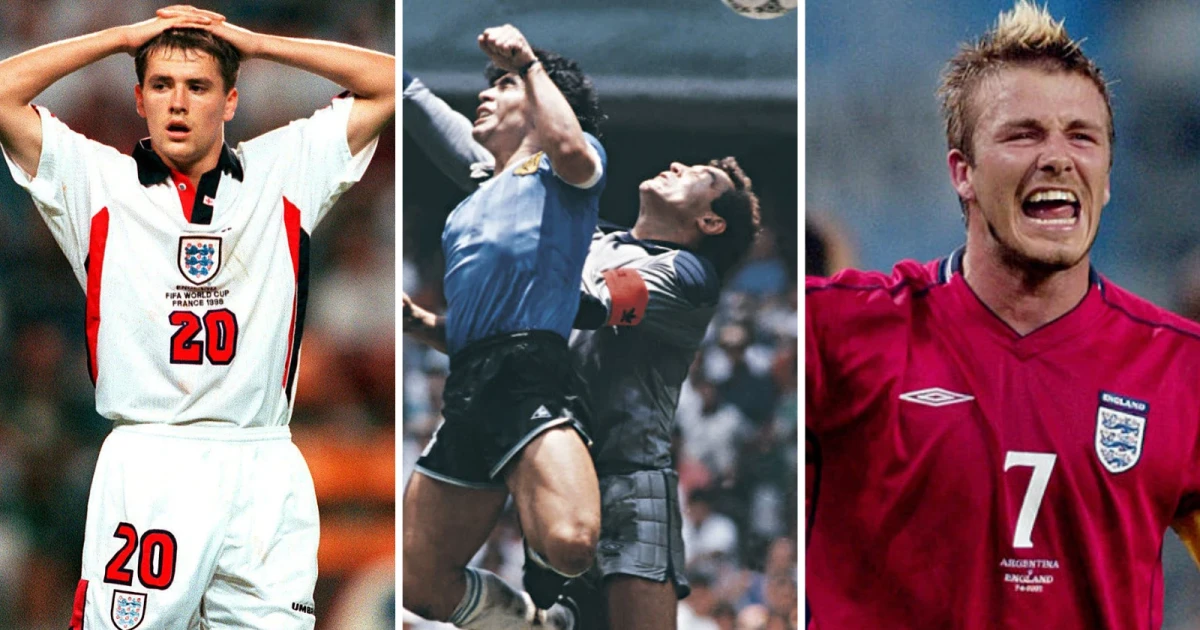
England and Argentina do not meet in World Cups so much as reopen old wounds. Their rivalry has been built on decisive goals, dismissals, and a political memory that stretches far beyond football, with the Falklands War giving extra force to the 1986 quarter-final in Mexico City.
How the rivalry was forged
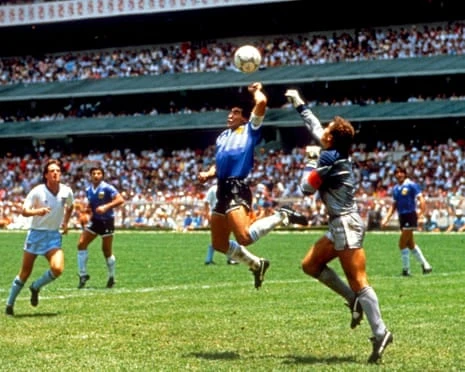
The first landmark came at Wembley in 1966, when England beat Argentina 1-0 in the quarter-final and Argentina captain Antonio Rattín was dismissed in a flashpoint that has echoed through the rivalry ever since. Twenty years later, the same matchup produced a very different kind of football drama at Estadio Azteca in Mexico City, where Argentina won 2-1 and Diego Maradona wrote himself into World Cup folklore twice over.
FIFA’s own retelling of that 1986 game still centers on Maradona’s two goals: the illicit opener that became known as “The Hand of God” and the solo second strike later celebrated as “The Goal of the Century.” The match came four years after the Falklands War, and that timing gave every tackle, protest and celebration a political charge that football alone could never supply.
When history became emotion
By the time England and Argentina met again in the last 16 at France 1998, the fixture had become a collision of talent and tension. Both teams arrived as serious contenders, with England ranked fifth and Argentina sixth in the FIFA-Coca-Cola World Ranking before the tournament, which underlined how elite and how loaded the tie had become. In Saint-Étienne, the game finished 2-2 after extra time and Argentina advanced on penalties, but the scoreline tells only part of the story.
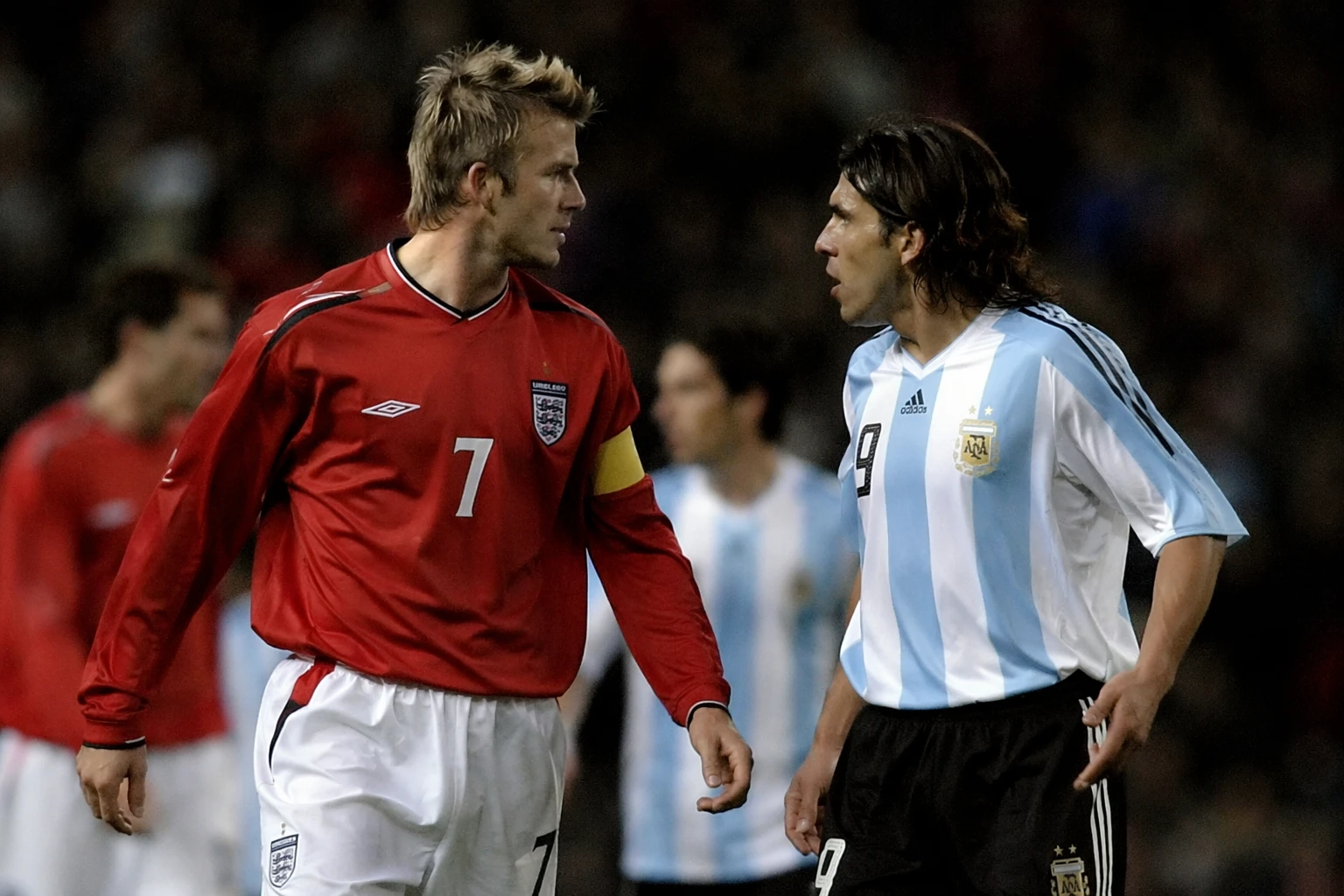
That match also produced one of England’s most painful World Cup memories. David Beckham was sent off after retaliating against Diego Simeone, and the dismissal instantly turned him into the central figure in England’s post-match anguish. He later apologised publicly, called it the worst moment of his career, and received a two-match FIFA ban along with a £2,000 fine.
The 1998 tie also marked the arrival of another England star on the global stage. FIFA has highlighted Michael Owen’s goal in that match as the moment that launched his international reputation, a reminder that this rivalry has often been the setting for both trauma and breakthrough. England’s pain in Saint-Étienne also fed the idea that this fixture could define careers as sharply as it defined tournaments.
Revenge in Sapporo
Four years later, England got a measure of payback in the group stage in Sapporo. Beckham scored the winning penalty just before half-time after good work by Michael Owen, and England won 1-0 in a match that was immediately framed through the memory of 1998. BBC Sport’s match report called it “England’s sweet revenge”, and the phrase captured the emotional shorthand that had built up around the fixture.
That result mattered because it showed how quickly the rivalry’s narrative can flip. Beckham, once the symbol of England’s collapse against Argentina, became the player who settled the rematch, while Owen again sat at the center of the action. The game did not erase the past, but it gave England a rare moment in which the old wound seemed briefly answered.
Why this fixture still carries weight
The power of England-Argentina lies in how often the football has been inseparable from memory. The 1966 dismissal of Rattín, Maradona’s dual masterpiece in 1986, Beckham’s red card in 1998 and his penalty in 2002 have turned four World Cup meetings into a compact history of grievance, redemption and mythmaking. That is why the rivalry is still treated as one of the most hostile in international football: every new meeting inherits the arguments, symbols and national emotions of the last one.
The political backdrop keeps the fixture larger than sport. The Falklands War sits behind the 1986 quarter-final like a shadow, giving the match a symbolic weight that went well beyond qualification or silverware. In World Cup terms, England’s wins in 1966 and 2002 and Argentina’s victory in 1986, together with the 1998 draw that Argentina won on penalties, have made the rivalry a sequence of pressure points rather than a simple head-to-head record.
That is why each renewal still feels different from an ordinary knockout game. England and Argentina bring history with them, and in this matchup history has usually arrived before the teams even take the field.
Sources
- [1]bbc.co.uk
- [2]fifa.com
- [3]news.bbc.co.uk
- [4]englandfootballonline.com
- [5]11v11.com