Sports
England and India make history in first women’s Test at Lord’s

Lord’s hosted its first women’s Test on Friday as England and India met in a four-day Rothesay Test that had already sold more than 30,000 tickets and put Nat Sciver-Brunt in charge of the home side. The fixture arrived exactly 50 years after Rachael Heyhoe Flint first led out an England Women’s team at the ground, at a stadium that had staged 150 men’s Tests over 142 years before women’s red-ball cricket finally got the same stage.
England named a 15-player squad for the match, with five players in line for Test debuts, including Alice Capsey, Tilly Corteen-Coleman and Mady Villiers. Clare Connor said the group had been selected for “another historic few days at Lord’s for women’s cricket,” and called Test cricket a “rare and wonderfully challenging experience” in the women’s game. The game also marked England’s first Test since an away Ashes match at the MCG in January 2025, underscoring how infrequently the format still appears in the women’s calendar.
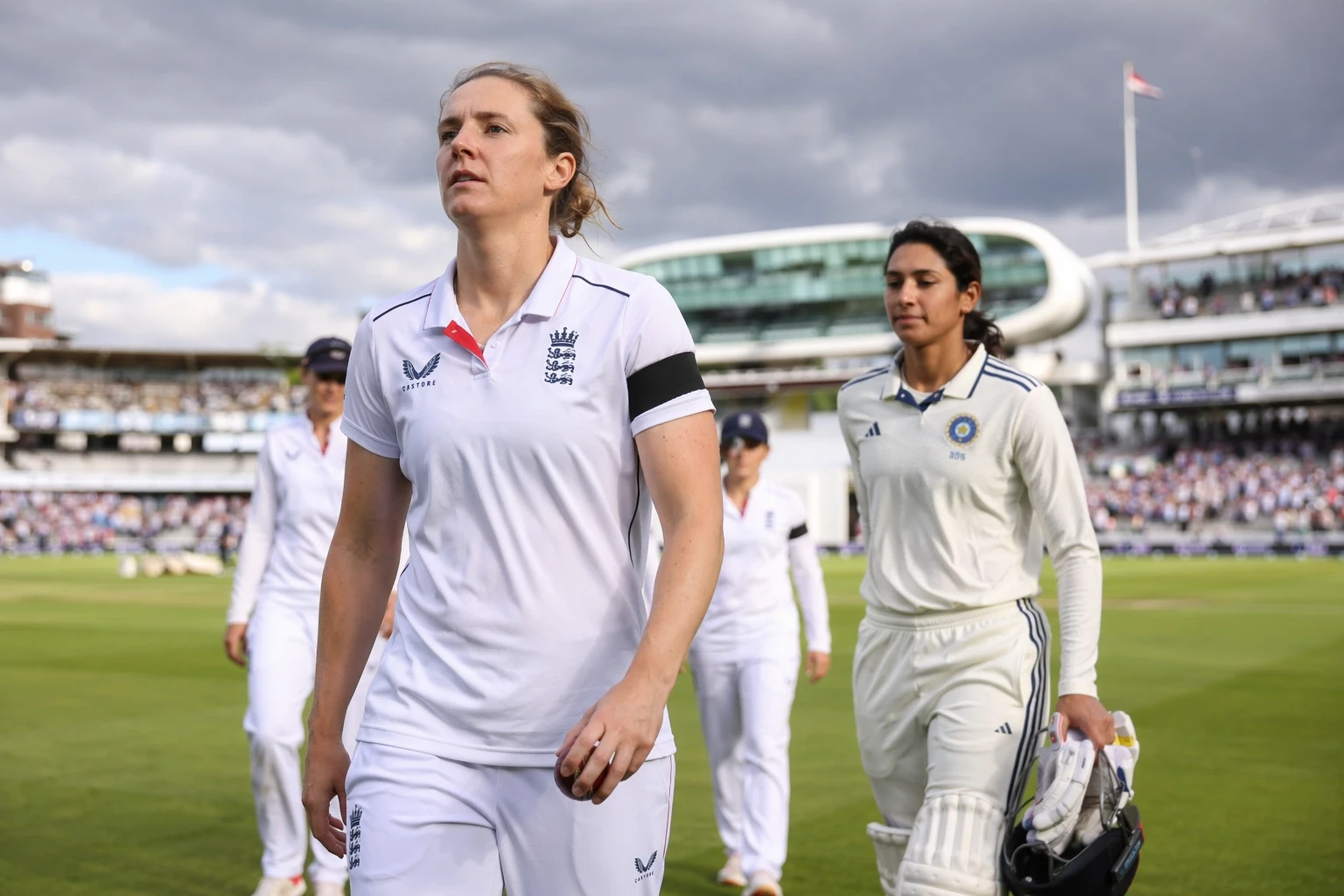
On the field, India reached 285 in their first innings on day one after Smriti Mandhana made 83, Harmanpreet Kaur scored 58 and Deepti Sharma also passed fifty. Sophie Ecclestone checked the innings with three wickets in six balls across two overs, ending India’s late acceleration and leaving England with a target that still felt manageable after the new-ball pressure had eased.

Mandhana’s innings carried its own milestone weight. The 29-year-old became the youngest woman to reach 300 international matches across formats, doing so in her 300th appearance and at 29 years and 357 days. The day also carried a farewell note for Tammy Beaumont, who was playing her final international match, while England began the Test only hours after losing the women’s T20 World Cup final to Australia at Lord’s. That blend of star power, full stands and red-ball scarcity gave the match commercial and sporting force that went well beyond ceremony, and left administrators with a clear test of their own: whether women’s Test cricket will be funded and scheduled as a lasting part of the game, or treated as an occasion that arrives only when history demands it.
Sources
- [1]bbc.co.uk
- [2]lords.org
- [3]icc-cricket.com
- [4]france24.com
- [5]thesheffieldpress.com
- [6]cricinfo.com