Health
England braces for hotter summers with official heatwave advice

Sheffield reached 39.4C in 2022, and the UK crossed 40C for the first time that year. England’s hotter summers now come with an official warning system, school adaptation plans and a blunt NHS message: anyone can become unwell when temperatures rise, and heatstroke is a medical emergency. The Met Office records all 10 of the warmest UK years since 1884 since 2002.
How England’s heat warning system works
The latest Beat the heat guidance was updated on 20 May 2026 and applies to England. It sits alongside the Heat-health Alert Service, which is run by the UK Health Security Agency with the Met Office from 1 June to 30 September each year, covers England only, and uses green, yellow and amber alerts to warn health and social care services when high temperatures may affect health.
The alert system is impact-based, which means it is designed to show not just that hot weather is coming, but what that heat is likely to do to people and services.
What the NHS wants you to watch for
Heat exhaustion can affect adults and children alike, and it can start with tiredness, dizziness, headache, nausea, sweating or clammy skin, cramps, thirst and irritability. Heatstroke is more severe: signs include a very high temperature, hot skin without sweating, fast breathing or heartbeat, confusion, restlessness, seizures and loss of consciousness. The skin warning can be harder to spot on brown or black skin, which makes the other signs especially important.
If someone has heat exhaustion, move them to a cool place, remove unnecessary clothing, give water, and cool the skin with water and fanning. If symptoms do not improve within 30 minutes, or if heatstroke signs appear, it becomes a 999 emergency.
The coping habits that line up with public-health advice
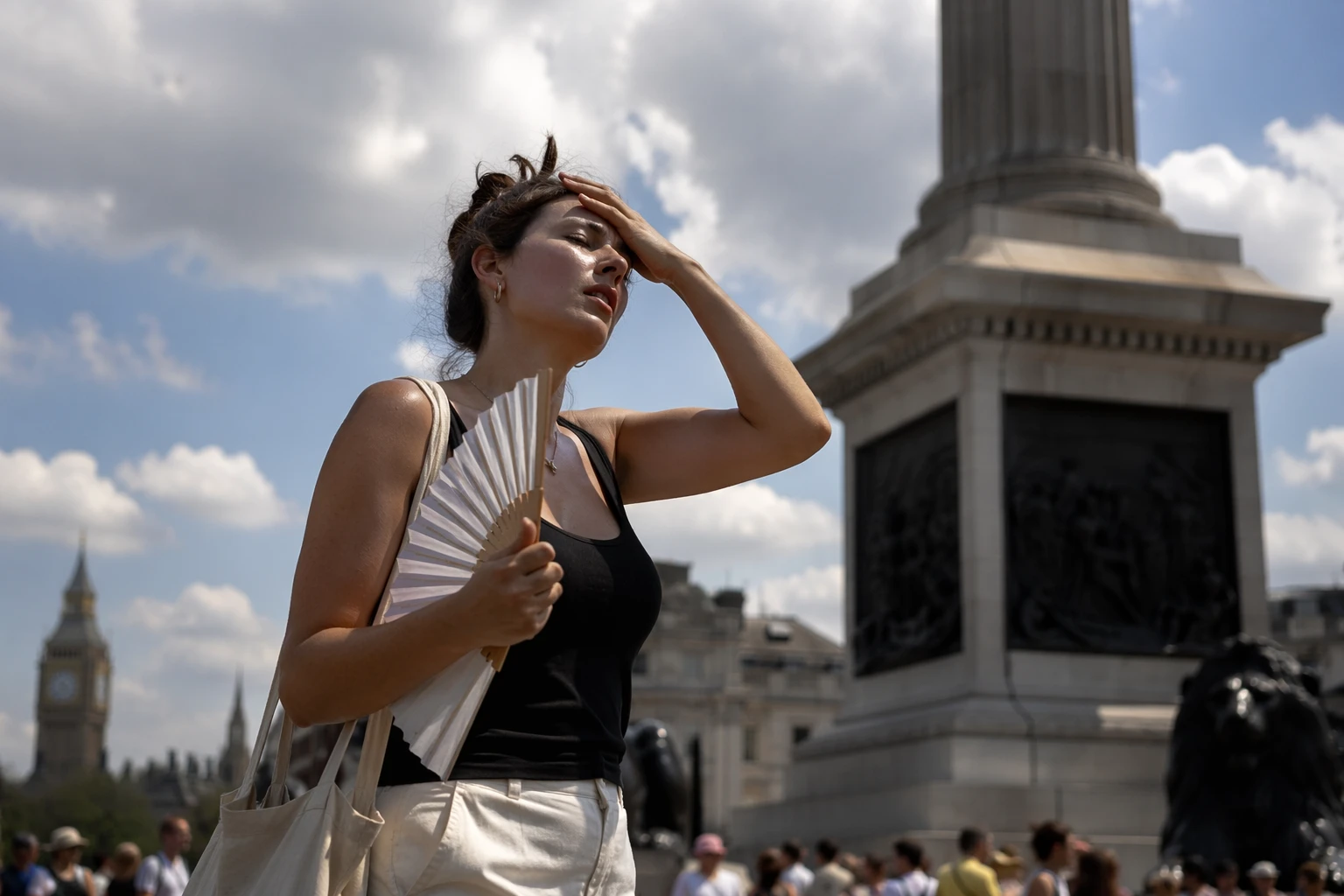
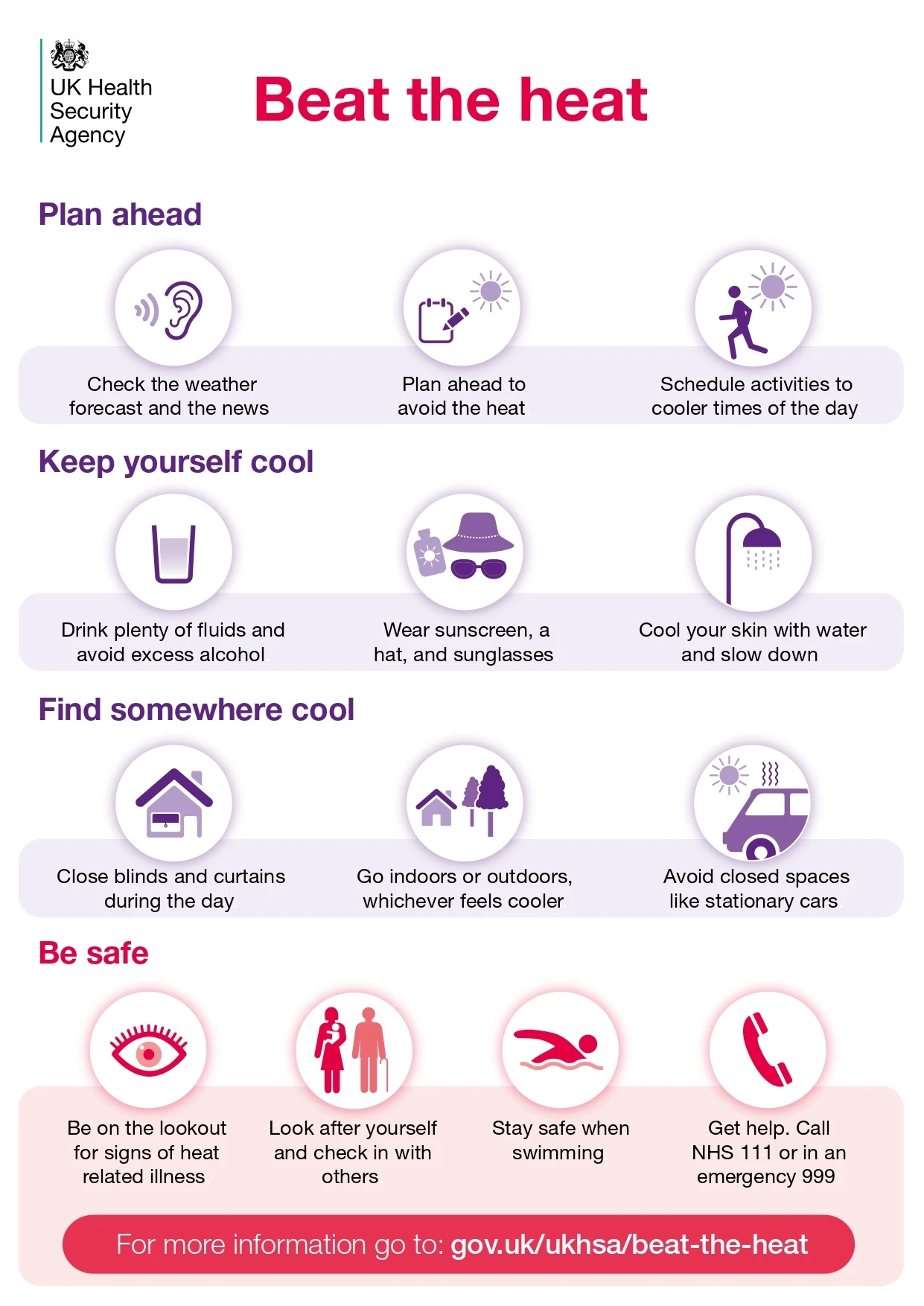
• Plan exercise, dog-walking and other physical activity for the cooler parts of the day, usually early morning or evening, rather than during the hottest hours.
• Keep rooms cooler by closing windows and curtains in rooms that face the sun during the day, then opening windows at night if the air outside is cooler and it is safe to do so.
• Avoid direct sunlight between 11am and 3pm, when UV levels are highest. If you have to go out, cover up with suitable clothing, wear a wide-brimmed hat and sunglasses, seek shade and use sunscreen generously.
• Drink plenty of fluids throughout the day, not just when you feel thirsty, and limit alcohol and caffeine because both can contribute to dehydration. If you are sweating heavily, rehydration drinks can help replace electrolytes.
• Wear loose, light-coloured clothing in breathable fabrics such as cotton or linen. Dark colours and synthetic materials absorb and trap heat, which makes them a poor choice for long hot spells.
• Use low-tech cooling that works at home: spray or sponge the skin with cool water, and use cold packs wrapped in a cloth under the armpits or on the neck. Turning off non-essential electronics also helps cut indoor heat at the margins.
• Avoid hot, closed spaces such as stationary cars, and check that fans are working before the heat arrives. The same advice applies to anyone trying to sleep through a warm night: cooling the room first, then ventilating it when outside air is cooler, is more effective than waiting until you are already overheated.
Who faces the highest risk
Anyone can become unwell, but the highest-risk groups include older adults, babies and young children, pregnant people, people with heart or breathing problems, those with other underlying health conditions, outdoor workers, people experiencing homelessness, people who live alone, and households in top-floor flats or homes with restricted windows. Hot weather can increase the risk of heart attack, stroke, lung problems and other diseases, and the Government estimates that 2,803 people aged 65 and over died from heat in England in 2022, with annual heat-related deaths projected to triple by 2050.
Check on family, friends and neighbours who may be at higher risk, and ask them to do the same for you if you are vulnerable.
How Sheffield is adapting schools
Sheffield City Council launched a Learning in Warm and Hot Weather Toolkit on 19 June 2026 to help schools manage rising temperatures and protect pupils. Developed through the council’s Built for Change programme with schools, young people and academic experts, it gives schools practical steps to prepare for warmer weather, reduce heat in buildings and outdoor spaces, and respond when conditions become uncomfortable or unsafe.
Classrooms in many schools regularly exceed comfortable learning temperatures, and even moderately warmer conditions are linked to lower learning outcomes as well as changes in attendance and behaviour. The toolkit also focuses on vulnerable pupils, including children with health conditions, disabilities or poverty-related risks, and recommends ready access to drinking water, adapted routines and relaxed uniform codes in hot weather.
Why the long-term trend matters
Sheffield’s own climate projections point to much hotter, drier summers and wetter but warmer winters. The 2022 heatwave was a milestone in UK climate history.
Sources
- [1]bbc.co.uk
- [2]gov.uk
- [3]weather.metoffice.gov.uk
- [4]nhs.uk
- [5]sheffield.gov.uk
- [6]metoffice.gov.uk