Sports
England red card and penalty explained in World Cup last-16 clash
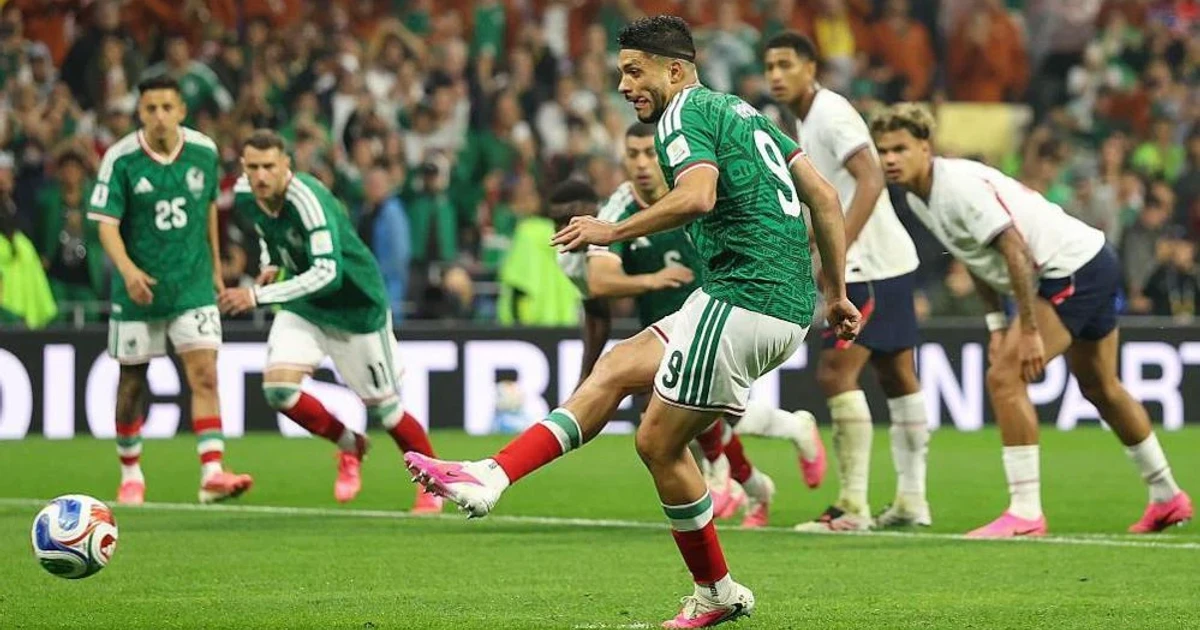
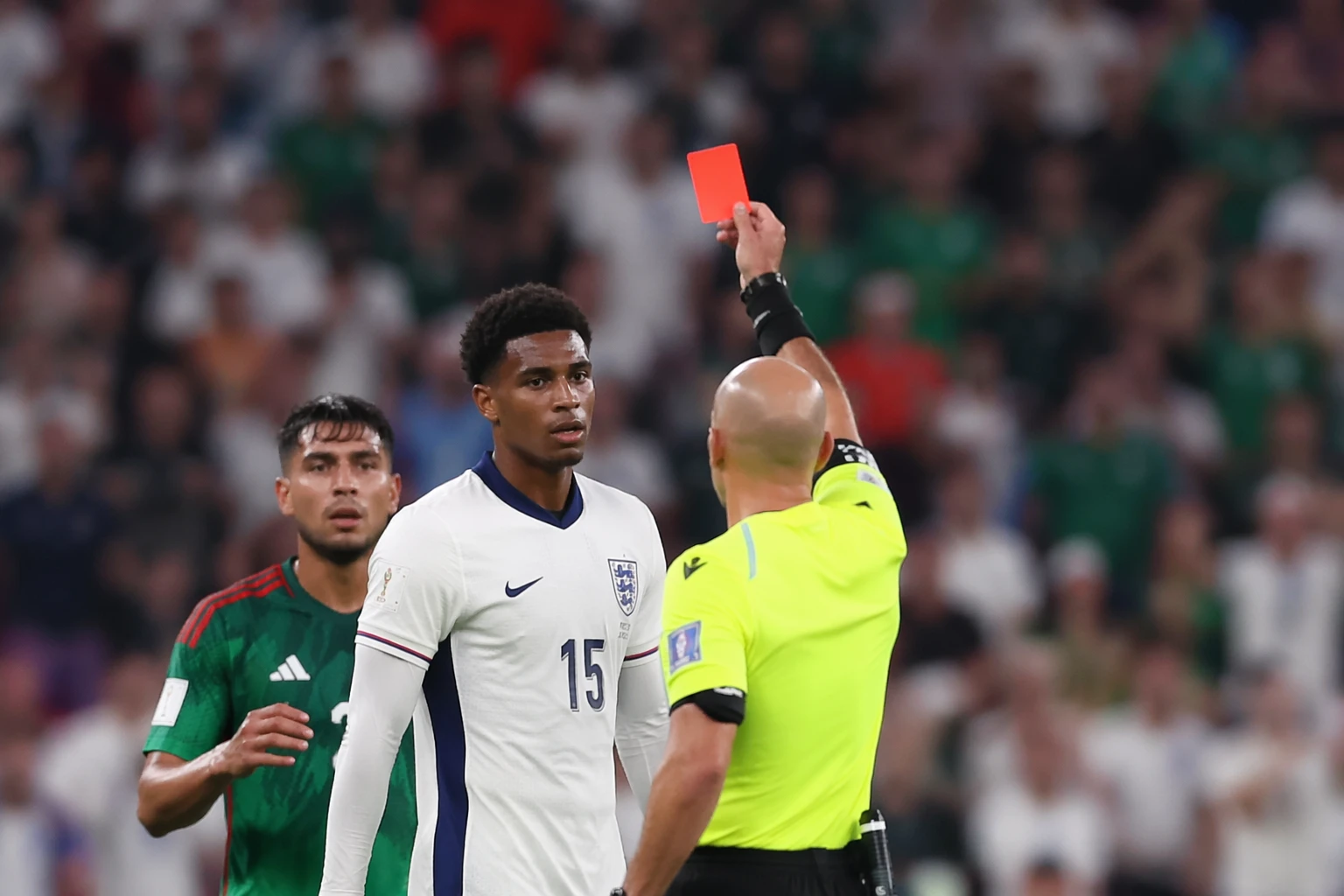
Jarell Quansah was sent off and England conceded a penalty in their last-16 tie with Mexico in Match 92 at Mexico City Stadium, a World Cup knockout call that left no room for caution. FIFA listed Alireza Faghani as referee and Jalal Jayed as fourth official for the match, which kicked off on 6 July 2026.
Why the red card was shown
The key rule sits in IFAB Law 12: a player who denies the opposing team a goal or an obvious goal-scoring opportunity is guilty of a sending-off offence. That is the legal basis for a red card. When a referee judges that a defender has stopped a near-certain scoring chance, the punishment is immediate and severe.
Quansah was listed in England’s World Cup squad, and the decision against him reflected that disciplinary category. The referee did not have to choose between allowing play to continue or issuing a caution. If the action was judged to have denied an obvious chance, Law 12 points straight to dismissal.
Why a penalty accompanied the dismissal
A red card alone would only explain a sending-off. The penalty explains the location of the foul. When an obvious goal-scoring opportunity is denied inside the penalty area, the defending team is punished twice: the attacking side receives the restart it should have had from the spot, and the defender is removed from the match.
In practical terms, England were left to play with 10 men while Mexico were given a penalty, and that changes the shape of the match immediately. Defensively, every line has to drop and compress; offensively, the team with 10 players has to decide whether to chase the game or protect itself from further damage.
What VAR can change, and what it cannot
The VAR framework gives officials a route to review exactly these kinds of moments. Under IFAB’s video assistant referee protocol, decisions involving goals, penalty or no penalty, and red cards for denying an obvious goal-scoring opportunity can be checked by looking back over the attacking phase of play. The referee’s original decision stays in place unless the review reveals a clear and obvious error.
VAR is not designed to re-officiate every contact or second-guess every judgment call. It exists to correct the most serious mistakes, especially where a penalty and a dismissal can alter a tournament result. In a game of this weight, the review process covers a single action that can be judged both as a foul for a penalty and as misconduct for a red card.
Why this mattered so much in World Cup 2026
World Cup 2026 is the first 48-team FIFA World Cup, with 104 matches staged across Canada, Mexico and the United States. England were already deep into the knockout stage, where one decision can decide whether a team stays alive or goes home.
Pierluigi Collina has said that six of the 10 red cards shown so far at World Cup 2026 were for denying an obvious goal-scoring opportunity.
The tournament rules around suspensions
FIFA also adjusted the regulatory backdrop before the finals began. On 8 May 2026, it amended article 10 paragraph 2 so that single yellow cards and certain pending suspensions from qualifiers, including direct red cards for denying an obvious goal-scoring opportunity, do not carry over into the final competition. That meant the tournament opened with a clean disciplinary slate for those pre-finals issues.
For England, that separates the World Cup itself from earlier qualifying punishment. The Quansah decision belongs entirely to the final competition, not to any carryover from the route into it.
How the decision changed the match
England lose a defender, Mexico gain a penalty, and the tactical balance shifts at once. In a last-16 tie, that is a structural change that can force substitutions, alter pressing triggers and change how both teams manage risk for the rest of the game.
Sources
- [1]bbc.co.uk
- [2]fifa.com
- [3]theifab.com
- [4]inside.fifa.com