Sports
Erling Haaland’s family tree explained as viral lookalike fuels sister rumors
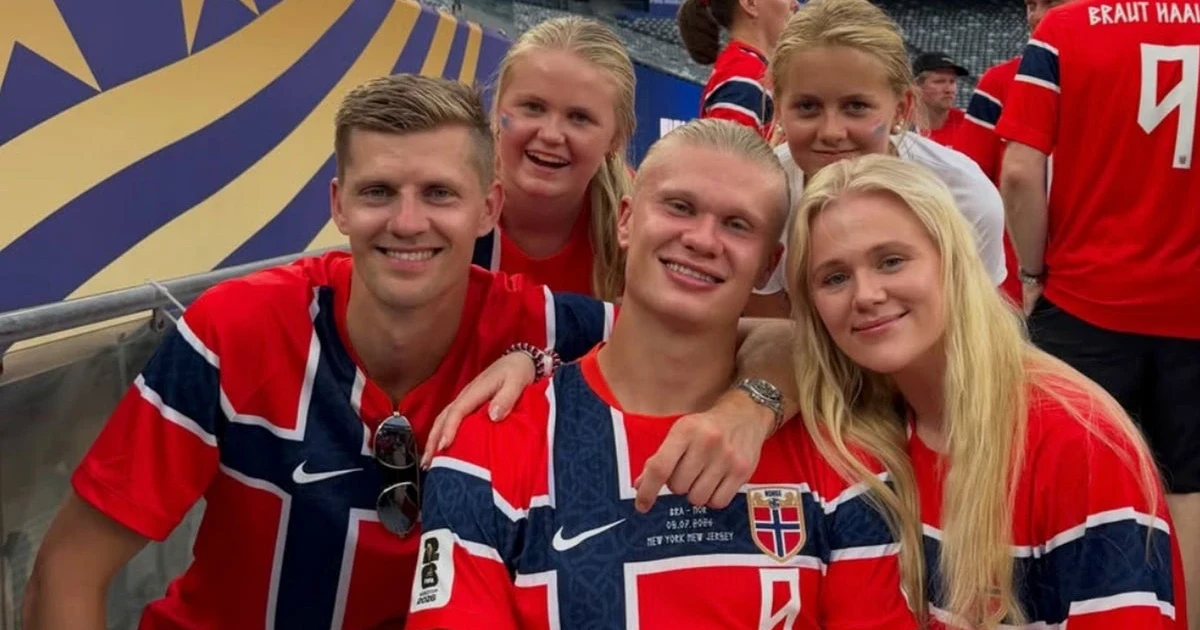
Erling Haaland’s name moves quickly across social media, which is exactly why a passing resemblance can harden into a family rumor in a matter of hours. The current wave of sister speculation has less to do with hidden relatives than with how easily fans mistake a lookalike for a sibling when the subject is one of football’s most visible stars.
What the rumor gets wrong
The key confusion is simple: Haaland does have a sister, but the woman circulating in viral posts is not being identified by any verified family record as that sibling. The documented names in his immediate family are Gabrielle Haaland and Astor Haaland, with Gry Marita Braut and Alf-Inge Haaland as his parents. That makes the rumor less a mystery about whether he has a sister and more a case study in how a familiar face gets attached to a false label.
Lookalike claims travel well because they are visual, compact, and easy to caption. A cropped clip, a confident post, and a few thousand reposts are often enough to turn a resemblance into “proof,” especially when the person in question already carries an unusual amount of public attention. Haaland’s profile gives that content extra lift: he is not just a top scorer, but a player whose family, childhood, and nationality have been discussed for years.
The real Haaland family tree
Haaland was born on 21 July 2000 in Leeds, England, while his father was playing in England. That detail still matters because it explains both his dual nationality and the way his early life sits between English and Norwegian football. He was born in Leeds in West Yorkshire, and when Alfie Haaland’s career in England ended in 2003, the family moved back to Norway.
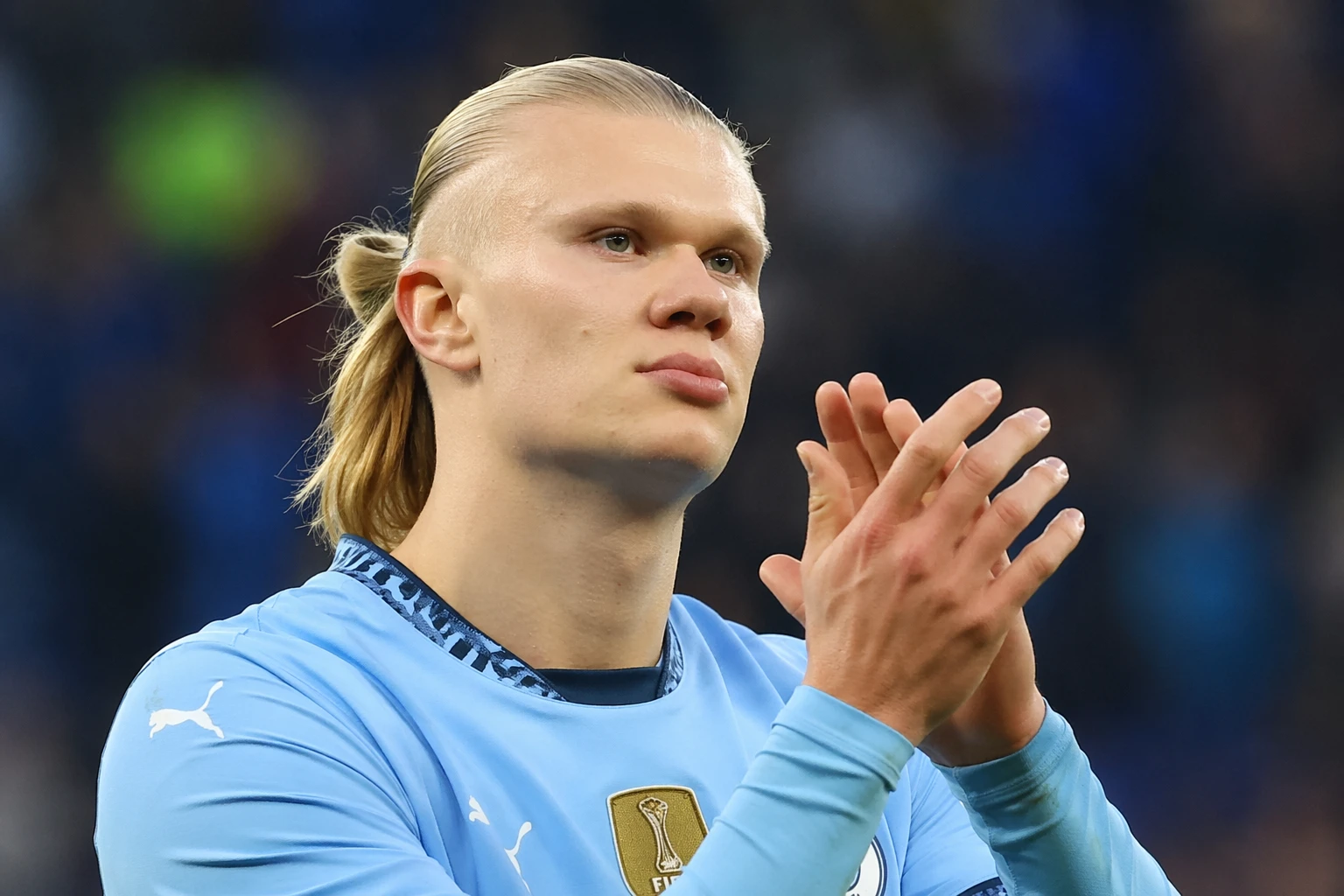
The family’s football link is deeper than a single father-son story. Haaland’s father, known as Alfie or Alf-Inge Haaland, spent part of his career in the Premier League, and England once explored his eligibility before Norway secured him early through its youth system. Former England manager Gareth Southgate later pointed to that early Norwegian pathway as decisive. In practical terms, Haaland was not a late discovery for Norway, but a player the country protected before the broader international battle around his allegiance could fully form.
His mother also belongs inside the sports frame. Gry Marita Braut was a Norwegian heptathlon athlete, which helps explain why athletic pedigree keeps resurfacing in stories about him. The family tree extends further through the Braut line, where relatives including Jonatan Braut Brunes and Emma Braut Brunes are identified as footballers. That wider sporting network gives the lookalike chatter a foothold, because the public is already primed to expect a strong family resemblance in a family with multiple elite athletes.
Why the story keeps returning
The rumors do not survive because they are persuasive on their own. They survive because Haaland is one of the most scrutinized athletes in the world, and any fresh image attached to him immediately competes with his established public identity. When a player has a famous father, a well-known mother, siblings with documented names, and relatives active in the same sport, people are more likely to believe they are seeing another branch of the same family even when they are not.
That fascination has only increased as his personal life has become more public. In October 2024, Haaland and Isabel Haugseng Johansen announced they were expecting their first child, and their son was born in December 2024. By 2026, he was not just a football star with a famous football family, but a father himself, which widened the public appetite for family-centered details and made any new rumor feel more plausible to casual viewers.

The same appetite was visible in July 2026, when Alfie Haaland was shown reacting emotionally from the stands as Norway advanced at the World Cup. That scene reinforced the family’s visibility in football culture, where the Haalands are not abstract celebrity names but recurring figures in stadium shots, match coverage, and fan conversation. Even the way his record is tracked reflects that pressure, with a Norwegian reference page updating his caps and goals on 6 July 2026.
How viral celebrity misinformation spreads
This is the mechanics story behind the gossip. Low-stakes misinformation about a sports star spreads quickly when it has three ingredients: a face that looks familiar, a family name the audience already recognizes, and a platform environment that rewards certainty over verification. Fan accounts amplify the post, commentators repeat the joke, and the original claim becomes detached from the actual family record.
Haaland is an unusually fertile target because almost every part of his biography is already public enough to invite comparison. He was born in England, raised in Norway, became an international star, and comes from a family with genuine sporting credentials. That makes the false step easy: if the family line is real, then any lookalike can be mistaken for a sibling, even when the names do not match.
The real story is more precise, and more interesting, than the rumor. Haaland’s family tree includes a heptathlete mother, a footballer father, siblings Gabrielle and Astor, and a maternal branch that has produced more footballers. The viral clip may have started with resemblance, but the documented family background explains why the internet keeps reaching for a connection that is not there.
Sources
- [1]news.google.com
- [2]espn.com
- [3]nrk.no
- [4]no.wikipedia.org
- [5]athlonsports.com
- [6]famousbirthdays.com