Health
Estonia faces new wave of deadly nitazenes after fentanyl decline

Nitazenes accounted for half of Estonia's drug-related deaths over the past two years, after fatalities rose from 39 in 2022 to more than 100 in 2023. The country that spent more than a decade with Europe’s highest overdose death mortality is now confronting a faster synthetic-opioid market, with nitazenes turning up in powders, counterfeit tablets, liquids, illicit heroin, fentanyl, benzodiazepines and pain medicines.
Heroin largely disappeared from Estonia's market in the early 2000s, and by 2004 illicitly manufactured fentanyl had taken its place. For more than a decade up to 2017, Estonia had the highest overdose death mortality rate in Europe. Police confiscated nearly 10 kilograms of fentanyl in 2017, up from just 314 grams the year before, and the disruption of the main trafficking networks helped bring an abrupt end to the fentanyl era by the end of that year.

In April 2019, Estonia became the first country in Europe to identify isotonitazene, marking the arrival of a new class of highly potent synthetic opioids. Nitazenes produce a stronger, faster, sharper and shorter-lived high than fentanyl, while overdoses can be harder to reverse with life-saving treatment. Fentanyl availability fell sharply from 2018 to 2022, but the broader synthetic-opioid wave kept moving, with nitazenes increasingly displacing fentanyl and heroin across Estonia, Latvia and Lithuania.
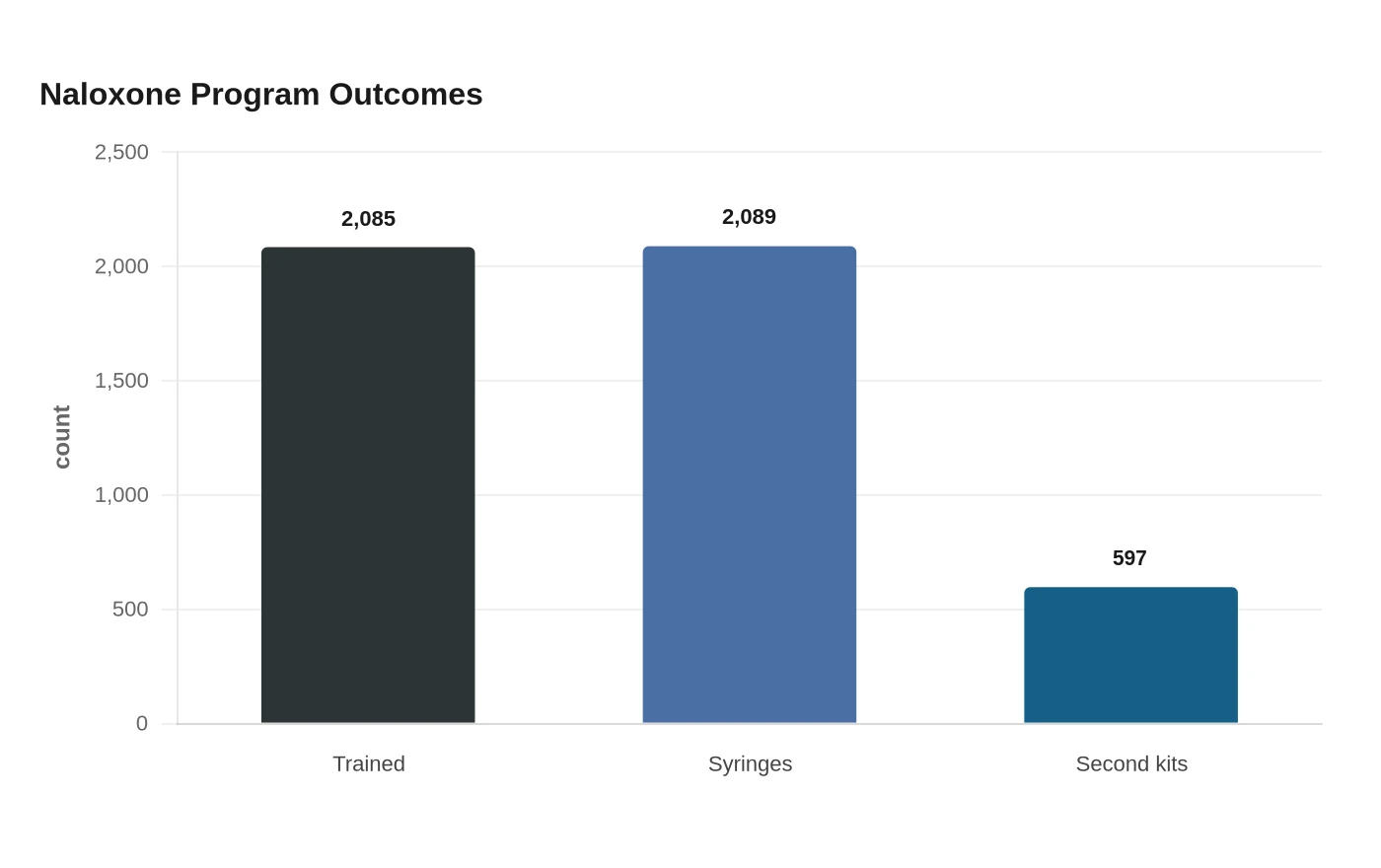
Estonia had already built a harm-reduction response by 2013 that included opioid substitution treatment, needle exchange and take-home naloxone training and distribution. By the end of 2017, 2,085 people had completed naloxone training and 2,089 pre-filled naloxone syringes had been distributed; in 597 cases, people later received a second kit because the first had been used to save a life. Over 2021-2024, 332 people died from overdoses in Estonia, 262 of them men.