Health
Ethiopian town residents say rabies fears forced mass dog killings

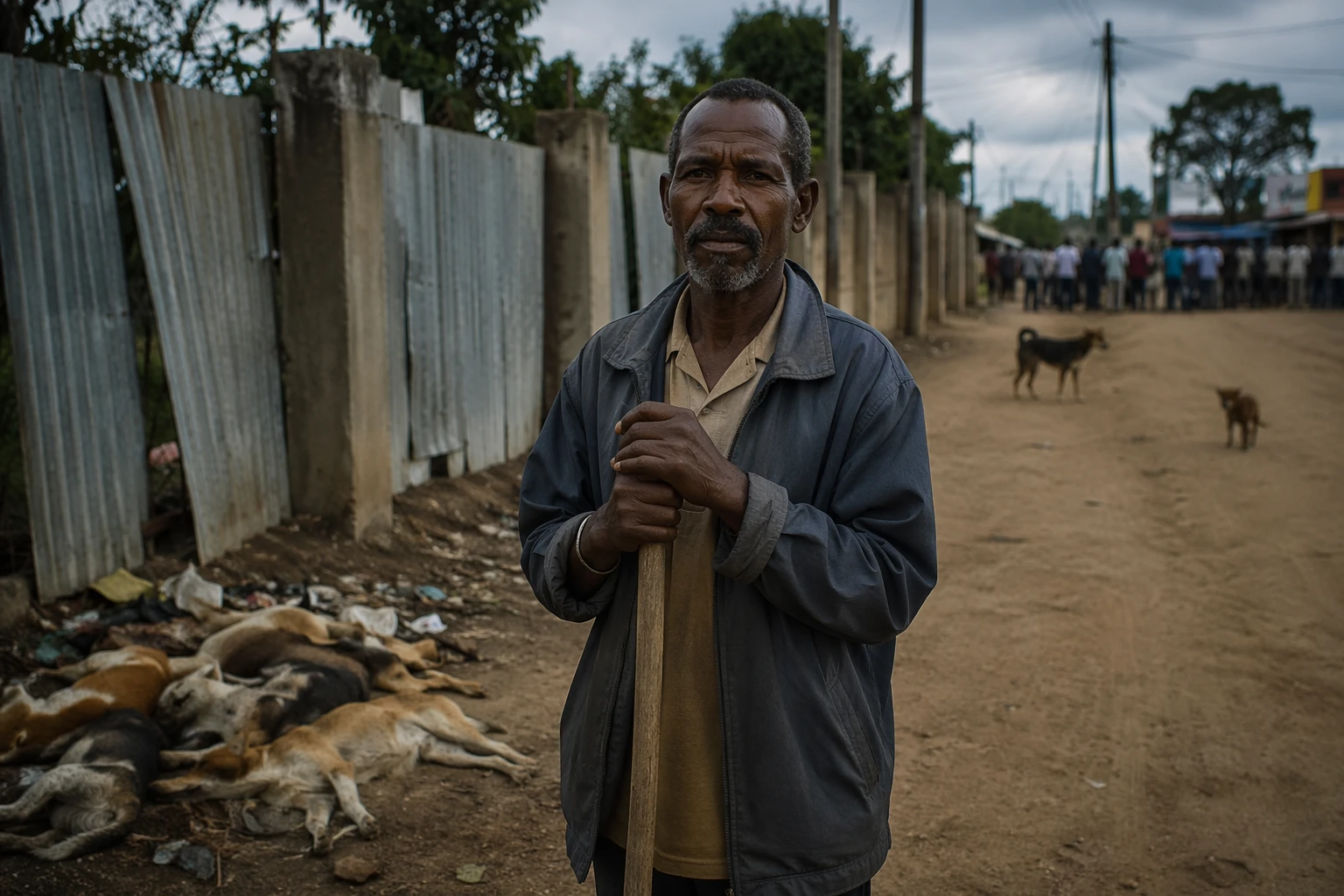
Residents in the Ethiopian town of Hossana said fear of rabies, fines and arrest drove them to kill hundreds of dogs after a local order was imposed. Eyewitnesses told the BBC that some owners hung their dogs or beat them to death, a violent response that exposed how quickly a public-health scare can turn into a punishment campaign when authorities offer little else.
The directive came through community associations affiliated with local government, residents said, but Mayor Samuel denied that his administration ordered the killings and called them illegal. He said roughly 70% of Hossana’s 10,000 dogs were guard dogs that had already been vaccinated for rabies, underscoring the gap between the town’s coercive response and any broader plan to control the disease.
That gap matters in a country where rabies remains a deadly and persistent threat. A 2017 report on Addis Ababa estimated that thousands of Ethiopians are infected each year and about 2,700 die annually. Ethiopia has since been implementing an Integrated Rabies Control and Elimination Strategy covering 2018 to 2030, with mass dog vaccination at its center, but the Hossana killings suggest how uneven that strategy has been on the ground.
Research and reviews have found that dog vaccination coverage in Ethiopia remains far below the 70% level often considered necessary to stop canine rabies transmission. Global rabies-control reporting says Ethiopia has not agreed to share public epidemiological rabies data through the Rabies Epidemiological Bulletin, leaving planners with a thinner picture of where infections are spreading and which communities are most at risk.

That lack of reliable surveillance is more than a technical problem. CDC country guidance treats robust rabies monitoring and a national canine rabies control program as basic markers of control, yet the Hossana episode showed what happens when those systems are weak: residents are left to improvise under pressure, public fear replaces humane animal management, and vaccination campaigns fail to reach the dogs most likely to live alongside people.

In Hossana, the result was a mass killing carried out by residents who said they felt they had little choice. The town’s response has become a stark example of how low-capacity authorities can turn a preventable zoonotic disease into a crisis of violence, fear and failed governance.
Sources
- [1]bbc.co.uk
- [2]yahoo.com
- [3]thereporterethiopia.com
- [4]springer.com
- [5]idosi.org
- [6]rabiesalliance.org
- [7]cdc.gov