World
EU Designates Iran's Revolutionary Guards as Terrorist Organization Amid Heightened Tensions
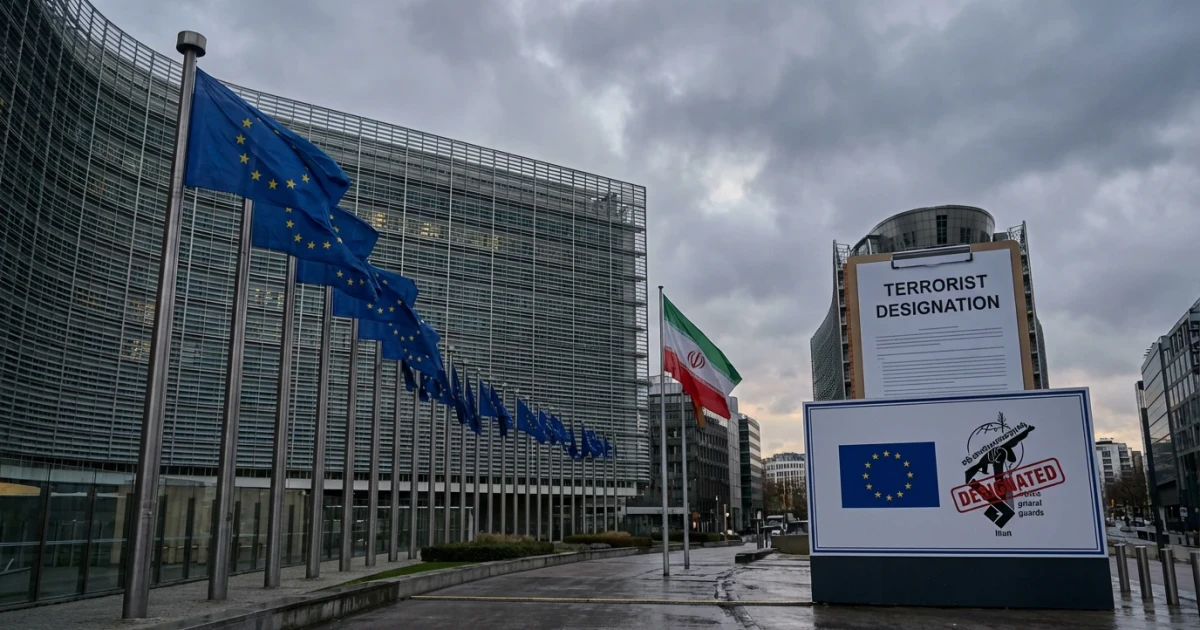
The European Union (EU) has officially added Iran's Revolutionary Guards, known as the IRGC, to its list of terrorist organizations, marking a significant shift in European policy towards Tehran as tensions between Iran and the West continue to escalate.
EU’s Landmark Decision on the IRGC
The move to designate the Islamic Revolutionary Guard Corps (IRGC) as a terrorist group was announced following a meeting of EU foreign ministers. The decision reflects growing concern within Europe over Iran’s regional activities and its ongoing disputes with Western powers, particularly the United States.
- The IRGC now joins other entities deemed security threats by the EU, impacting diplomatic relations and economic ties.
- The listing signals a coordinated European response to what the EU describes as Iran’s destabilizing actions in the Middle East.
- This move comes as Iran faces increasing isolation due to its nuclear program and involvement in regional conflicts.
Background: Who Are Iran’s Revolutionary Guards?
Founded after the 1979 Islamic Revolution, the IRGC has grown into one of Iran’s most powerful military and political forces. The organization operates independently from Iran’s regular army and has significant influence over the country’s economic and security policies. The IRGC has been accused by Western governments of supporting proxy groups throughout the Middle East and orchestrating attacks against Western interests.
- The IRGC is estimated to have over 150,000 personnel and controls vast economic assets in Iran.
- It has been a target of previous US sanctions and was labeled a terrorist organization by the United States in 2019.
International Implications and Reactions
The EU’s decision to formally label the IRGC as a terrorist organization is expected to have far-reaching diplomatic and economic consequences. The move intensifies pressure on Iran at a time when negotiations over its nuclear program have stalled and as it faces domestic unrest.
- EU member states are now required to freeze IRGC assets within Europe and restrict travel for individuals associated with the group.
- This coordinated approach aligns the EU more closely with US policy, potentially leading to further cooperation on security issues regarding Iran.
Rising Iran-US Tensions
The designation comes amid heightened tensions between Iran and the United States. Both countries have exchanged accusations over attacks in the Middle East, and the IRGC has been at the center of many of these disputes. Western officials have cited Iran’s support for militant groups and its ballistic missile program as primary concerns.
Impact on EU-Iran Relations
The addition of the IRGC to the EU’s terrorist list is likely to complicate efforts to revive the Iran nuclear deal and may provoke further retaliatory measures from Tehran. Analysts predict a period of increased diplomatic friction and uncertainty in the region.
Looking Ahead
The EU’s designation of Iran’s Revolutionary Guards as a terrorist organization underscores the growing divide between Tehran and Western powers. The move signals a hardening European stance and raises questions about the future of diplomatic engagement with Iran. As tensions mount, the international community will be watching closely to see how Iran responds and whether the decision leads to further escalation or renewed negotiations.
Sources
- [1]BBC