World
EU plans energy labels on air conditioner installation quotes
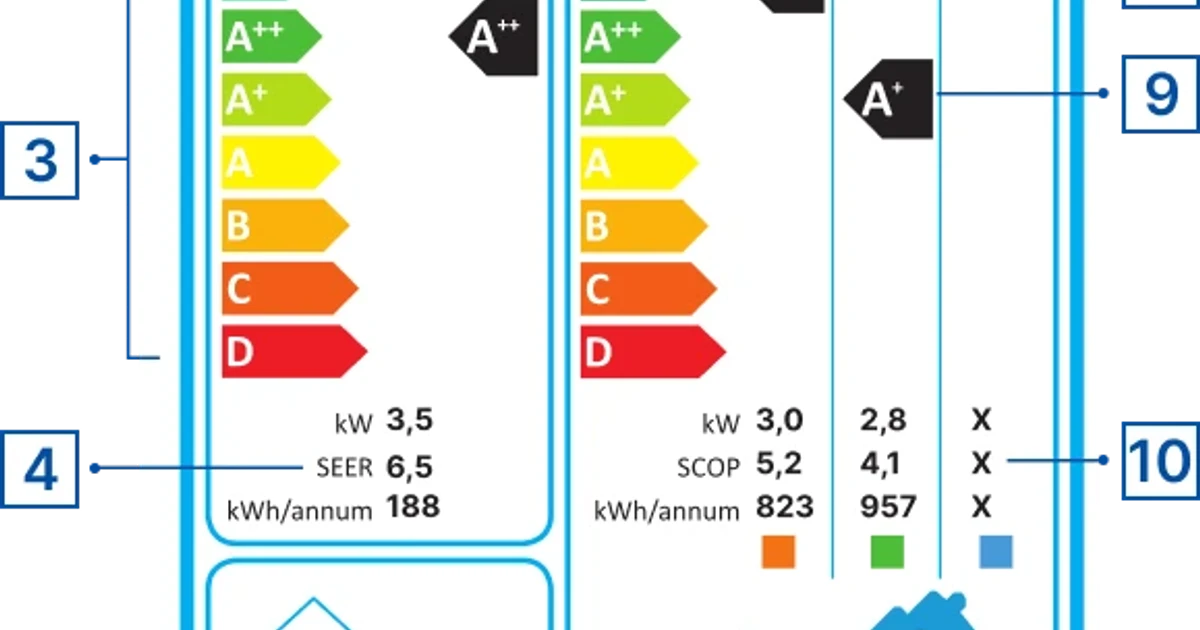
The European Commission proposed on Wednesday to require installers to show the energy label for air conditioners, boilers and kitchen appliances when they send a quote, a move aimed at helping households compare running costs before they buy. The change matters most when people are under pressure, such as during a heatwave or when a boiler fails and there is little time to shop around.
For consumers, the policy is designed to put efficiency into the buying decision at the moment it often gets skipped. Many households buy through local installers rather than in a store, which means they may never see the product on a shelf or study specifications online at leisure. A Commission official said the EU wants to change that dynamic for people who call an installer because it is too hot to bear, rather than waiting to compare models later.
The proposal lands as Europe faces hotter summers and more severe heat events, and as demand for cooling rises in countries where air conditioning has historically been far less common than in North America. Sales have been surging in France and Spain, underscoring how quickly the market is changing. In practical terms, the label can affect both the upfront choice and the power bill that follows, especially for appliances that run for long hours during peak demand.
Brussels is building the plan on a long-running energy-label system that dates back 50 years, to the aftermath of the 1973 oil crisis. The current Energy Labelling Framework was last revised in 2017, and the Commission says the label directly influences purchasing decisions for 75% of people buying home appliances, based on a 2024 Eurobarometer. EU energy-label and ecodesign policies are estimated to have cut average household bills by about 317 euros in 2024, with savings projected to rise to 480 euros by 2030.
The Commission says the EU regulates more than 30 product groups under ecodesign, 15 of which also carry an energy label. It also says the European Product Registry for Energy Labelling now contains more than 2 million labeled product models, and that 83% of consumers consulted the label on average over the past five years. Even so, the European Parliament Research Service has warned that implementation has been weakened by delays in updating product-specific rules, persistent non-compliance, and uneven enforcement, especially online and for imports from outside the bloc.
The new quote rule also fits into a wider rewrite of appliance policy. The Commission consulted on revised rules for space and water heaters from 28 November 2025 to 23 January 2026, saying the rules date to 2013 and need updating for newer testing methods, sound power levels, NOx emissions and hybrid heat pumps. Its 2025 to 2030 working plan for ecodesign and energy labelling was adopted on 16 April 2025, and a Heating and Cooling Strategy is due in the second quarter of 2026.
The market backdrop is shifting fast. The Commission’s Joint Research Centre said preliminary data from 13 member states showed heat pump sales rose 11% in 2025 to 2.34 million units in those markets, while the heat pump market was up 17% in the first quarter of 2026 from a year earlier. EHPA-linked data showed residential heat-pump sales rose by an average of 25% in France, Germany and Poland in the same period, a reminder that cooling and heating policy are now converging in the same household purchase.