World
EU plans new restrictions on children’s social media use

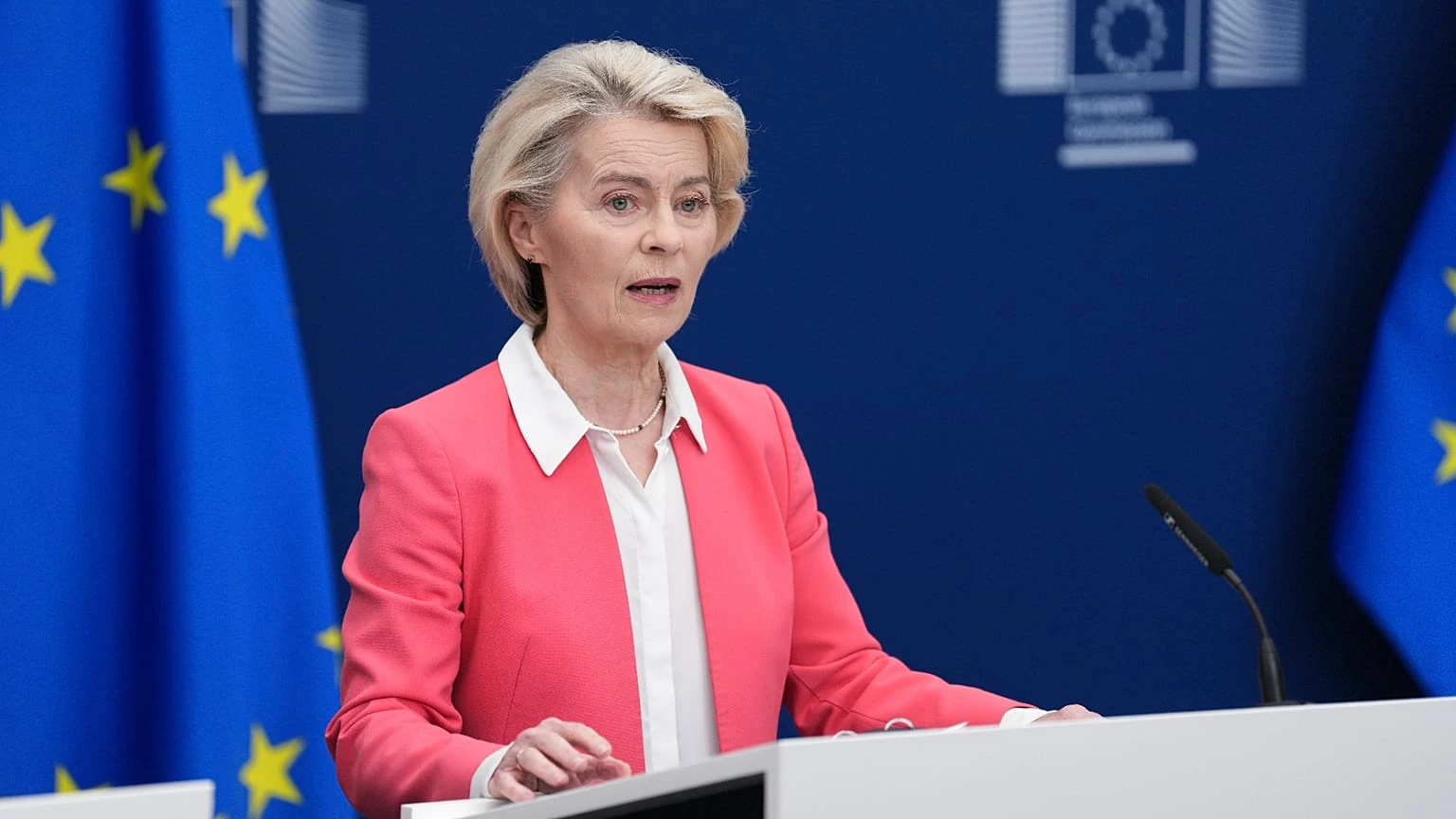
Children should not be exposed to screens below age 3. The expert panel recommends time-limited use for minors under 13 under parental supervision and gradual introduction to social media and other technology until 13 with adult oversight. European Commission President Ursula von der Leyen said Brussels will move to restrict children’s access to social media.
Von der Leyen said the question is no longer whether children face risks online, but what governments should do to give them a safer start. She said the Commission is likely to follow the panel’s approach and present a concrete proposal after the summer, with a September state-of-the-union address expected to serve as the formal stage for the announcement. The Commission is also considering age restrictions for other online services, not just social platforms, as it moves toward phased and gradual access for different age ranges.

The Commission has already started to assemble a broader age-assurance framework. On April 29, it published a recommendation for a common approach to EU-wide age verification technologies and has been testing a prototype age-verification app in Denmark, France, Spain, Greece and Italy. The long-term plan is to fold that technology into the digital EU ID card expected from the end of 2026. Most major social platforms already set 13 as the minimum account age because children under 13 cannot consent to data processing under EU privacy rules, but many younger users still get around the limit by lying about their age.
The harder line also reflects political pressure from several capitals. Athens, Copenhagen and Paris have all pushed for age restrictions, while France and Spain were among the earlier advocates for tougher limits, with Spain backing an age threshold of 16 in 2025 discussions. In July 2025, Commission officials said there was no plan for an EU-level age ban even as national governments remained free to legislate on their own.

If the European Union standardizes age verification and forces platforms to define harmful services under the Digital Services Act, companies such as TikTok, YouTube, Instagram and Facebook could be pushed to redesign account access, recommendation systems and addictive features for users across markets, not just in Europe.
Sources
- [1]internazionale.it
- [2]politico.eu
- [3]commission.europa.eu
- [4]europeannewsroom.com
- [5]fpf.org
- [6]thestar.com.my
- [7]usnews.com