World
EU powers propose limits on voting rights for future members
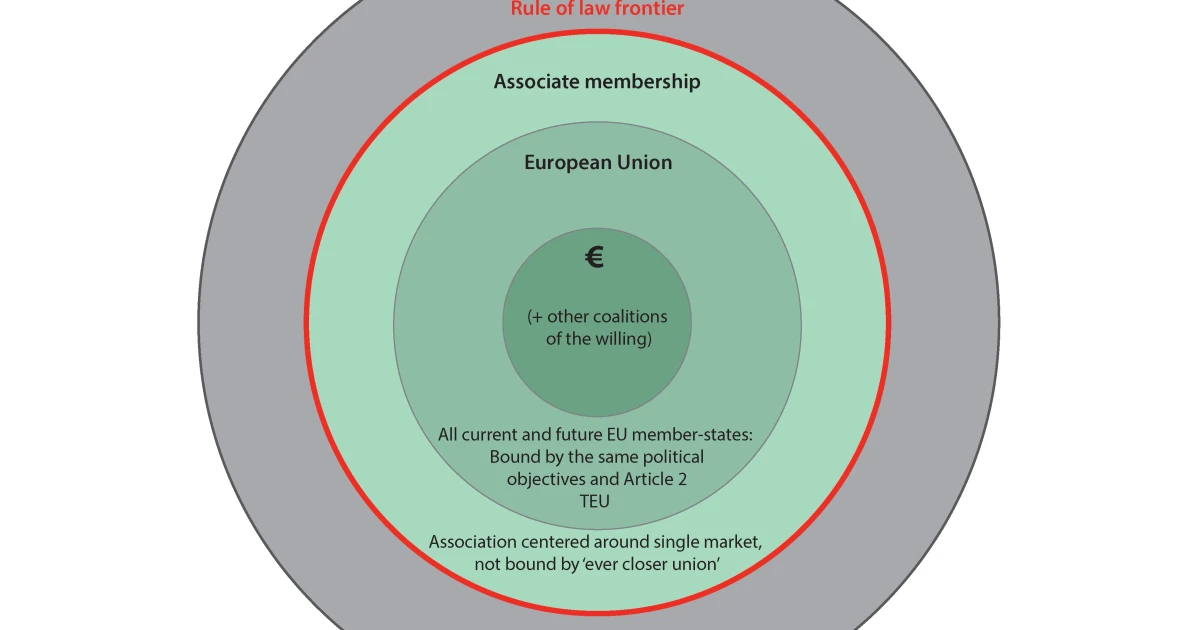
Five of the European Union’s biggest and most influential governments are pressing to change what membership would mean for the next wave of entrants. Germany, France, the Netherlands, Belgium and Luxembourg laid out a proposal that would make enlargement more conditional, including the possibility of temporarily limiting some voting rights for new members.
The joint paper, seen June 9, calls for a new monitoring mechanism and a safeguard clause that could be triggered if a member showed serious backsliding in democracy or media freedom. The five governments also want the bloc to discuss temporary, transitional limits on voting rights in unanimity-based areas such as enlargement, foreign policy and budget decisions, where one capital can still block action in Brussels.
The idea goes to the heart of a long-running EU dilemma: how to expand without importing another internal veto point. Hungary, under Viktor Orban, has become the bloc’s cautionary example. Its democratic backsliding has fuelled frustration among officials who argue that leverage becomes much harder to enforce once a country is fully inside the club. The European Parliament launched Article 7 proceedings in 2018 over concerns about a serious breach of EU values, and the dispute remains unresolved.
The push comes as Ukraine and Moldova move toward the first accession negotiating cluster, known as Fundamentals. EU accession talks are split into 33 chapters in six clusters, with fundamentals opening first and closing last. Member states must agree unanimously to close the process at the end, making the early design of the rules especially consequential. Two intergovernmental conferences were scheduled in Luxembourg for June 15 to formally open the first cluster for Ukraine and Moldova, after all EU member states agreed to open talks on that stage.
For Kyiv and for governments across the Balkans, the message is clear: the EU still wants enlargement, but it may now come with a more graduated version of power. The Cyprus Presidency has said enlargement remains one of the bloc’s most transformative policies, a strategic commitment and a geopolitical imperative, especially as Russia’s pressure keeps Ukraine at the centre of the debate. Yet some capitals are looking for stronger safeguards before admission, not after, in case the next round of enlargement creates another Hungary-style crisis inside the club.
The stakes are also visible in Montenegro, which is aiming to become the EU’s 28th member by 2028. Air Montenegro has already turned that target into a slogan, “28 by 28 - The Next EU Member,” showing how accession has become part of the country’s public messaging. The Commission’s 2024 rule-of-law report already covers both EU member states and enlargement countries, underlining how closely Brussels is watching democratic standards before the next expansion is even complete.