World
EU to hold first talks with Taliban on Afghan deportations
The European Union held its first closed-door talks with Taliban officials in Brussels, a move aimed at working out deportations and “dignified returns” of Afghan nationals but one that immediately sharpened the bloc’s clash between migration control and human-rights credibility. Belgium issued five one-day visas for the delegation after a security assessment, limiting travel to Belgium alone and underscoring how tightly the meeting was controlled.
The Taliban delegation was expected to be led by Foreign Ministry spokesman Abdul Qahar Balkhi and to sit down with officials from the European Commission, the European External Action Service and member states. Brussels insisted the contacts were technical and operational, not recognition of the Taliban government, but the optics were unavoidable: for the first time, the bloc gave the de facto rulers of Afghanistan formal access in the EU capital.
Migration commissioner Magnus Brunner defended the outreach by saying the EU had “no choice” but to talk to the Taliban if it wanted to return rejected Afghan asylum seekers. That stance reflected mounting pressure inside the bloc to speed up returns of rejected asylum seekers and people convicted of crimes, including Afghans. Afghan nationals lodged nearly one million asylum applications in EU member states between 2013 and 2024, and roughly half were approved. Germany has also been deporting some Afghan nationals with criminal convictions since 2024.
Rights groups said the meeting risked crossing a red line. Amnesty International said Afghanistan could not be considered safe for returns and warned that deportations would expose people to persecution, enforced disappearance, arbitrary detention, torture and other ill-treatment, while the Taliban’s repression of women and girls remained institutionalized. Amnesty also said nearly 22 million people in Afghanistan needed assistance amid a deepening humanitarian crisis and severe food insecurity.
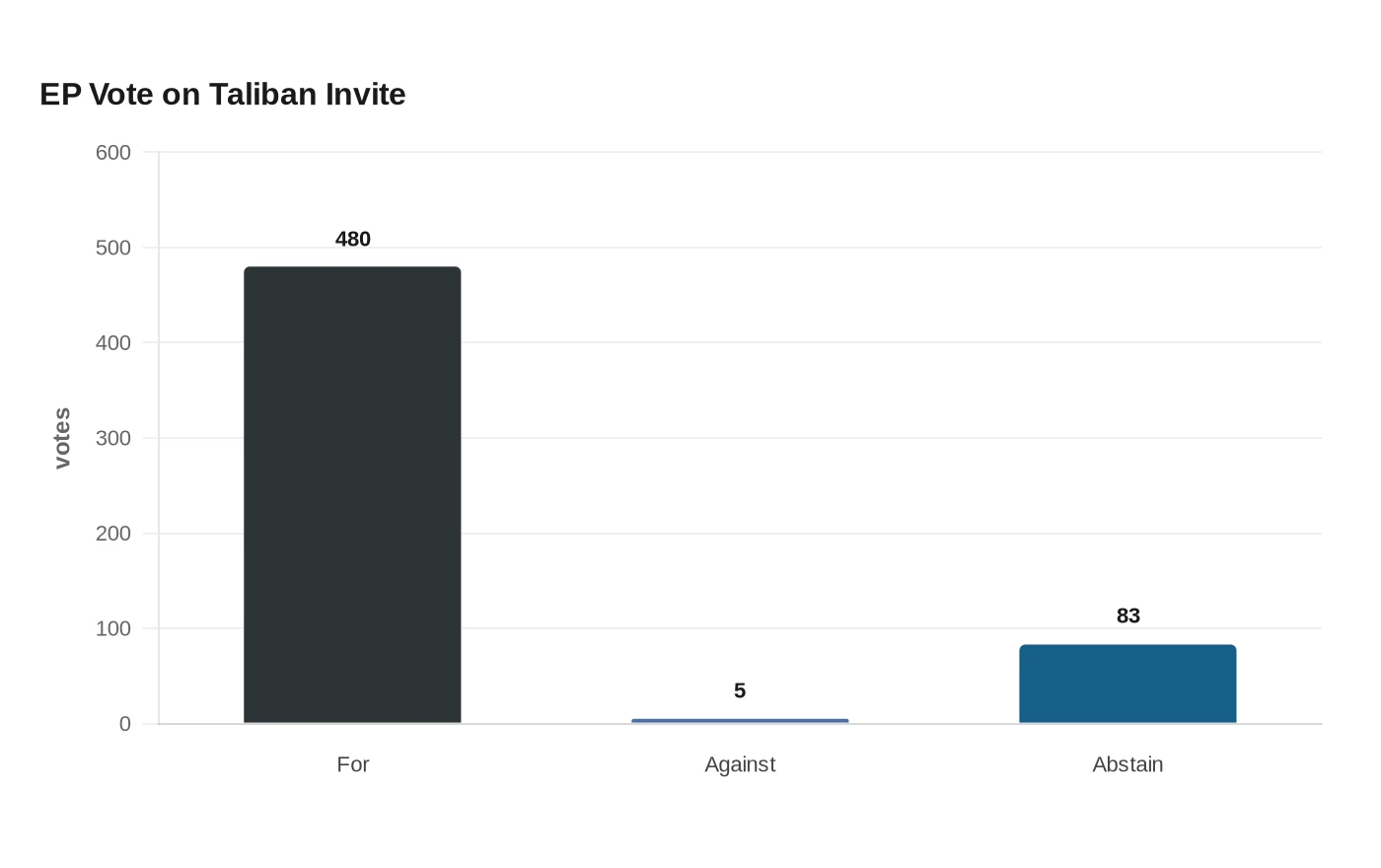
Human Rights Watch said EU countries were undermining their credibility by condemning Taliban abuses while cooperating with the group on forced returns. A joint statement from Afghan and European civil society organizations said the invitation sent a dangerous signal, noting that many Taliban leaders were on EU and UN sanctions lists and that the International Criminal Court had issued arrest warrants against Taliban leaders. The European Parliament had already voted on May 21, 2026, by 480 votes to 5 with 83 abstentions, to condemn the invitation, reject normalization and press for tougher sanctions.
The talks landed as the Taliban continued to tighten restrictions on women and girls, including bans on public life and education, with reports of arrests in Herat over veil rules. For the EU, the practical case for deportation channels collided with a harder question: how far Brussels can go in dealing with Kabul without eroding the principles it says it is defending.
Sources
- [1]npr.org
- [2]rferl.org
- [3]france24.com
- [4]amnesty.org
- [5]ecre.org
- [6]afintl.com
- [7]democrata.es