Technology
Euclid finds two most distant quasars, reveals 31 early Universe giants
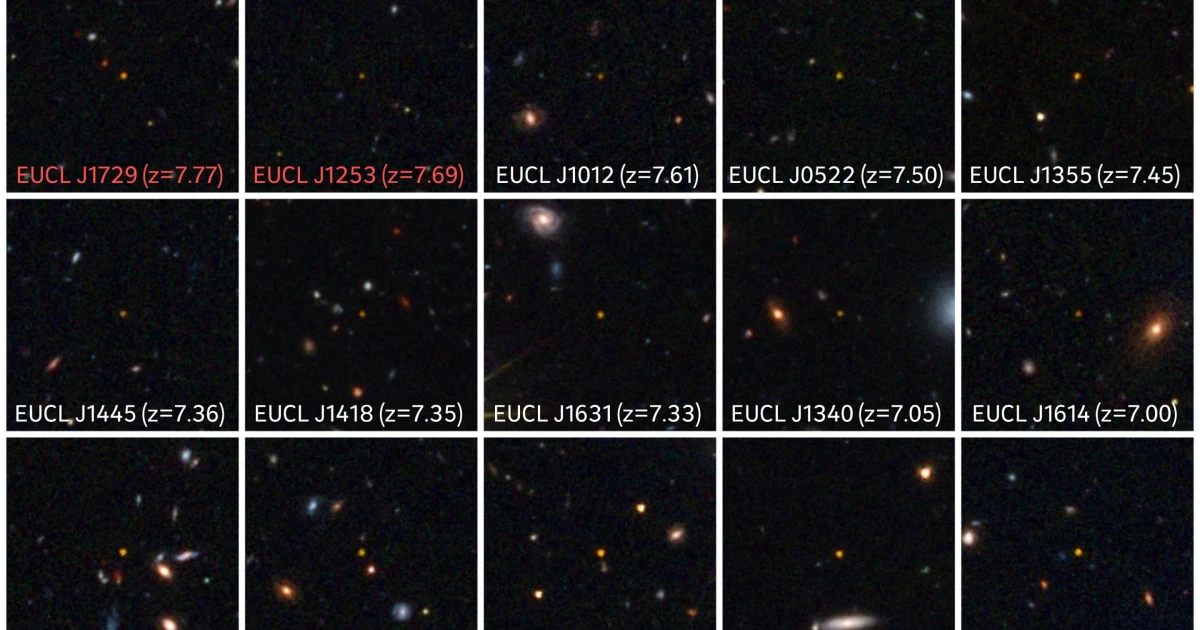
Euclid has found 31 new quasars in the early Universe, including the two most distant ever observed. The objects sit at redshifts from 6.6 to 7.8 and show the light of supermassive black holes as they existed only about 670 million years after the Big Bang, when the Universe was roughly 5% of its current age.
The record pair, EUCL J172902.75+641018.1 at redshift 7.77 and EUCL J125308.55+705432.3 at redshift 7.69, are more than 13 billion light-years away. Their discovery pushed the confirmed count of quasars above redshift 7 from nine to 23, more than doubling the known population of these extremely early objects. The results appeared in Astronomy & Astrophysics on July 6, 2026.
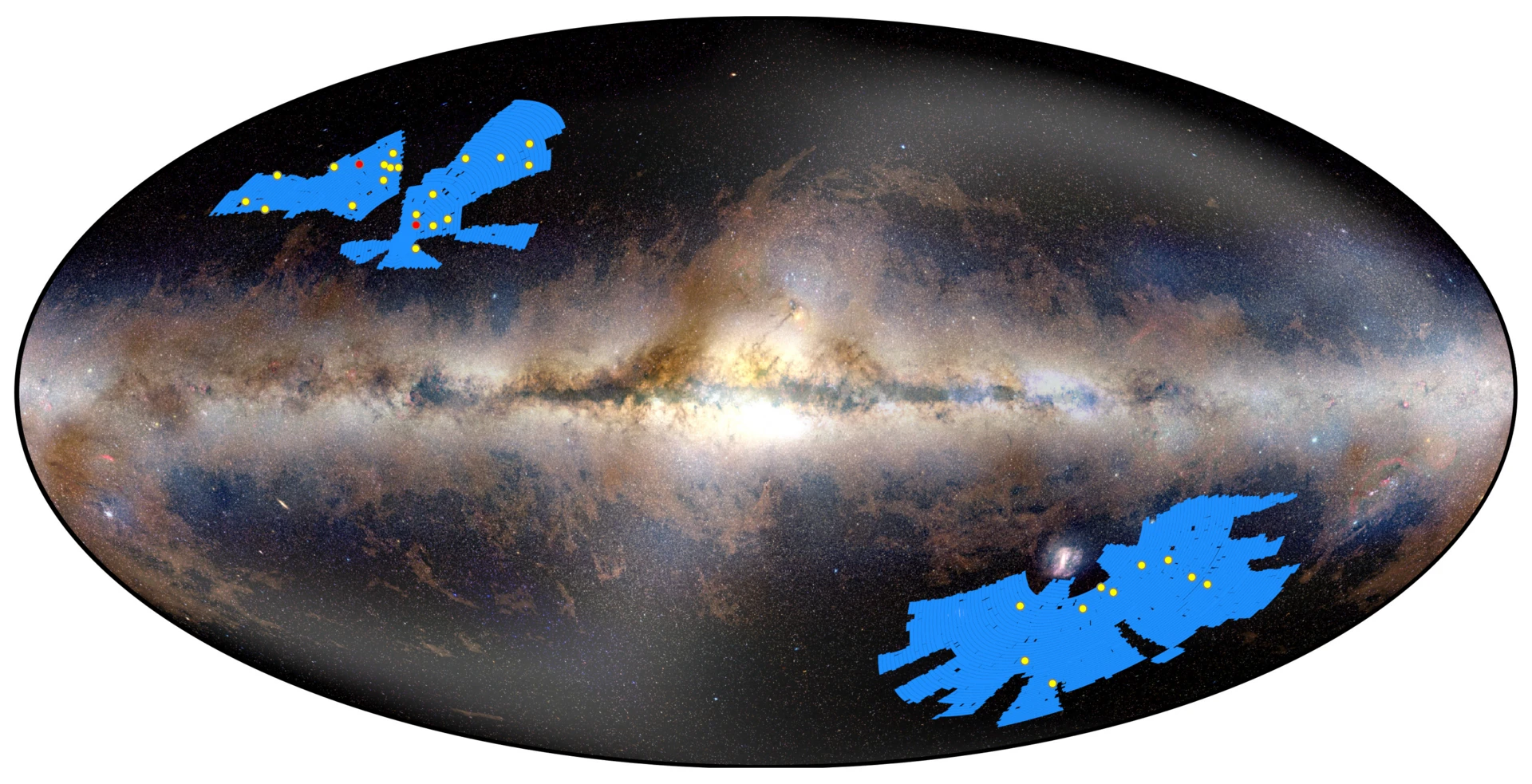
Euclid launched in 2023 and was built to survey the sky in visible light and near-infrared wavelengths, a combination that is especially powerful for finding the most distant quasars. As the Universe expands, the light from these ancient objects is stretched into the near-infrared, where Euclid’s instruments can detect it across wide areas of sky. The search also used imaging from Subaru Telescope’s Hyper Suprime-Cam, which helped identify the two record-setting quasars.
Astronomers have hunted for early quasars for decades because they are rare beacons from the epoch of reionization, the period when the first stars and galaxies ionized the fog of neutral hydrogen that filled the young cosmos. Masafusa Onoue, Daming Yang, Antoine Basset, Jean-Charles Cuillandre, and Knud Jahnke were among the researchers involved in the work, which the Euclid Consortium says draws on the first 18 months of Euclid data. Subaru surveys over the past decade had already uncovered about 200 early quasars, especially fainter ones, but the most distant members of the class remained too scarce to map the full population.
The new sample sharpens a central question in cosmology: how billion-solar-mass black holes formed so quickly after the Big Bang. Researchers also want to know how those black holes affected reionization and what their host galaxies looked like at such an early stage. Euclid’s wider census of 31 quasars gives astronomers a stronger base for tracing the first generation of quasar black holes, from the epoch when the Universe was still in its infancy.
Sources
- [1]cbsnews.com
- [2]euclid-ec.org
- [3]subarutelescope.org
- [4]esa.int
- [5]pmc.ncbi.nlm.nih.gov