Business
Euro zone inflation cools in June, easing pressure on ECB rates

Inflation eased more than expected across several major euro zone economies as June preliminary readings showed Germany, France and Italy all coming in softer than forecast. Spain was the exception among the large economies, leaving traders to look for a downside surprise in the bloc-wide inflation figure due on July 1.
The French numbers were the clearest sign that price pressure is slowing in some of the euro area’s biggest economies. INSEE estimated French consumer-price inflation at 1.8% in June, down from 2.4% in May, while the EU-harmonised rate was 2.0%. Monthly consumer prices fell 0.2%. The agency said the drop was driven mainly by lower energy costs, with services inflation easing and goods prices also softening. Petroleum-product prices were still up 11.2% year on year, but that was a sharp slowdown from 16.6% in May.

Germany also cooled, with inflation slowing to 2.4% from 2.7% the previous month. Italy posted a gentler pace as well, reinforcing the sense that June’s easing was not confined to a single economy. Spain remained relatively elevated, however, which keeps alive the risk that the euro zone’s disinflation is uneven rather than decisive. Eurostat said euro area annual inflation was 3.2% in May, up from 3.0% in April, and economists surveyed by Reuters had expected June inflation at 3.0%, so the national readings pointed to a possible downside miss.
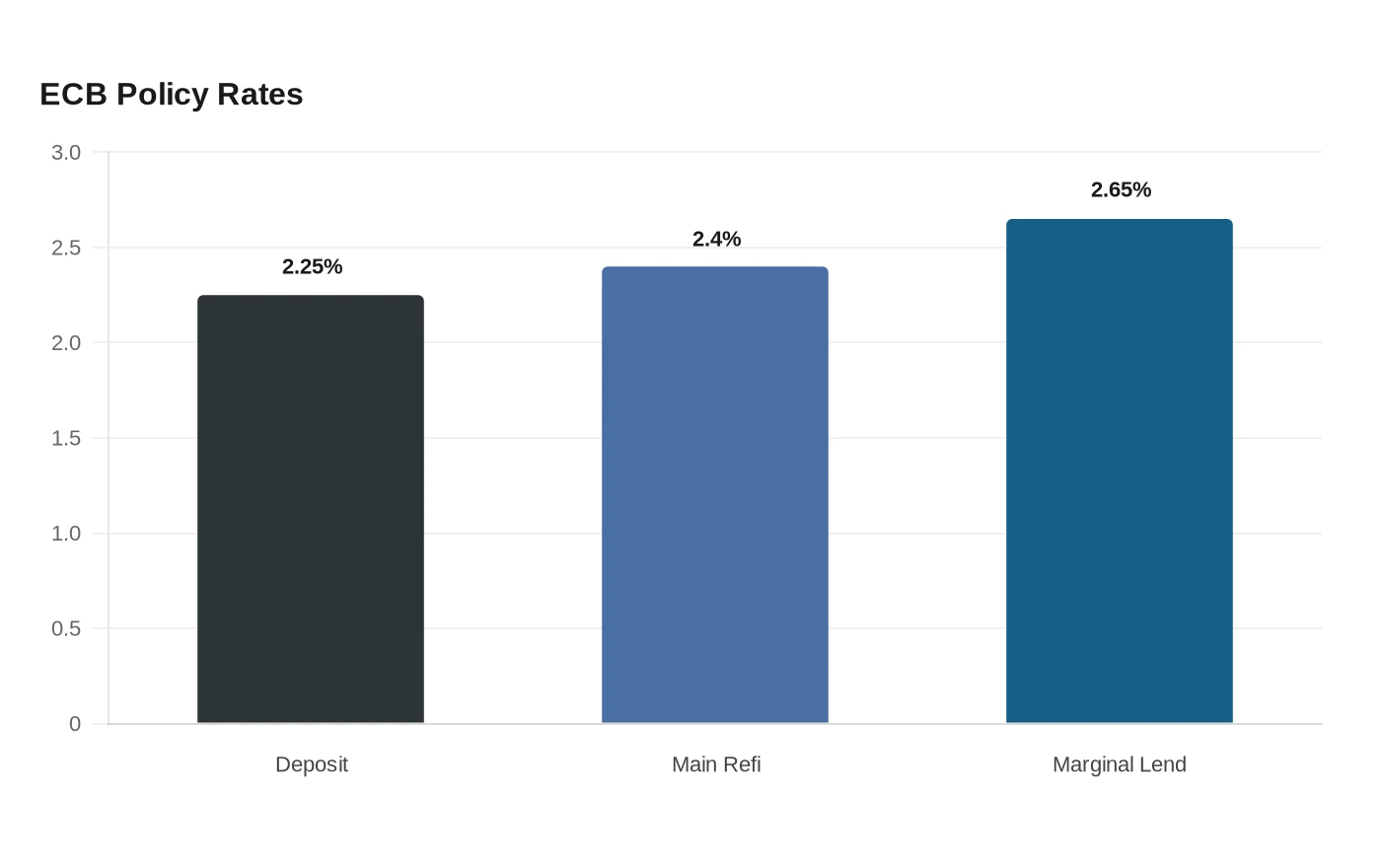
The data landed less than three weeks after the European Central Bank raised its three key interest rates by 25 basis points on June 11, taking the deposit rate to 2.25%, the main refinancing operations rate to 2.40% and the marginal lending facility to 2.65%. At that meeting, the ECB projected euro area headline inflation at 3.0% in 2026. Capital Economics economist Jack Allen-Reynolds said upside risks to inflation had declined markedly and that there was no pressing need for the ECB to raise rates further.
For bond markets, that combination of softer national inflation and still-uncertain energy prices shifts the odds toward a more patient ECB path. U.S. investors watching the Federal Reserve will read the same signal through a global lens: if the ECB can pause, pressure on long-dated yields may ease across markets, even if a modest later hike in Frankfurt still cannot be ruled out. The International Monetary Fund said in April that Europe faced a new energy-driven supply shock linked to the war in the Middle East, with euro area growth projected at 1.1% in 2026, a reminder that sticky services and energy shocks still have the power to reverse the current calm.
Sources
- [1]globalbankingandfinance.com
- [2]ecb.europa.eu
- [3]ec.europa.eu
- [4]insee.fr
- [5]imf.org