World
Europe heatwave shatters records in Switzerland, Denmark and Czech Republic
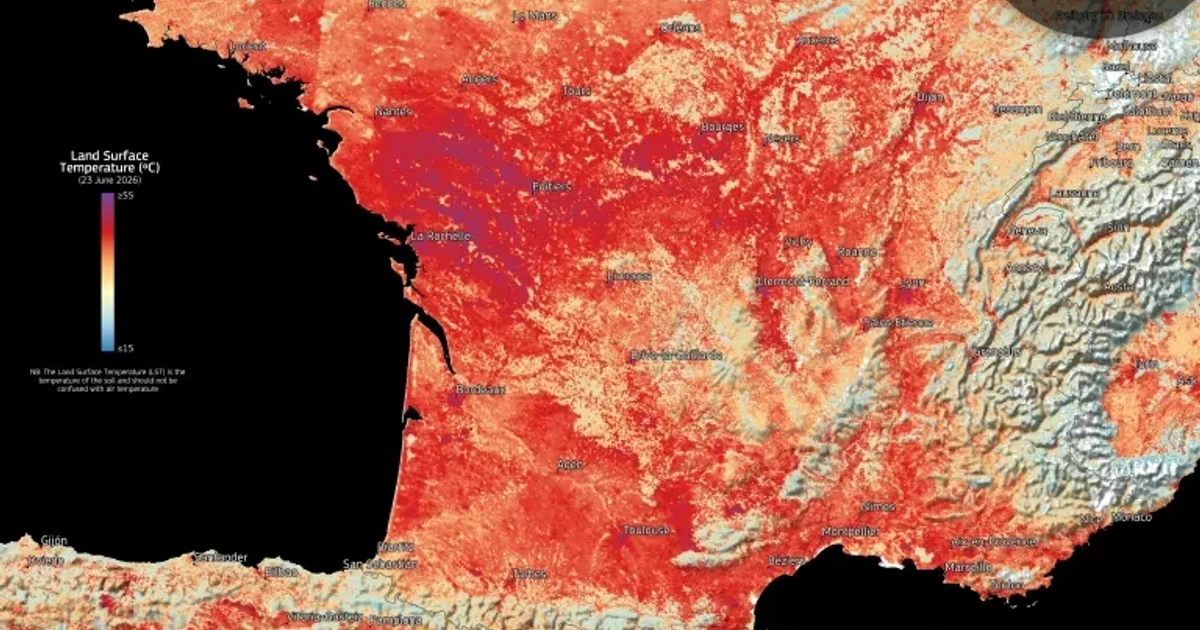
Basel, Ødum and Doksany all logged new heat records on Saturday as a late-June heat wave pushed east across Europe, exposing how quickly even countries built around a temperate climate can be overwhelmed. Denmark’s meteorological service said Ødum, north of Aarhus, hit 37 C, the warmest day since records began in 1874. Switzerland reached 38.8 C in Basel, while the Czech Republic set a national high of 40.6 C in Doksany.
Germany added its own warning sign a day earlier, when a preliminary national record of 41.3 C was reached near Saarbruecken, close to the French border. The heat did not stay in the abstract: outside Berlin, the concrete of the A2 highway burst in two places and the road had to be closed. Deutsche Bahn said the country’s transportation infrastructure was being severely affected, and rail companies urged people to avoid all nonessential travel over the weekend.
The pressure reached inside homes as well. In Dormagen, in western Germany, dozens of residents were evacuated from a nursing home after indoor temperatures rose to 35 C. One resident died overnight, though authorities had not determined whether the heat caused the death. In France, the Paris public hospital authority, AP-HP, said its emergency departments had treated nearly 3,000 patients in 24 hours, more than a third above normal, with many of them over 75 needing hospitalization.

The heat wave also rippled through public services beyond medicine. French officials said it had disrupted rail travel, power generation, schools and outdoor events, while Italy’s health ministry issued red alerts for 18 cities for June 27 and June 28, including Milan, Rome, Turin, Venice, Genoa, Florence and Bologna. In Frankfurt, the Ironman European Championship shortened its cycling and running courses because of the temperatures.
Climate attribution researchers said the extreme conditions would have been virtually impossible without human-caused climate change, and UN weather officials have said the episode is placing major strain on health systems, infrastructure, agriculture and ecosystems. For Central Europe, where heat once carried a different meaning than it does now, the damage to roads, trains, hospitals and elder care showed how far the region’s infrastructure and public health systems still are from the new reality.
Sources
- [1]news.google.com
- [2]abcnews.com
- [3]straitstimes.com
- [4]france24.com
- [5]cbc.ca
- [6]ungeneva.org
- [7]reuters.com