Health
Europe hospitals rush to prepare for deadly heat waves

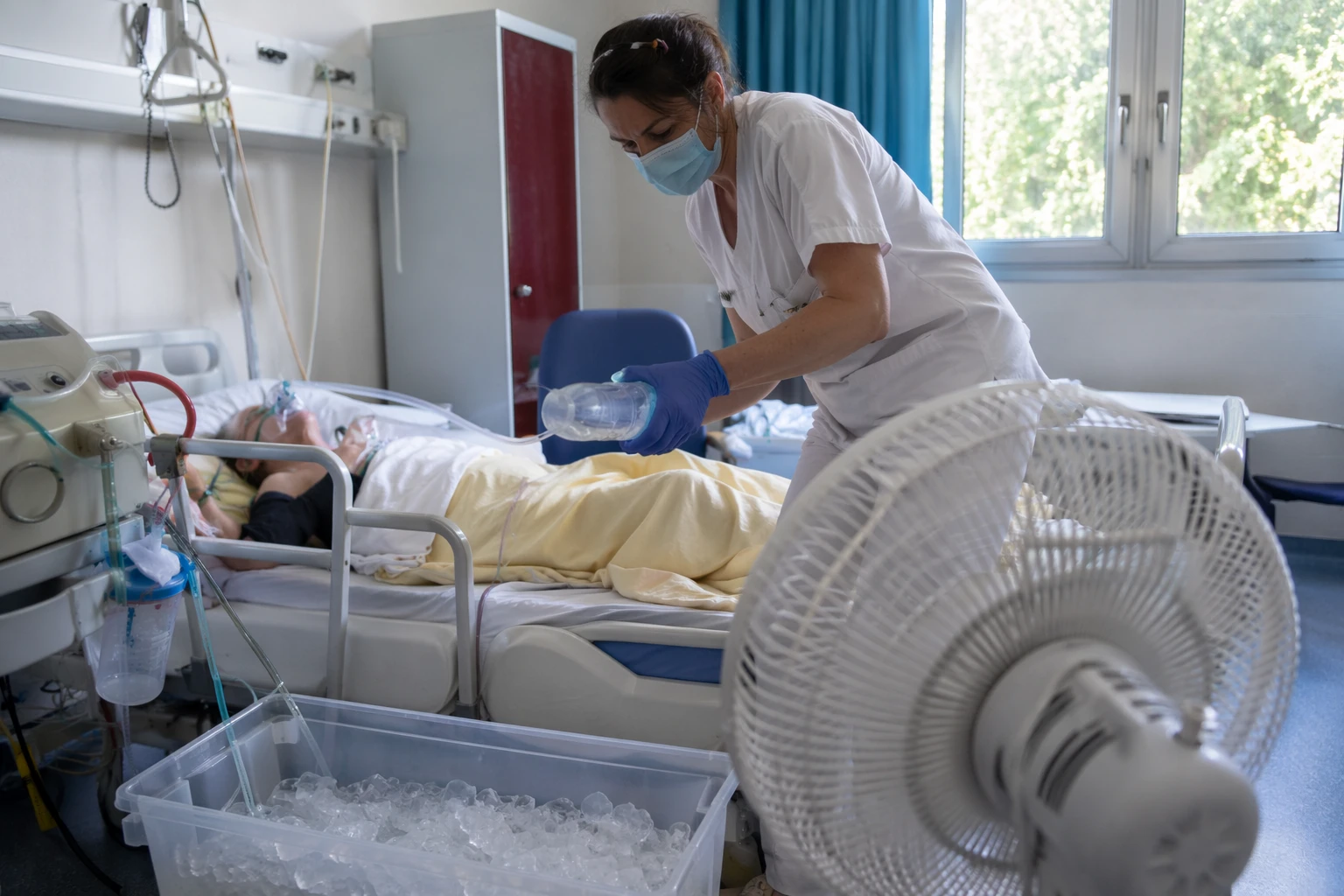
A Paris-region hospital has ordered its own ice-making machine after scrambling through Europe’s latest heat wave with cold-water baths, borrowed ice and around-the-clock improvisation. Cédric Lussiez, the hospital director, said staff thought they were ready but were not actually ready, a blunt lesson for health systems treating extreme heat as a recurring emergency.
The strain stretched far beyond one facility. Santé publique France said the heat wave spread to all regions of mainland France, with 90 departments under orange alert covering 91% of the population and 49 departments under red alert covering 52%. France’s national weather agency said Tuesday, June 23, 2026 was the hottest day on record nationwide, breaking the previous record set in 2003.
The public-health toll has been measured in mortality as well as pressure on emergency rooms. French authorities later attributed about 1,000 excess deaths in June to the heat. In Paris and surrounding areas, nearly 3,000 people sought hospital care in a 24-hour period, and the Paris police chief said hospitals were reaching saturation, prompting local measures including alcohol-sales restrictions.
Hospitals are now folding heat into the same planning cycle they use for flu season. In the Paris region, the hospital that struggled through the wave has already ordered an ice machine so staff will not need to depend on a supermarket or fast-food restaurant for emergency supplies again. France’s government is also buying 30,000 air-conditioning units for health facilities, with the first deliveries expected within days, a sign that cooling is becoming part of basic medical infrastructure rather than an optional comfort.
The broader warning from Europe’s health authorities is that the next summer will be worse. Hans Henri Kluge, the World Health Organization’s Europe director, called the heat wave a “dress rehearsal” and said more than half of European countries still do not have comprehensive heat-health action plans. WHO Europe said roughly 60% of hospital admissions after emergency visits during the heat wave involved people aged 75 and older, underscoring how quickly heat punishes older patients, people with chronic illness and those without access to cooling.
France has seen this before. The 2003 heat wave killed about 15,000 people, a benchmark that now hangs over every new emergency procurement, staffing adjustment and cooling protocol as hospitals prepare for more summers that arrive as infrastructure tests.
Sources
- [1]usnews.com
- [2]santepubliquefrance.fr
- [3]inpes.santepubliquefrance.fr
- [4]politico.eu
- [5]news.un.org
- [6]who.int
- [7]france24.com
- [8]bbc.co.uk
- [9]link.springer.com