World
Europe races to field AI wingman drones after Ukraine war lessons
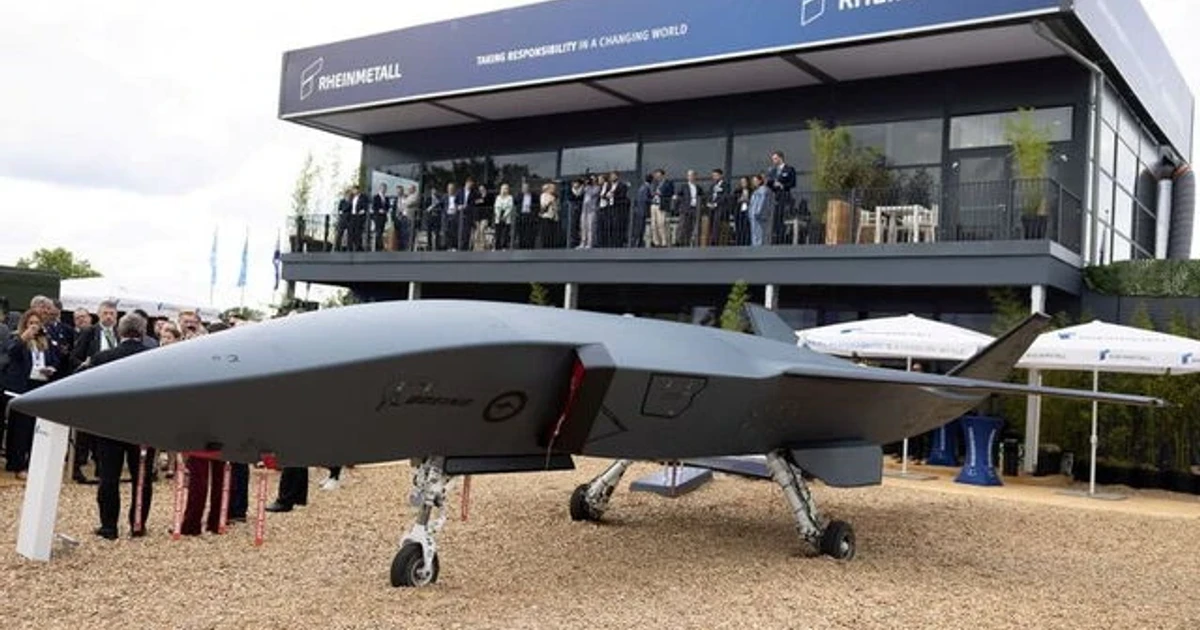
European air power is being reorganized around a new idea: send the fighter, but let an AI-enabled wingman do the dangerous work beside it. In Berlin, Airbus, Boeing, Helsing and General Atomics all used the airshow stage to pitch aircraft that can scout, jam, deceive and strike with manned jets, a sign that the lesson of Ukraine is not just more drones, but a new combat architecture.
The doctrine shift from single jets to mixed fleets
The wingman concept, also called a collaborative combat aircraft, is built on a simple but profound change in battlefield economics. Instead of asking one expensive fighter to carry every sensor, every weapon and every risk, militaries can split those tasks across a manned aircraft and a set of uncrewed companions. That can extend the reach of the jet, reduce exposure for pilots and create more options in contested airspace.
Airbus defines an uncrewed collaborative combat aircraft as an autonomous, armed aerial platform designed to operate alongside fighter jets. Boeing describes the MQ-28 Ghost Bat in similar terms, as a system meant to team with existing military aircraft. The shift matters because the value is no longer just in the airframe itself, but in what it can carry and how it can connect to the wider force, including sensors, jammers, communications links and weapons.
That is why the procurement conversation is changing. Air forces that once judged new aircraft mostly by speed, range and stealth now have to think about software, autonomy, data links and the ability to function as part of a larger package. The result is a move away from the single all-purpose jet and toward mixed formations that can divide up reconnaissance, electronic attack and strike missions.
Ukraine changed the cost calculus
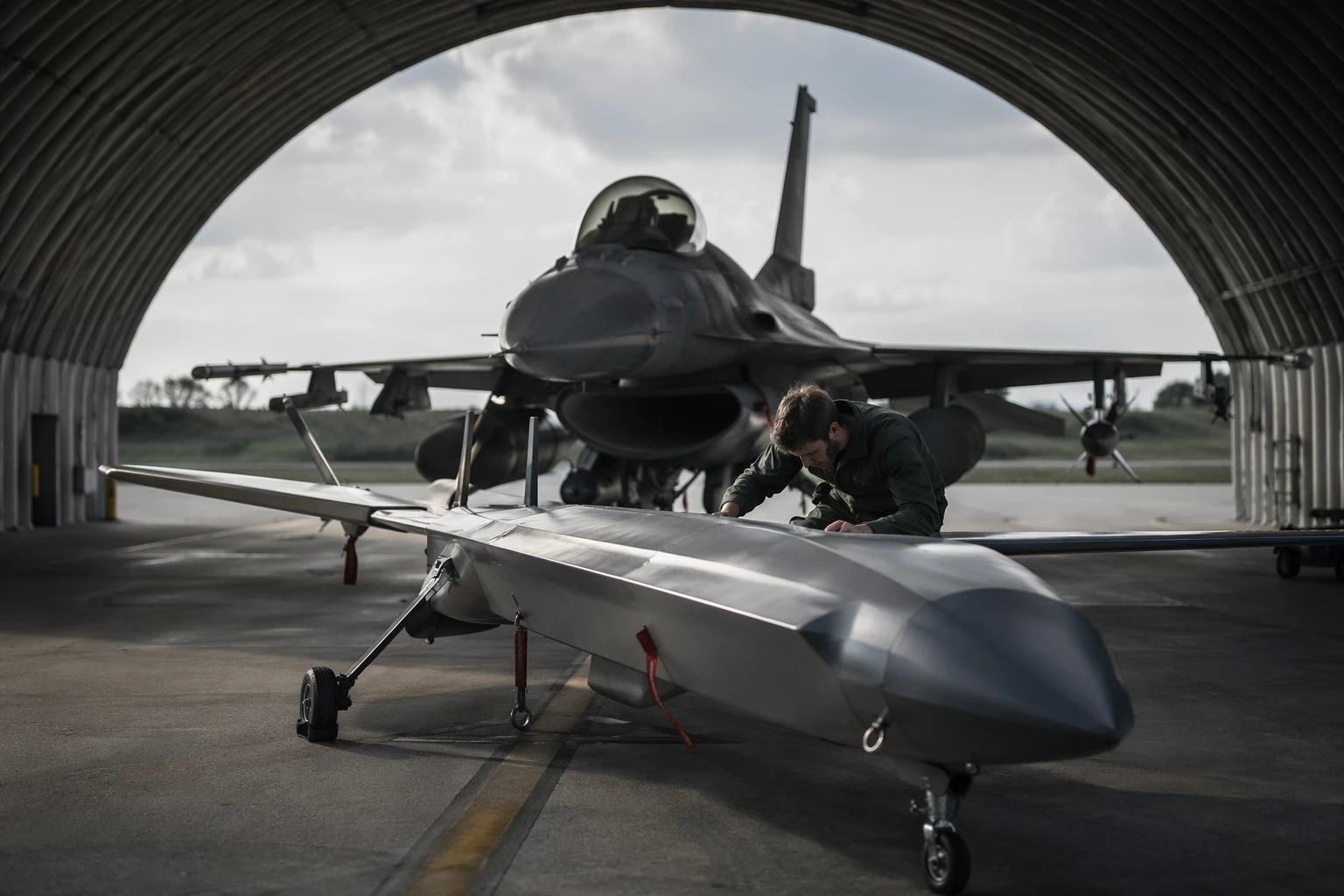
The war in Ukraine exposed how much modern combat now depends on drones, sensors and electronic warfare. NATO has said Russia rapidly developed drone-enabled deep-strike and intelligence, surveillance and reconnaissance capabilities in the conflict, and that has pushed Allies to pay much closer attention to counter-drone defense and electronic warfare.
That changes the logic of air combat in two ways. First, it raises the premium on systems that can survive in heavily jammed or sensor-rich environments, where communications disruption can make an expensive fighter less effective if it is operating alone. Second, it pushes commanders to think about risk distribution. A wingman drone can move ahead into dangerous airspace, absorb attention, or force an enemy to reveal its position before a pilot is committed.
NATO’s own response shows how far the thinking has moved. In 2025, the alliance launched new counter-UAS measures that included improved planning, emergency coordination and procurement. That is not the language of a niche experiment. It is the language of a force preparing for drones as a routine part of high-end war.
Who is moving fastest
At ILA Berlin, Airbus used its 2026 presence to focus on autonomous flight and one of Europe’s most comprehensive uncrewed aerial systems portfolios. The company also unveiled an uncrewed version of its H145 helicopter, the U145, showing that the push toward unmanned systems is broader than just fighter accompaniment. Airbus is trying to position itself not merely as an aircraft maker, but as a provider of the autonomy stack that will define future air power.
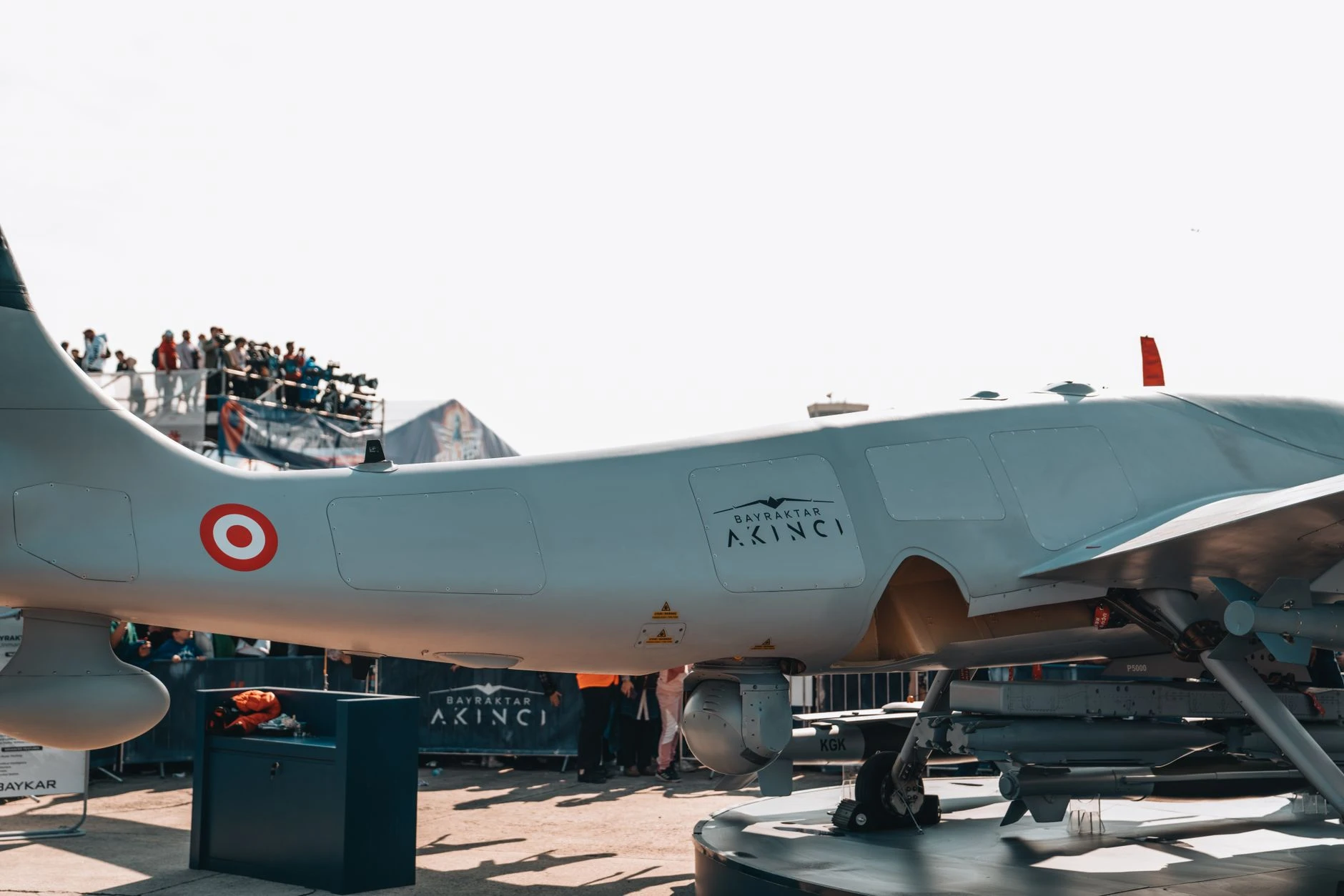
Boeing is making a parallel argument from a different angle. Its MQ-28 Ghost Bat is presented as a collaborative combat aircraft designed to team with existing military aircraft and improve survivability in contested environments. Boeing’s F-15EX page goes further, describing the fighter’s two-seat open-architecture design as an airborne director for collaborative combat aircraft. That matters because it shows the wingman idea is not being treated as a stand-alone drone program, but as part of a network in which a manned aircraft can command or coordinate uncrewed partners.
Helsing and General Atomics were also on display in Berlin, trying to win attention from Germany’s military and from potential export buyers. The export angle is important. Europe’s next air-combat market will not be decided only by performance in a demo; it will be shaped by which systems can be integrated, supported and sold across allied fleets.
FCAS has become a fight over the network
The most consequential European question is not just who builds the drone, but who owns the architecture that links it to the rest of the force. Germany and France have effectively put their joint fighter ambitions under strain, yet Reuters-linked reporting says they still intend to continue work on the FCAS system of systems, the combat-cloud architecture that ties together aircraft, drones and satellites.
That is why the next Franco-German ministerial council discussion on remaining responsibilities, expected on July 17, 2026, matters so much. If the manned fighter element stalls, the data layer may become the real prize. Control over command links, software standards and battle-network design would shape who leads Europe’s next generation of air power, and who must adapt to someone else’s system.

Dassault Aviation, the French government and the German government are all tied to that debate, which has moved beyond industrial rivalry. It is now a question of strategic sovereignty. If Berlin and Paris can preserve the combat-cloud portion of FCAS, they keep a path open to interoperable air combat even if the fighter program itself is weakened. If they cannot, Europe risks buying aircraft without owning the network that makes them most useful.
Why NATO sees this as strategic, not experimental
The wingman race is happening because the battlefield is changing faster than traditional procurement cycles. Ukraine has shown that deep strike, surveillance and electronic warfare are no longer edge cases. They are central to whether an air force can operate at all in contested skies.
For NATO, that means the next generation of air power will likely be judged by three tests: how much it costs to lose a platform, how much risk a pilot must carry, and how quickly a fleet can adapt its software and networks. Wingman drones answer all three only if the broader system works. They are cheapest when they can be reused or attrited without strategic pain, safest when they keep pilots farther from the worst threat zones, and most powerful when their data architecture is resilient.
That is why Berlin was about more than hardware. Europe is not merely buying drones. It is negotiating the shape of future air combat, from cockpit risk to procurement priorities to the command layer that will decide how NATO fights in the next war.
Sources
- [1]usnews.com
- [2]airbus.com
- [3]boeing.com
- [4]shape.nato.int
- [5]nato.int
- [6]flightglobal.com