World
Europe’s air-conditioning gap narrows as heat waves intensify
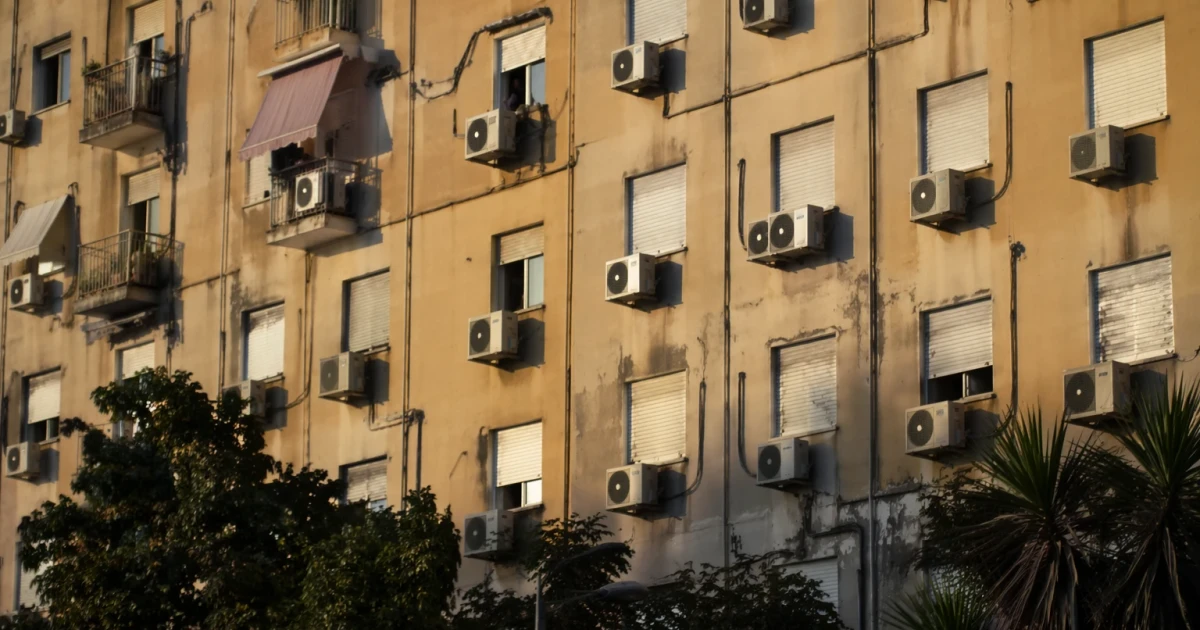
Only about 20% of European homes have air conditioning, according to the International Energy Agency. That share is far below the United States and Japan. The number of units in Europe has more than doubled since 1990 and is projected by the IEA to keep rising fast.
A continent catching up, but not evenly
Europe has long relied on milder summers, better building design and a thinner culture of mechanical cooling than the United States. That is changing as AC ownership expands, yet the growth is not evenly spread. Europe’s existing AC ownership is relatively low and, unlike the U.S. model, is still more evenly distributed across income levels, but new installations are increasingly concentrated among wealthier households.
Some households are already moving toward climate-controlled interiors, while many others remain exposed to hotter rooms, sleepless nights and rising health risks. The IEA projects residential AC installations in Europe will quadruple by 2050, a pace that would reshape both household spending and public infrastructure.
Heat is driving the demand
Europe is the world’s fastest-warming region, and many households are still underprepared for hotter summers. A 2026 European Environment Agency report with Eurofound, based on an online survey of more than 27,000 respondents in 27 European countries, found that more than four in five people said they had experienced at least one climate-related impact in the last five years, with heat the most common.
The same report found that a majority of EU citizens do not have air-conditioning or fan systems at home.
The energy penalty is real
Energy use for space cooling in buildings has more than tripled globally since 1990, and cooling already accounts for nearly 20% of the electricity used in buildings worldwide, according to the IEA. As air conditioners spread, the load on grids rises with them, especially during the hottest hours when electricity systems are already under the most stress.
Air conditioning can protect people in the short term, but if it is added without tighter efficiency standards, building upgrades and passive cooling measures, it can also lock in higher electricity demand, higher emissions and more pressure on grids.
France has become the political battleground
France shows how quickly cooling policy can turn partisan. Marine Le Pen and her National Rally have called for large-scale AC installation in public buildings and vulnerable settings, a position that has gained traction as heat waves become more punishing. They argue that if heat kills, cooling should be installed where people gather and where risk is highest.
Agnès Pannier-Runacher, France’s ecological-transition minister, has pushed back against the idea that air conditioning is the main answer. Her position is that AC can worsen heating problems and is not a sufficient long-term adaptation strategy.
The memory of 2003 still shapes policy
Europe has already lived through the consequences of being unprepared. The 2003 heatwave killed at least 30,000 people across Europe, including nearly 15,000 in France alone. The scale of the disaster forced a political reckoning in Paris, where a parliamentary inquiry found failures in preparedness and helped trigger France’s first national heatwave plan in 2003-04.
A Nature Medicine study estimated 62,775 heat-related deaths in Europe in 2024.
What cooling policy has to do next
The challenge for Europe is how to expand cooling without widening inequality or overwhelming the grid. If wealthier households keep adding units first, the continent risks creating a climate shield that arrives late for low-income households, older residents and people living in hotter, less adaptable housing.
Better insulation, shaded streets, cooler building materials, stronger standards for efficiency, and public spaces designed to stay habitable when temperatures spike reduce the need for cooling in the first place.
Sources
- [1]cbsnews.com
- [2]iea.org
- [3]build-up.ec.europa.eu
- [4]eea.europa.eu
- [5]euronews.com
- [6]politico.eu
- [7]france24.com
- [8]britannica.com
- [9]rfi.fr
- [10]nature.com