World
Europe’s harsher response to Ceuta shows far-right shift in migration politics

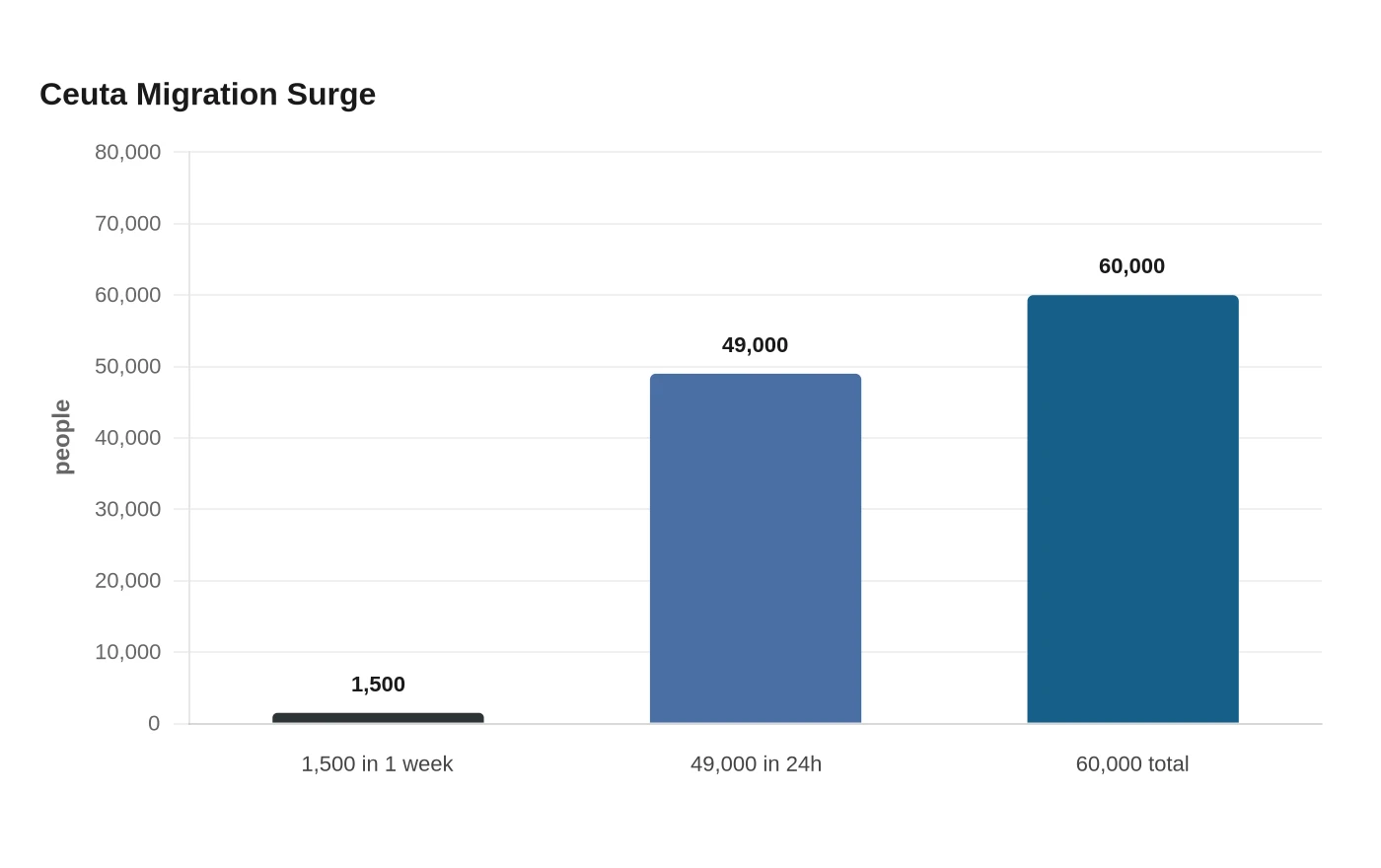
Juan Jesús Vivas warned of an emergency in Ceuta after 1,500 migrants arrived in one week, as Spain moved troops into the North African enclave and said the surge from Morocco had begun to reverse. The Spanish government said about 49,000 people crossed into Ceuta in 24 hours in July, and later put the total at roughly 60,000 during the border rush.
The toll was severe. Reuters reported 57 deaths, while other outlets put the number at least that high and some counted 67. The crisis laid bare how quickly a migration shock in the Strait of Gibraltar can become a test of European politics, border force and the limits of solidarity.

The response was far harsher than in 2015, when Europe sheltered many refugees and more than one million people arrived by sea that year. That earlier wave helped harden European politics and widen the opening for the far right. By 2021, Spain was already speeding up expulsions after a migrant tide from Morocco ebbed, and a study of online reactions to the Ceuta crisis found that VOX played a major role in shaping the discussion, a sign that far-right framing had already moved into the center of migration debate.

The 2026 backlash was broader and more overt. Right-wing politicians across Europe seized on the crisis, and Spain accused some EU partners of responding in a “selfish”, “polarising” and “unlawful” way. The political pressure landed on Pedro Sánchez, long seen as pro-immigration, who now faced the toughest challenge of his premiership as opposition parties used the surge to attack his migration policy.
Reuters said rumors on social media and economic hardship helped fuel the mass crossing, tying the episode to conditions far beyond the border fence. In Ceuta, a Spanish exclave on the Moroccan coast, the crisis once again fused border control, EU burden-sharing and domestic competition into one political fight, with far-right rhetoric no longer confined to the margins of the debate.
Sources
- [1]nytimes.com
- [2]reuters.com
- [3]revistas.comillas.edu
- [4]ifo.de
- [5]npr.org
- [6]politico.eu
- [7]euronews.com
- [8]bbc.com
- [9]dw.com