Technology
Evoworks Evo75 brings premium wireless typing in a compact 75% board

The Evoworks Evo75 is built for people who want a compact keyboard that feels expensive before they even touch a key. It combines a CNC 6063 aluminum case, a stainless-steel weight, and tri-mode connectivity in a 75% layout, then adds a mounting system tuned for softer, more deliberate typing. The result is a board that serves work, travel, and desk aesthetics at the same time, while still leaving room for serious customization.
A compact 75% board with premium hardware
The Evo75 follows the earlier Evo80, but it lands in a more practical size for mainstream desks. A 75% layout keeps the function row and navigation cluster while trimming the footprint, which makes it easier to fit beside a mouse without giving up essential keys. That balance is a big part of its appeal: it looks premium, but it is not trying to be a showpiece that sacrifices usefulness.
Its construction explains why it stands out. The CNC 6063 aluminum case gives it the dense, machined feel associated with much more expensive custom keyboards, while the stainless-steel weight adds mass and stability. Those are not cosmetic details. They affect how the board sits on the desk, how it sounds, and how planted it feels during long typing sessions.
What the Evo75 is actually for
This is a keyboard for people who care about typing feel first, but who do not want to give up wireless convenience. The Evo75 supports USB-C, Bluetooth, and 2.4GHz wireless, so it can live on a desk as a work board, then move to a laptop setup or a cleaner cable-free arrangement without changing hardware. For anyone balancing office use, home use, and occasional gaming, that flexibility is a major part of the value proposition.
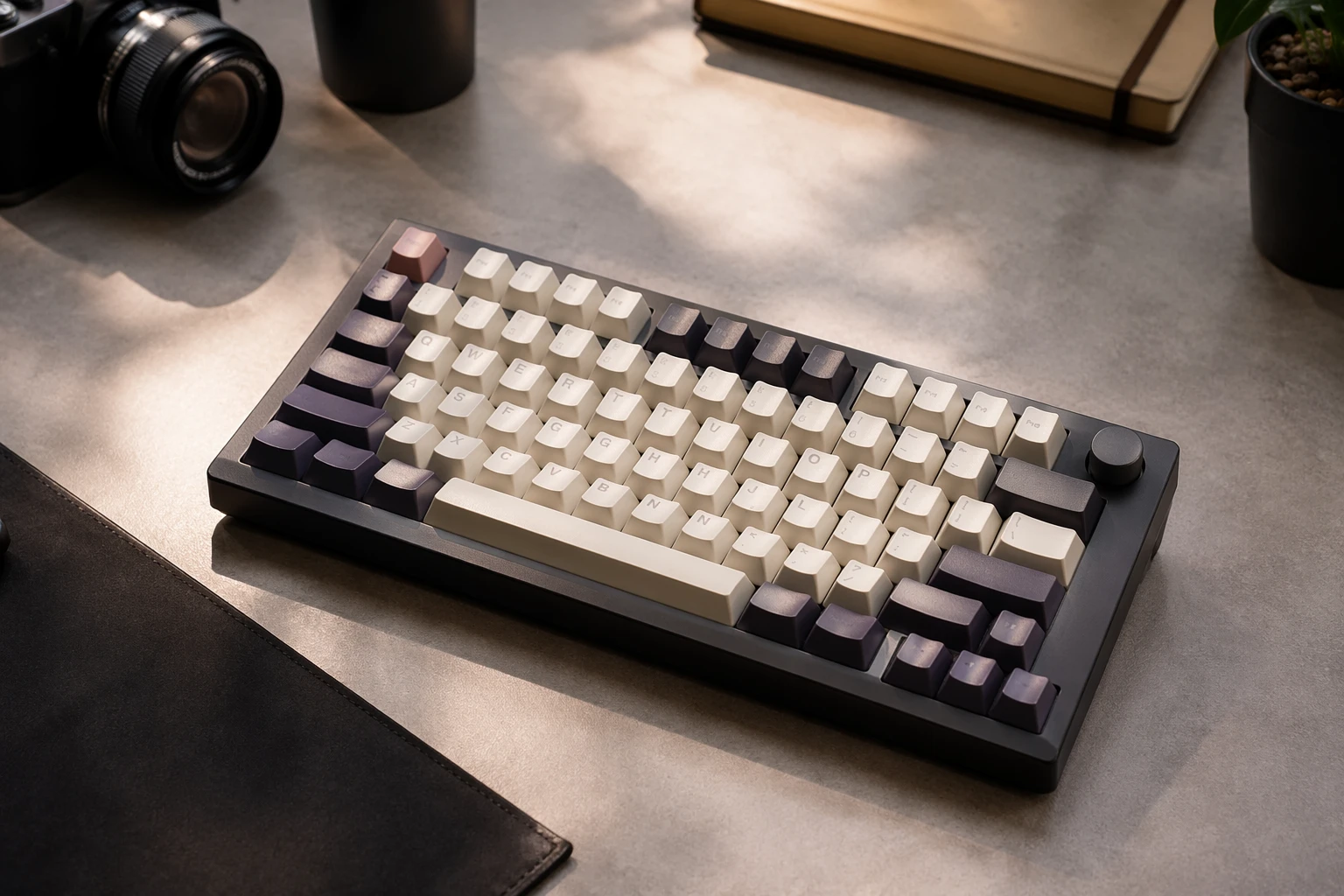
It is also a board for buyers who want a finished product rather than a project. The Evo75 is sold as a prebuilt keyboard, which means the case, mounting, PCB, and tuning are already assembled around a specific experience. That makes it especially appealing to users who want premium typing without spending weekends sourcing parts, tuning stabilizers, or experimenting with foam stacks.
The two tuning paths define its personality
Where the Evo75 becomes especially interesting is in its two main builds. One version pairs an FR4 plate with Amber switches for a brighter, more articulate sound. The other uses a PP plate with Rye switches for a deeper, more muted thock. Those are not just minor variations. They change the character of the board enough that the choice says something about what you want your keyboard to do.
The FR4 and Amber setup leans toward clarity and precision. It is the more obvious match for work, especially if you want each keystroke to feel crisp and present. The PP and Rye version is more about warmth and restraint, with a sound profile that feels calmer and more heavily damped. If the first build is about definition, the second is about atmosphere.
Why the mounting system matters
The Evo75 uses a butterfly leaf-spring mounting system with triple-layer shock absorption, and that is one of the main reasons reviewers have described it as unusually refined out of the box. Instead of delivering a rigid, flat typing feel, the mounting system introduces a little give, which softens bottom-out impact and creates a more cushioned response. For mainstream readers, that translates to less harshness and more comfort during long sessions.
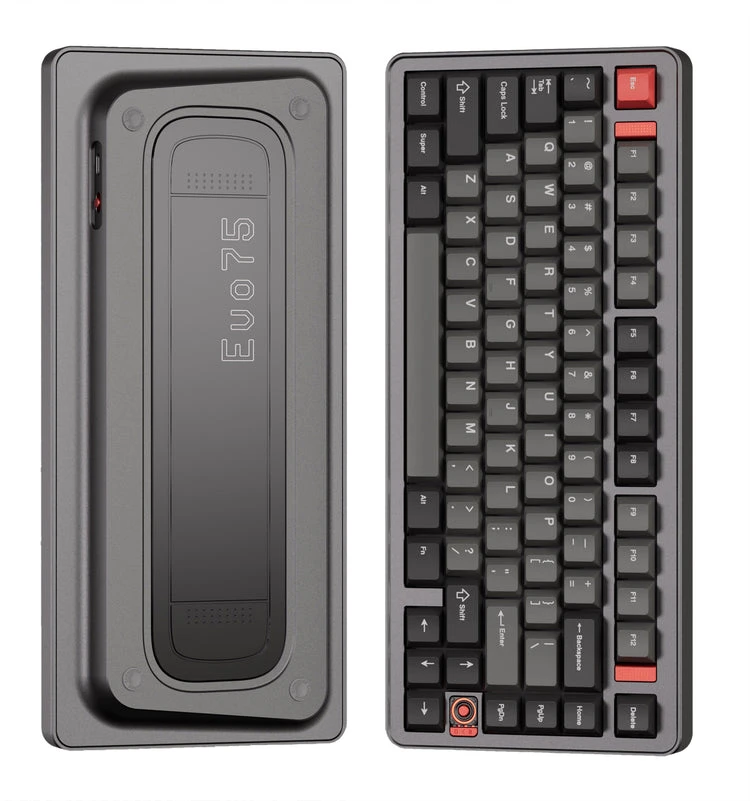
It also helps the Evo75 separate itself from cheaper prebuilt mechanical keyboards. Many boards can sound good in isolation, but the Evo75’s mounting design aims for consistency across the whole typing surface. That matters whether the board is being used for writing, coding, or daily office work, because a stable feel across keys is part of what makes a keyboard feel genuinely premium.
Repairability and customization are built in
A premium board is not always easy to open, but the Evo75 avoids that trap. Review coverage highlighted its tool-free ball-catch disassembly and magnetic connectors, which make it far easier to open than its metal construction might suggest. That is a practical advantage for anyone who wants to swap switches, change the plate feel, or maintain the keyboard over time.
The hot-swap PCB and VIA/QMK support push that same logic further. Hot-swap makes switch changes straightforward, while VIA and QMK support give the Evo75 a level of configurability that matters to power users. You can remap keys, adjust layers, and tailor the board without treating it like a sealed appliance. In a market full of attractive but inflexible keyboards, that is a meaningful distinction.
How it compares with the Evo80 philosophy
As the successor to the Evo80, the Evo75 looks like Evoworks refining its formula rather than reinventing it. The earlier model established the brand’s premium direction, while the Evo75 tightens the experience around a more compact 75% format and a more focused acoustic identity. Ticktype also notes that the Evo75 uses a single-layout ANSI PCB choice to improve acoustic consistency, which suggests the company is prioritizing a controlled, repeatable sound rather than chasing endless layout variation.

That choice tells you who the board is for. The Evo75 is not trying to be the most modular keyboard on the market. It is trying to be a polished one, where the layout, sound, and feel are already aligned. For buyers who value coherence over tinkering, that is a strong tradeoff.
Price and buying case
Retail listings place the Evo75 around $150 to $179, depending on seller and configuration. That puts it in the premium prebuilt category, but not in the extreme upper end of custom mechanical keyboards. One review published September 12, 2025 described it as an "elegant" 75% tri-mode wireless keyboard and said its design and tuning deliver an exceptional typing experience, which captures the basic appeal well: it feels more refined than its price might suggest.
Divinikey lists the Evo75 as a fully built 75% keyboard with a tri-mode PCB, stainless-steel weight, and butterfly leaf-spring structure, with a preorder ship date of July 2026. Mechanical Keyboards likewise emphasizes the USB-C, Bluetooth, and 2.4GHz connection set, along with the quick-release ball-catch design and leaf-spring mount. Taken together, those listings show a product aimed at buyers who want premium materials, easy maintenance, and wireless versatility in one package.
In practical terms, the Evo75 is the right buy if you want one keyboard that can do almost everything well: work, casual gaming, desk presentation, and long-term customization. The FR4 and Amber configuration suits users who want sharper feedback and a more animated sound. The PP and Rye build is the better fit for anyone who wants a deeper, calmer board that feels more subdued and luxurious. Either way, the Evo75 sells the same idea clearly: premium value does not have to mean choosing between beauty, utility, and repairability.
Sources
- [1]theverge.com
- [2]kbd.news
- [3]divinikey.com
- [4]mechanicalkeyboards.com
- [5]qwertykeys.com
- [6]ticktype.com
- [7]milktooth.com