World
Explosion at Chinese Fireworks Factory Leaves 26 Dead
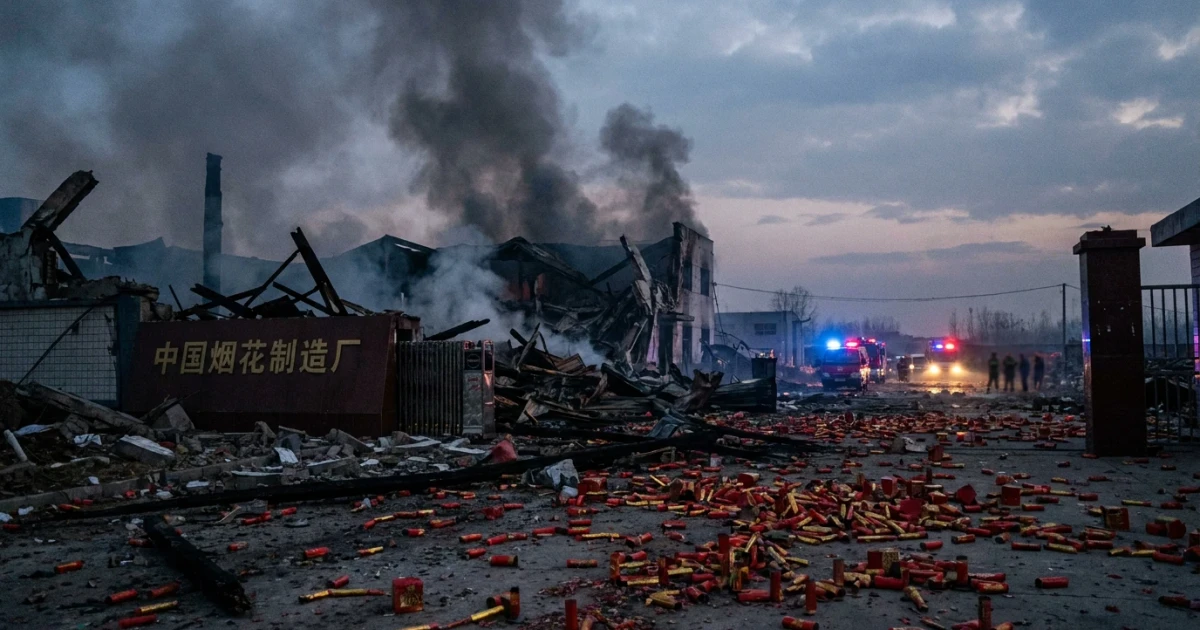
A deadly explosion at a fireworks factory in China has claimed at least 26 lives and left dozens more injured, according to reports from AP News and the BBC. The incident, which unfolded on May 5, 2026, once again highlights ongoing concerns about workplace safety in China’s large-scale fireworks industry.
Details of the Incident
The explosion occurred in a fireworks manufacturing plant, a sector well-known in China for both its economic significance and its occupational hazards. While authorities have not yet released the names of the victims or the precise cause, initial reports confirm that more than two dozen people were killed and dozens more sustained injuries, some of them serious enough to require urgent hospital care.
- Fatalities: At least 26 workers confirmed dead
- Injuries: Dozens, with numbers expected to rise as rescue efforts continue
Local emergency response teams were dispatched to the site to extinguish the fire and assist survivors. While the factory's location has not been publicly disclosed, such plants are typically situated in rural regions where fireworks production is a longstanding industry.
Fireworks Industry and Safety Record
China is the world’s largest manufacturer and exporter of fireworks, but the industry has faced repeated scrutiny for safety lapses. According to China’s Ministry of Emergency Management, industrial accidents remain a persistent issue, with hundreds of work safety incidents reported annually across sectors. The fireworks sector is particularly high-risk, due to the handling of explosive materials in often crowded and under-regulated facilities.
Statistics show that China has experienced hundreds of fatal industrial accidents per year over the past decade. Fireworks factories have been the site of some of the most devastating incidents, with explosions causing mass casualties and significant economic loss.
Historical Context and Regulatory Efforts
Research published in the Analysis of Firework Factory Accidents in China (2000–2017) highlights that the majority of such accidents are due to inadequate safety measures, poor training, and violations of operational protocol. The Chinese government has, in recent years, attempted to tighten regulations, including mandatory shutdowns for non-compliant factories and increased inspections. However, enforcement remains inconsistent, especially in remote and economically dependent regions.
Broader Impact and Ongoing Risks
While official investigations into the latest explosion are underway, the tragedy underscores the continued risks facing workers in hazardous industries. The International Labour Organization provides data on occupational accidents globally, showing that China’s industrial sector has higher rates of workplace fatalities compared to many developed economies.
In addition to the immediate human toll, such incidents often lead to temporary shutdowns, economic losses for local communities, and renewed calls for safety reforms. The United Nations Economic Commission for Europe’s Manual on Fireworks outlines international best practices, but local adoption and compliance remain challenges in China’s vast and decentralized industry.
Looking Ahead
As authorities continue rescue and recovery efforts, the focus will inevitably shift to accountability and prevention. The recurring nature of such disasters suggests that more robust enforcement of safety regulations and better training are necessary to protect workers. For now, families and communities are left to mourn the latest victims of one of the world’s most hazardous industries.