Business
Extended-range electric vehicles aim to cut costs and boost adventure appeal
Extended-range electric vehicles are moving from curiosity to strategy because automakers see a market that still wants electric driving, but not electric-only risk. U.S. new EV sales fell 27% in the first quarter of 2026 to 216,399 units, and market share held at 5.8%, even as public charging reached 253,700 ports nationwide and home-charging costs climbed to $63 over the prior 30 days, according to industry and government data.
That gap helps explain why EREVs are back. McKinsey describes them as a series setup in which a small gasoline engine acts as a generator rather than directly driving the wheels, with typical electric range of 100 to 200 miles, well above the 20 to 40 miles common in plug-in hybrids. BloombergNEF says range-extender EVs are a variant of plug-in hybrids with an onboard generator, and warns that their growing share uses smaller batteries than battery-electric vehicles, slowing battery demand growth.
Ram has already made the shift explicit. Stellantis said it pulled launch timing for the range-extended Ram 1500 REV ahead of the pure battery-electric version because of overwhelming consumer interest and slowing demand for half-ton BEV pickups. The truck is targeted for up to 690 miles of total range, including 145 miles on battery power, with a 92-kWh pack, a 130-kW generator, 663 horsepower and more than 615 pound-feet of torque.
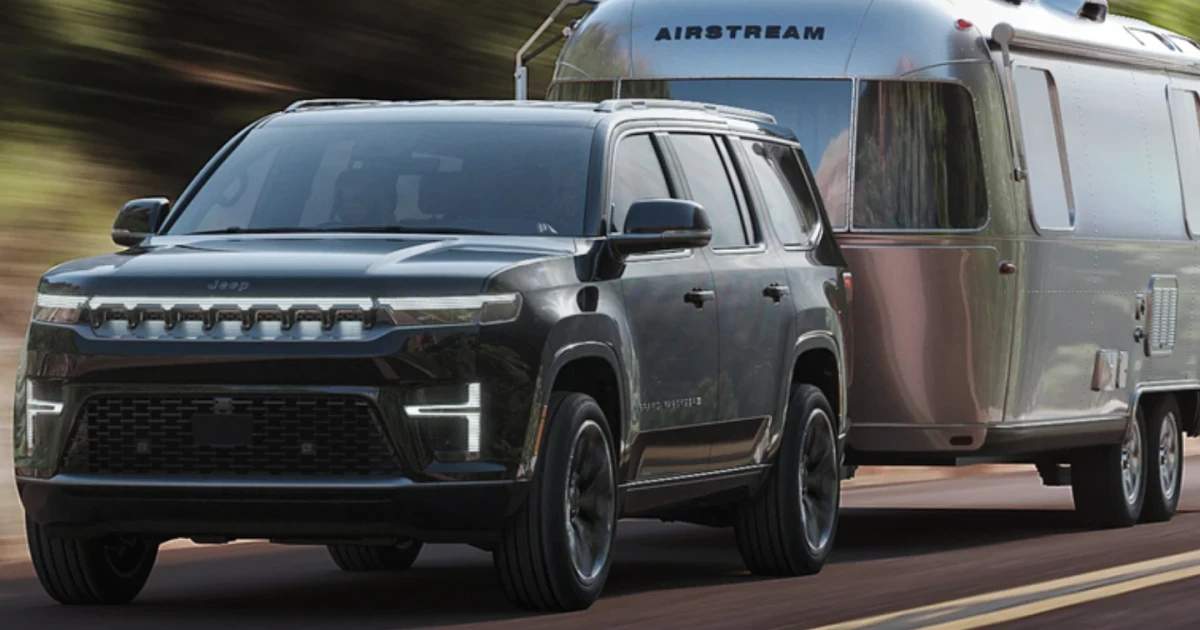
Jeep is following with the 2026 Grand Wagoneer REEV, which Stellantis says will be America’s first range-extended electric SUV application and will start under $65,000. The model uses a liquid-cooled 92-kWh battery pack and is estimated at 647 horsepower, while keeping the full-size SUV’s 4x4 and luxury credentials intact. Scout Motors is taking the same logic to its Traveler SUV and Terra truck, targeting initial production in 2027, entry pricing under $60,000 and a Harvester version with about 150 miles of electric driving and more than 500 miles combined.
For buyers, that makes EREVs a practical bridge: electric torque for commuting, a gasoline fallback for towing, long weekends and cold-weather travel, and lower battery requirements than a full EV. For the industry, the bigger question is whether that bridge pulls more Americans into electrification or gives them a comfortable stopping point before the all-electric transition is complete.
Sources
- [1]nytimes.com