US News
FAA Chief Defends Safety While Citing Inefficiency in Outdated Air Traffic System
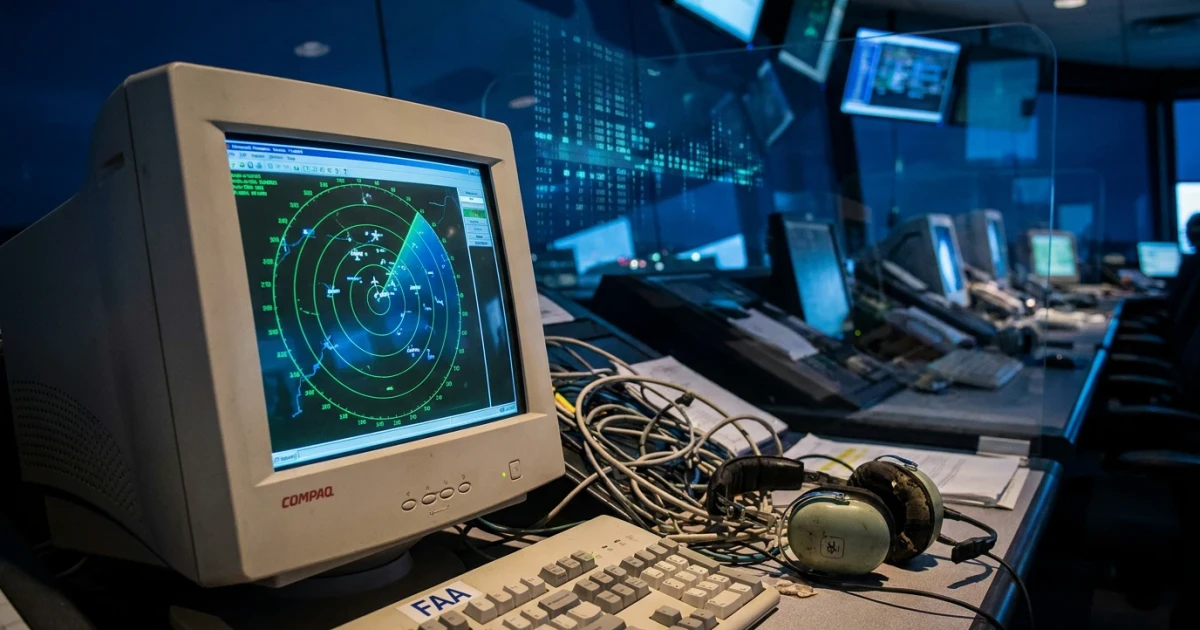
Millions of U.S. passengers rely on the Federal Aviation Administration’s air traffic control system every day, but the agency’s leader recently admitted that core operations still run on decades-old Compaq computers—raising questions about performance, safety, and the urgent need for modernization.
Outdated Technology Still Ensures Safety
During a recent briefing, the FAA administrator addressed concerns about the use of legacy Compaq computers to manage the nation’s airspace. Although these systems have been in service for many years, the FAA chief emphasized that safety remains uncompromised, echoing the agency’s long-standing commitment to keeping the skies secure for commercial and private aviation.
- The U.S. air traffic control system handles more than 45,000 flights per day, according to official FAA statistics.
- Despite the advanced age of much of its hardware, the system has maintained a strong aviation safety record over the past decade.
Efficiency Challenges with Legacy Systems
While the safety record remains robust, the FAA head acknowledged that relying on outdated Compaq computers comes with significant drawbacks in terms of operational efficiency. These legacy systems limit the speed and flexibility with which controllers can respond to changing air traffic patterns, weather events, or emergencies.
- The current technology slows down routine processes, from flight plan adjustments to communications between control centers.
- Controllers must often use workarounds or manual interventions when computer systems lag or fail to process data quickly.
Industry experts and government watchdogs have previously noted that the inability to rapidly upgrade hardware and software makes the system less resilient to future demands, particularly as air traffic continues to grow and new types of aircraft, such as drones and air taxis, enter the national airspace.
Modernization Efforts and Next Steps
The FAA is not unaware of these challenges. For years, the agency has been working on the NextGen modernization program—an ambitious effort to upgrade infrastructure, adopt advanced radar and satellite-based navigation, and replace outdated hardware with more efficient systems. According to the FAA’s air traffic control modernization fact sheet, NextGen has already delivered measurable improvements in delay reduction and fuel efficiency, but large portions of the system remain dependent on legacy computers.
As the FAA head noted, balancing safety with efficiency means investing further in technology upgrades while maintaining strict operational standards. The agency is under increasing pressure from airlines, pilots, and consumer advocates to accelerate these efforts, especially as air travel demand rebounds and new technological challenges emerge.
Looking Forward
Despite the reassuring safety record, the admission that air traffic control still depends on aging Compaq computers highlights the urgent need for continued investment and modernization. As the FAA moves forward, the challenge will be to update critical infrastructure without disrupting the safety and reliability on which millions of passengers depend every day.