Technology
FAA moves air taxis toward real-world certification and operations
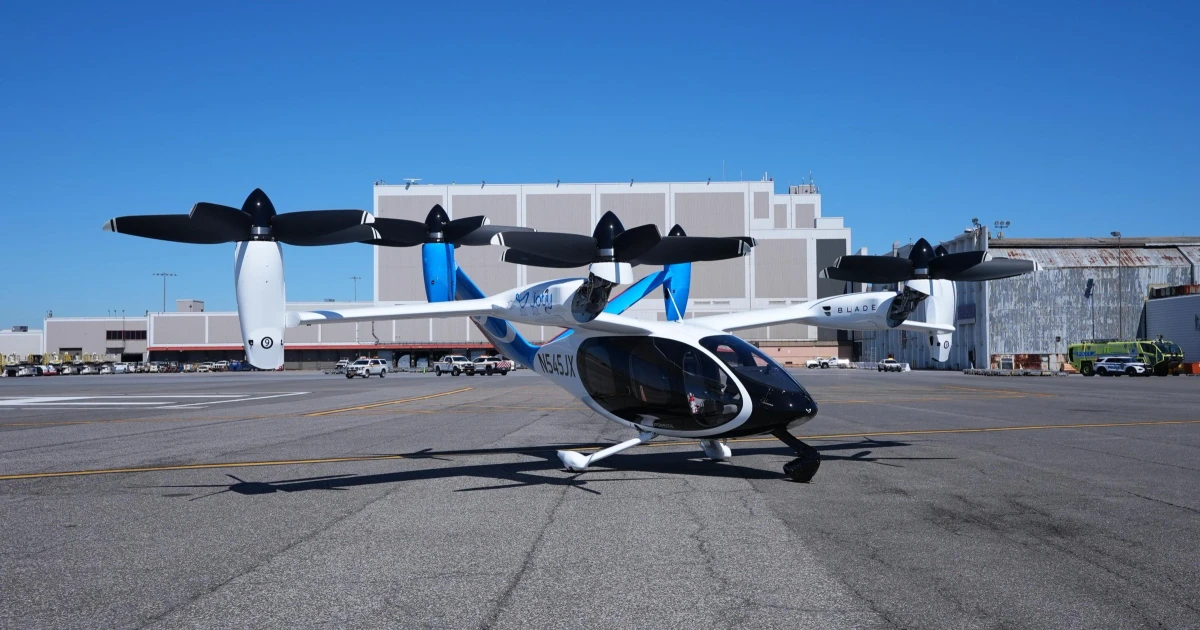
The glossy promise of air taxis is running into something far less cinematic and far more ative: federal aviation rulemaking. The Federal Aviation Administration is not treating these aircraft as futuristic sketches anymore, but as vehicles that must fit into a real certification and operations pipeline.
What the FAA is actually regulating
The agency uses the term Advanced Air Mobility, or AAM, for a transportation system built around advanced technologies, including electric aircraft and electric vertical takeoff and landing aircraft. In FAA language, many of these aircraft fall into the powered-lift category, and that is why they are so often described as air taxis.
That distinction matters because the FAA is not only discussing aircraft design. It is also defining how these vehicles move people and cargo between two points in controlled and uncontrolled airspace, which means the debate has shifted from concept renders to the mechanics of everyday operation.
Why this is more than a prototype story
The FAA has already issued a final rule that creates permanent amendments and a Special Federal Aviation Regulation lasting 10 years to facilitate powered-lift pilot certification and clarify operating rules. The agency has also published advisory material explaining how powered-lift aircraft will comply with parts of the federal aviation regulations, a sign that the system is being built for actual use rather than endless demonstration.
That is the central reality check for the air-taxi industry. The question is no longer whether the technology can be imagined, but whether aircraft, pilots, airports, and regulators can all align under a workable rulebook. If that process stalls, the industry does not become mass transit by default, it risks settling into a narrow premium service, or remaining forever in the category of promise.
The certification path is the real battleground
In June 2024, the FAA and the European Union Aviation Safety Agency said they had reached a significant milestone on the path to certifying eVTOL aircraft. FAA planning material has gone further, describing first eVTOL certification as expected in 2025 and projecting a $30 billion AAM market by 2030.

Those figures are not just a commercial forecast. They show how tightly the industry’s future is tied to regulatory approval. A market that large attracts capital, lobbying, and competition, but it also raises the stakes for safety, pilot training, operational rules, and public accountability.
The FAA’s powered-lift framework also shows how the agency is trying to avoid improvisation. By creating a ten-year SFAR and permanent amendments at the same time, it is building a bridge from experimentation to regularized operations. That is essential for any transportation system that claims it can move people at scale.
Why public interest depends on who gets access
Industry materials tied to this regulatory push emphasize benefits such as reduced congestion, improved connectivity, and emergency or medical transport uses. Those uses matter because they suggest air taxis could serve more than affluent travelers if the system is built with public purpose in mind.
But the social stakes are bigger than convenience. If the aircraft are priced like luxury services, then the benefits will concentrate among people who can already buy speed. If policymakers, airports, and operators treat them as part of a broader mobility network, they could support underserved routes, time-sensitive medical transfers, and better regional access.
That is why the conversation belongs in public health and social equity as much as in aerospace. Transportation determines who reaches hospitals, who can commute across fragmented metro regions, and which communities are left waiting while innovation lands elsewhere.
Infrastructure is becoming the next gatekeeper
The FAA says AAM infrastructure planning is already underway, and in 2026 it published an initial services assessment of eVTOL operations at Orlando International Airport. That is an important shift because it means the agency is now testing how these aircraft might fit into real airport environments, not just controlled demo flights.

Infrastructure is where the industry meets daily life. Airports, airspace coordination, charging or support systems, and operating procedures all have to work together if these vehicles are going to move beyond a few showcase routes. The Orlando assessment shows that the FAA is moving from theory into operational planning, one airport at a time.
This is also where the public will judge whether air taxis are serious transportation or a branded novelty. A concept can win applause at a trade show; it has to prove itself in the routines of actual service, with schedules, procedures, and oversight that ordinary passengers can trust.
The hype cycle has already happened before
Air-taxi enthusiasm is not new. In 2017, The Verge reported that Uber’s flying-car ambitions included a plan to bring the project to Los Angeles by 2020. The following year, it covered Volocopter’s first U.S. flight at CES while noting that the market was already crowded with major names and funding.
That history is a warning against tech futurism that moves faster than institutions can absorb it. Companies have promised airborne mobility for years, but the timeline has repeatedly collided with certification, safety, and the slow work of rulemaking. The current FAA push is a reminder that aviation does not reward hype alone.
What to watch next
The next phase will be defined less by splashy unveilings than by whether aircraft can clear the regulatory path the FAA is laying out. Powered-lift pilot certification, operating rules, airport integration, and eVTOL certification will decide whether these aircraft become a practical layer of mobility.
If the system works, the public could gain new options for congestion relief, connectivity, and time-critical transport. If it does not, air taxis may remain a symbol of an industry that was always better at inspiring headlines than moving ordinary people.
Sources
- [1]theverge.com
- [2]faa.gov