Science
Falcon 9 Stage Set for High-Speed Lunar Impact
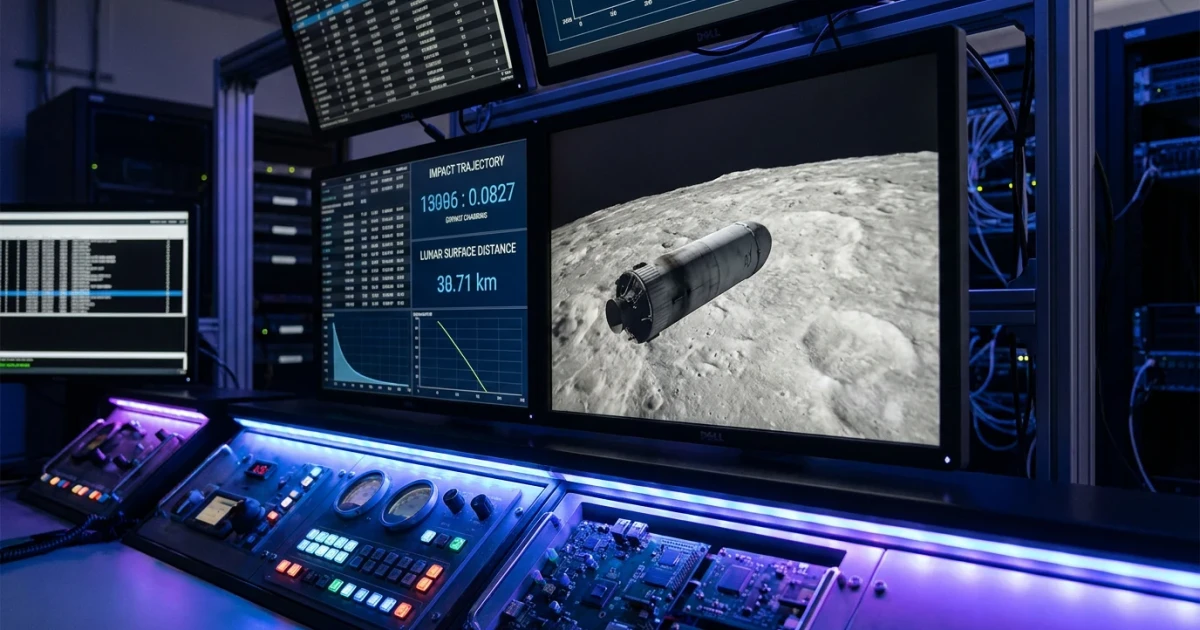
A Falcon 9 rocket stage from SpaceX is on course to strike the Moon this summer, marking a rare event in space exploration and debris management. According to Ars Technica, the impact will occur at approximately seven times the speed of sound, highlighting both the power of modern launch vehicles and the growing concern over space debris beyond Earth's orbit.
Unintended Lunar Collision
The Falcon 9, a workhorse of commercial spaceflight, is known for its reliability and frequent missions. However, a spent second stage, left in orbit after a past mission, is now projected to crash into the lunar surface. Tracking data, as referenced by Ars Technica, indicates the rocket will hit at extreme velocity, estimated to be about seven times the speed of sound. For context, this equates to speeds exceeding 2,400 meters per second—a figure corroborated by physics reference materials such as the American Meteor Society’s fireball impact explainer.
Technical Details and Impact Analysis
The Falcon 9 rocket is designed for both crewed and cargo missions, with its second stage often left in orbit when a mission does not require deorbiting. The upcoming lunar impact is unusual, as most spent stages either burn up in Earth's atmosphere or remain in orbit. Previous lunar impacts have been documented by NASA’s Lunar Reconnaissance Orbiter, which tracks artificial and natural craters, allowing scientists to analyze the effects of such collisions on the Moon’s surface.
- Impact Speed: Approximately seven times the speed of sound, or over 2,400 m/s
- Rocket Specifications: Falcon 9 second stage, weighing several tons (see NASA Falcon 9 Payload User’s Guide for technical details)
- Lunar Impact Crater: Expected to create a new crater, adding to the catalog of artificial impact sites maintained by the International Astronomical Union
Space Debris and Lunar Science Implications
This event underscores the broader issue of space debris, especially as humanity’s activity extends beyond low Earth orbit. The European Space Agency’s statistics reveal that objects like spent rocket stages increasingly pose risks not only in orbit, but also to celestial bodies such as the Moon. While accidental impacts can provide scientific opportunities—helping researchers study subsurface materials and impact dynamics—they also raise questions about long-term stewardship of space environments.
Tracking and Predicting the Impact
Trajectory predictions for the Falcon 9 stage rely on databases like NASA JPL’s HORIZONS System, which enables scientists to follow objects ranging from asteroids to spent rocket stages. This allows precise forecasting of impact sites and times, which is crucial for lunar science missions and potential future lunar infrastructure.
Looking Forward: Managing Debris Beyond Earth
As more launches occur and lunar exploration accelerates, the challenge of managing spent rocket stages and other debris will intensify. Scientists and policymakers are increasingly calling for improved tracking, end-of-life plans for spacecraft, and sustainable practices to protect both Earth's orbit and the Moon. The upcoming Falcon 9 impact serves as a reminder of the intersection between technological progress and environmental responsibility in space.
While the collision will likely leave a small crater, it offers an opportunity for lunar scientists to study impact dynamics and for space agencies to refine debris tracking methods. Observations from missions like the Lunar Reconnaissance Orbiter may yield insights into the aftermath, further informing future lunar missions.
Ultimately, the Falcon 9 stage's high-speed lunar impact is a striking illustration of the expanding footprint of human activity in space—and the need for careful management as exploration continues.