World
Family mourns Indian sailor killed in U.S. strike off Oman

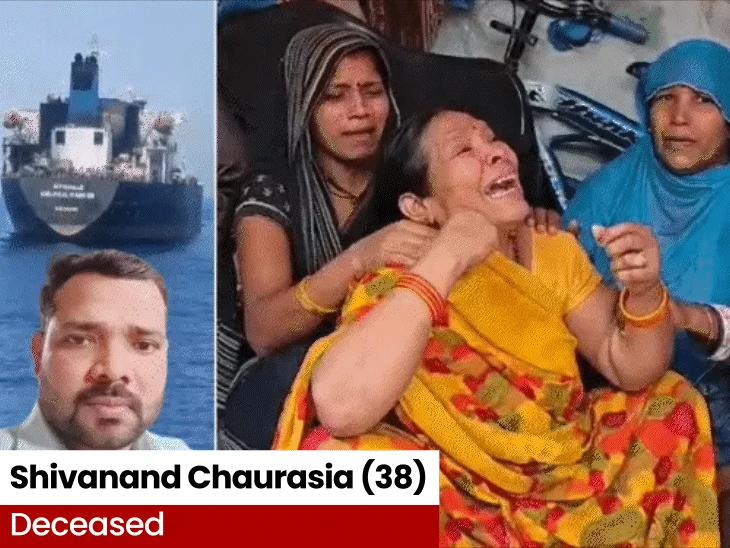
Families in Deoria, Uttar Pradesh, were left grieving over a call from the Gulf of Oman that changed everything. Sushila Devi sat sobbing on the floor after being told her husband, Shivanand Chaurasia, had been killed in a U.S. strike on the Palau-flagged tanker MT Settebello, turning one sailor’s death into a raw reminder of how distant conflicts reach Indian homes.
Chaurasia, 37, worked as a fitter or welder and had been away from home for about eight to nine months. Relatives said he last spoke with his family two days before the strike and told them everything was fine. His father, Ramji Chaurasia, said he learned his son had been killed after being told a bomb had been dropped on the ship. The family in Surauli village, in Deoria district, included his wife, two children and parents, and he was the sole earner for the household.
The tanker carried 24 Indian mariners when it was hit. U.S. Central Command said the strike occurred at 11:14 p.m. on June 9, 2026, and that an aircraft fired precision munitions into the vessel’s engine room after the crew repeatedly failed to comply with directions from American forces. India’s foreign ministry summoned U.S. deputy chief of mission Jason Meeks for the second time in three days, saying it had deep concern over the use of lethal force against civilian shipping and that such actions were unacceptable because they undermined international maritime commerce.
Three Indian seafarers were initially missing after the attack, while Oman rescued 21 others. A separate ship carrying 20 Indian crew was attacked the next day, with no deaths or injuries reported, underscoring how quickly the danger spread across the corridor. Iranian foreign ministry spokesman Esmaeil Baqaei condemned the attacks and offered condolences to the sailors’ families, adding another layer to a dispute already shaped by U.S.-Iran confrontation in the Gulf.
The stakes extend far beyond one tanker. The International Energy Agency says the Strait of Hormuz carried an average of 20 million barrels per day of crude oil and oil products in 2025, through a chokepoint just 29 nautical miles wide at its narrowest point. For India, where seafarers are a crucial export labor force and the second-largest source of ship workers after the Philippines, the deaths landed amid a record year for abandonment: 6,223 seafarers abandoned across 410 ships in 2025, including 1,125 cases involving Indian seafarers, the most of any nationality for a second straight year.
Analyst Brahma Chellaney said India’s response has looked like a routine diplomatic protest and a downplaying of the attacks. For families in Deoria, the issue is more immediate: a wage earner is gone, a household is shaken, and a trade route carrying the world’s oil has become another front line.
Sources
- [1]usnews.com
- [2]centcom.mil
- [3]al-monitor.com
- [4]aljazeera.com
- [5]itfglobal.org
- [6]iea.org
- [7]telegraphindia.com
- [8]indianexpress.com