World
Far-right riots expose Britain’s failed asylum hotel system
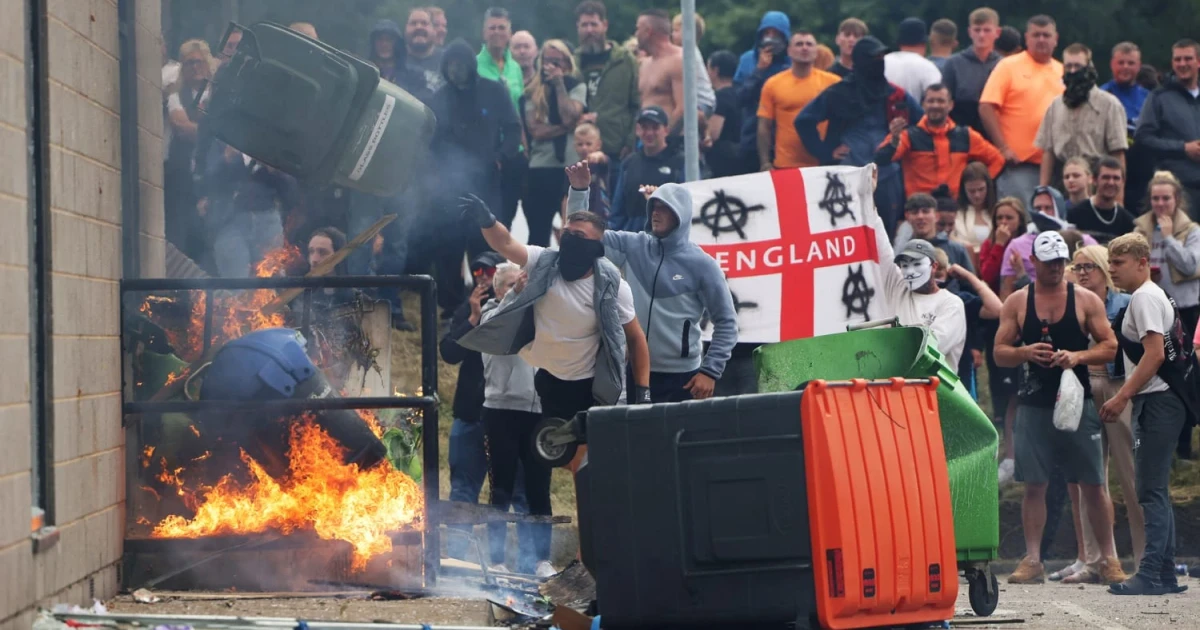
The violence outside a hotel near Rotherham exposed more than a single night of disorder. It showed how Britain’s asylum hotel system has become a target, a symbol and a failure point all at once, with people seeking safety trapped inside a political crisis they did not create. As far-right violence spread across multiple cities, the country was forced to confront how quickly misinformation, fear and weak policy can turn into public danger.
A system built to absorb failure
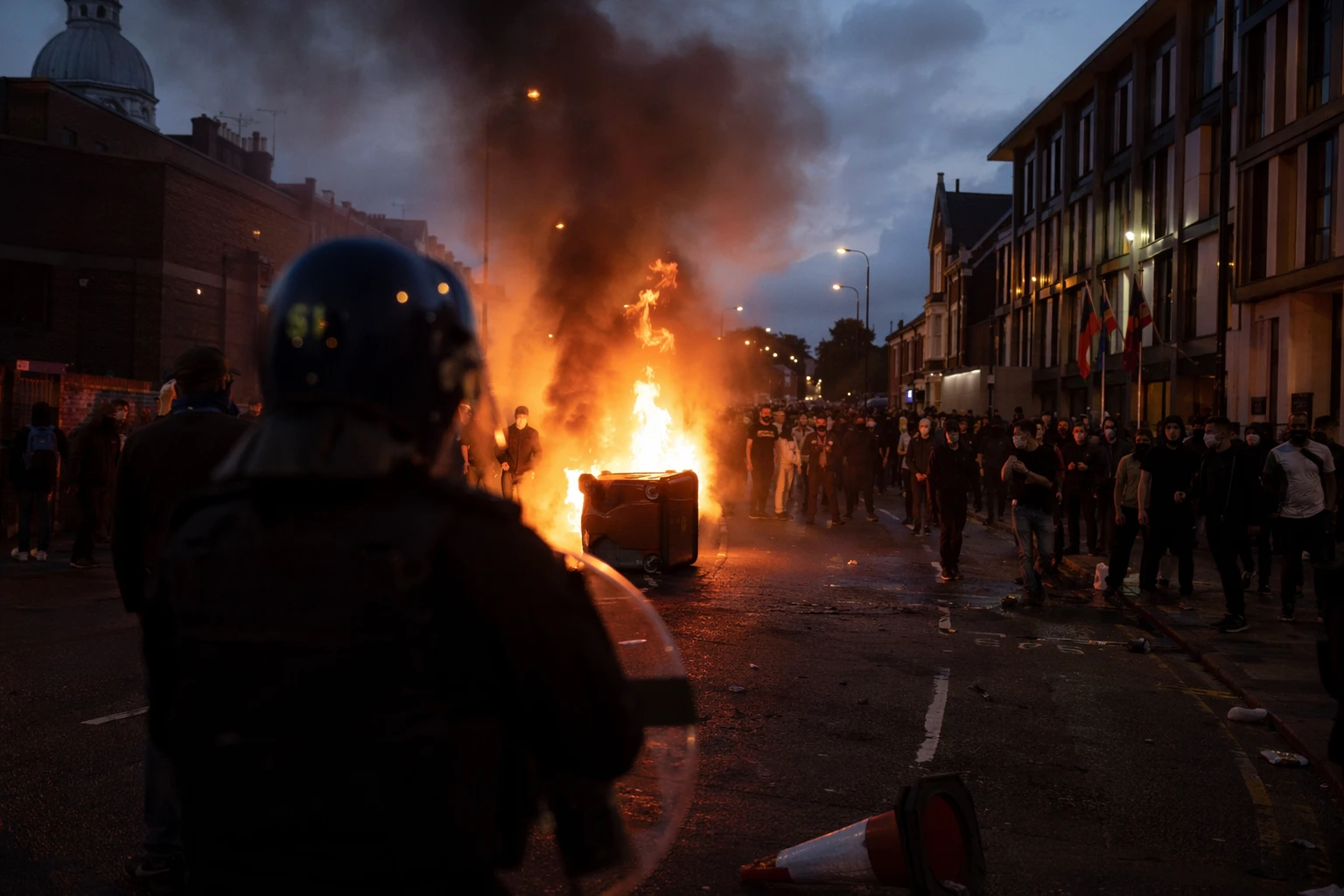
The disorder followed the Southport stabbings of July 29, 2024, and was fuelled in part by online misinformation about the suspect. In late July and early August, far-right anti-immigration riots and protests broke out across Britain, with violence reaching a hotel near Rotherham housing asylum seekers on August 4. Protesters threw bricks, smashed windows, set bins on fire and pushed them toward the building, while more than 200 asylum seekers and 22 staff were trapped inside and 64 officers were injured.
Prime Minister Keir Starmer condemned the violence as “far-right thuggery” and said those involved would face the full force of the law. The unrest spread beyond South Yorkshire to Liverpool, Bristol, Manchester and Belfast, turning a local attack into a national warning about the reach of extremist politics. Later court proceedings treated the Rotherham hotel attack as one of the most serious episodes in the post-war period, and more than 100 people were eventually sentenced in connection with the violence.
Why asylum hotels became such an explosive issue
The scale of the hotel system helps explain why it has become so politically combustible. By the end of June 2024, nearly 29,600 asylum seekers were being housed in hotels across the UK, while 118,900 people were waiting for an initial asylum decision. In Sheffield alone, 266 asylum seekers were in hotels in June 2024, down from 315 a year earlier, and 1,216 asylum seekers were receiving government support, down from 1,356 in June 2023.
Those figures are not abstract. Hotel housing isolates people from community networks and leaves them easier to target, especially when extremists cast them as a threat rather than as people waiting in limbo. Local refugee and sanctuary groups have argued that the system deepens vulnerability by keeping residents disconnected, uncertain and visible in ways that make them convenient scapegoats for far-right activists.
From a public health perspective, that matters. Prolonged uncertainty, crowding and isolation are not just administrative problems; they are stressors that can worsen mental wellbeing and erode any sense of safety or stability. When a housing system leaves people exposed to intimidation at the same time as it keeps them waiting for months on a decision, it turns asylum policy into a social health risk.
Sheffield’s response was built around solidarity
Sheffield did not respond only with alarm. City of Sanctuary Sheffield said it quickly mobilized after the attacks and held a private community response meeting on August 6, 2024 with more than 150 attendees, including Sheffield MPs’ offices, councillors, partner organizations, people seeking sanctuary, hotel residents, activists and campaigners. The group said the meeting centered the experiences of asylum seekers, refugees and communities of color, a deliberate effort to keep the human cost in view rather than letting the debate collapse into headlines about disorder alone.
Sheffield Council and anti-racist groups also organized counter-protests and later public meetings. That response mattered because it challenged the idea that the far right can define the public mood simply by shouting the loudest. It also signaled that community safety is not only a policing issue, but a matter of whether local institutions make room for people who are often spoken about but rarely listened to.
How far-right violence shapes mainstream politics
The deeper lesson is that far-right actors do not need formal power to move the center of political debate. By forcing asylum, migration and Islam to the top of the agenda, they make larger parties react on their terms, often through harsher language, tougher posture and a narrower understanding of what counts as a credible response. A European Journal of Political Research analysis found that far-right influence on mainstream parties’ communication has increased, especially among opposition parties and around issues of Islam and migration.
That agenda-setting power is visible in the British reaction. Starmer’s language focused on law, order and punishment, while local authorities and anti-racist groups were pushed into the defensive task of proving that solidarity can still be organized quickly and publicly. The result is a political climate in which the far right can lose the street battle and still win part of the argument by changing the terms of what everyone else feels compelled to say.
What a serious fix would require
A workable response has to go beyond condemning riots after the fact. It needs fewer people stuck in hotels, faster asylum decisions and a housing system that does not concentrate visible insecurity in ways that invite attack. It also needs protection for local groups that are already doing the labor of mediation, support and public reassurance when the state system is too slow to do it itself.
The lesson from Sheffield is stark. When asylum policy is built around temporary containment rather than dignity and speed, it leaves room for extremists to turn human delay into political spectacle. Britain’s challenge is not only to punish the rioters, but to stop building the conditions that make hotel housing such an easy target in the first place.
Sources
- [1]nytimes.com
- [2]cbc.ca
- [3]thestar.co.uk
- [4]sheffield.cityofsanctuary.org
- [5]theargus.co.uk
- [6]researchgate.net