US News
FBI searches home of Chinese media mogul James Su in Los Angeles
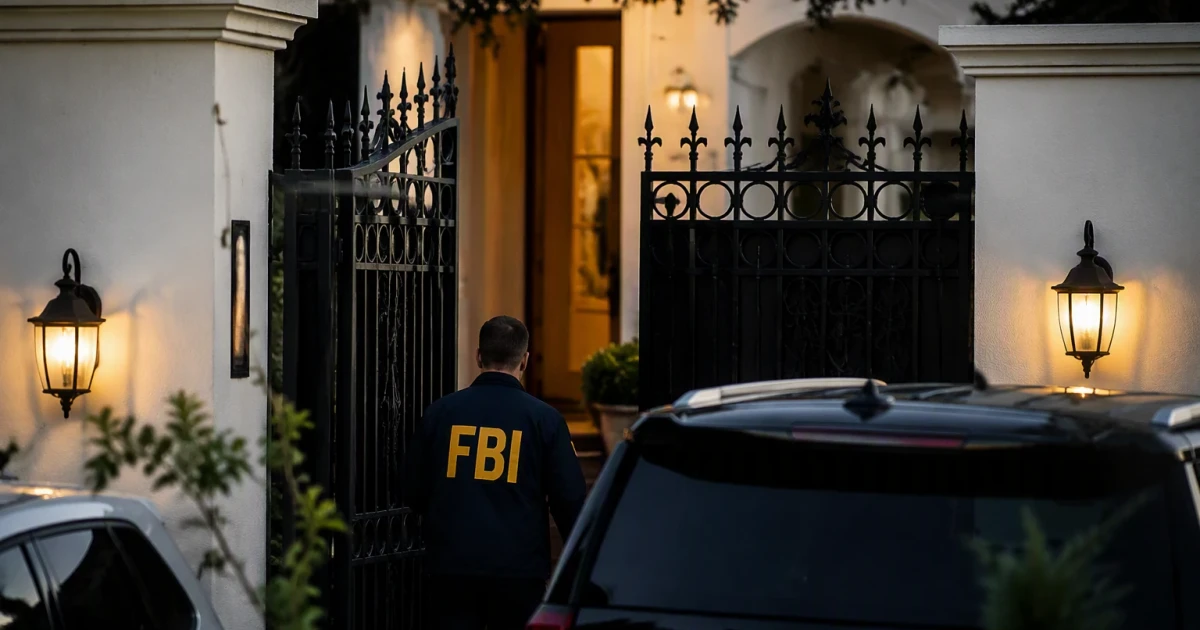
The FBI searched the home of James Su, the West Covina media executive and chairman of the Chinese American Film Festival, placing one of Los Angeles’ best-known Chinese-language media figures under federal scrutiny. The focus of the inquiry has not been disclosed, and investigators have not said whether charges are being considered.
Su built his profile through EDI Media Inc., the company he founded in September 1993 and now leads as founder and CEO. EDI Media says Su is also president of iCiTi News and describes him as the first Chinese American to own and operate a mainstream radio broadcasting channel in the United States. The company lists its West Covina base at 1773 W. San Bernardino Road, Bldg C-31, in a city that sits at the center of a large Chinese-American business and cultural network in the San Gabriel Valley.
His public role extended well beyond the media business. Su has shown up in civic and entertainment circles for years, including a moment when Rep. Judy Chu presented him with congressional recognition. That visibility makes the search notable well beyond one residence in Los Angeles: it touches the intersection of ethnic media, political access, sponsorship money and community leadership that has helped shape Chinese-American public life in Southern California.
The search also landed amid a broader round of FBI activity in the region. Local reporting in July identified raids at homes and offices tied to San Bernardino County elected officials and a Chinese-language media company, with the search wave involving four men. The names tied to that broader effort included San Bernardino County Supervisor Curt Hagman and Ontario City Council member Jim Bowman, and no arrests had been announced when those searches became public. Lancaster Mayor Rex Parris said the raids were likely looking for Chinese influence schemes.
Su has faced federal attention before. In 2015, Reuters reported on a covert Chinese radio network that involved Su and EDI Media, saying it spanned at least 33 radio stations in 14 countries. After that report, the FCC and Justice Department opened investigations into the California firm, and later U.S. testimony said radio stations in 15 U.S. cities were broadcasting content provided by Chinese state-run media.
That history gives the latest search sharper national-security implications. For Los Angeles’ Chinese-American cultural and business communities, the question is not only what investigators were seeking inside Su’s home, but how far the scrutiny could reach into festivals, media partnerships and political relationships built around his name.
Sources
- [1]latimes.com
- [2]ocregister.com
- [3]sgvtribune.com
- [4]dailynews.com
- [5]dailybulletin.com
- [6]edimediainc.org
- [7]linkedin.com
- [8]reuters.com
- [9]npr.org
- [10]uscc.gov