Business
FCC to vote on ending 39% TV ownership cap nationwide

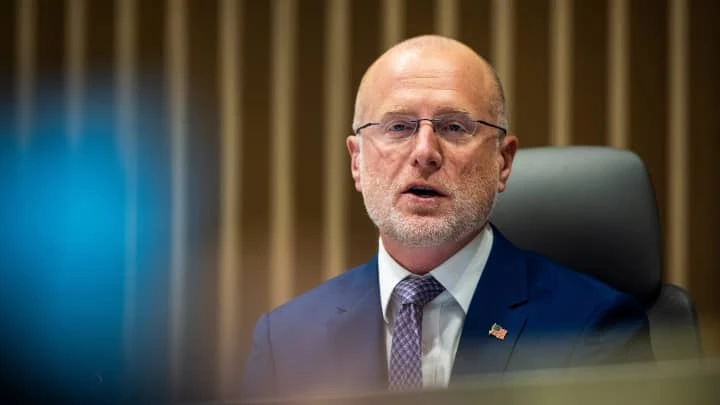
The Federal Communications Commission moved Wednesday to end the 39% national television ownership cap, setting up an August 6 vote that could redraw who owns local TV stations across the country. Chairman Brendan Carr wants the agency to replace the long-standing limit with a case-by-case public-interest review, a shift that would make it easier for the biggest station groups to grow beyond the current ceiling.
Station owners could use scale to bargain harder with networks, advertisers and distributors, but critics say that same scale would concentrate too much power over the news and emergency information that still reaches millions of households through local broadcast stations. The National Association of Broadcasters says the rule is outdated because it restrains broadcasters while streaming and digital rivals face no comparable ownership limits.

Congress set the 39% cap in the 2004 appropriations law and exempted it from the FCC’s normal quadrennial review. The agency also still uses the UHF discount, which counts UHF stations at half of their audience reach for compliance purposes. If the discount remains in place, a single owner could effectively reach as much as 78% of U.S. television households even if the nominal cap stayed at 39%, the Congressional Research Service said.

The FCC’s Media Bureau reopened the record on June 18, 2025, asking whether to modify, retain or eliminate the cap and the UHF discount. On July 23, 2025, the Eighth Circuit vacated the FCC’s Top-Four Prohibition and the related Note 11 expansion.

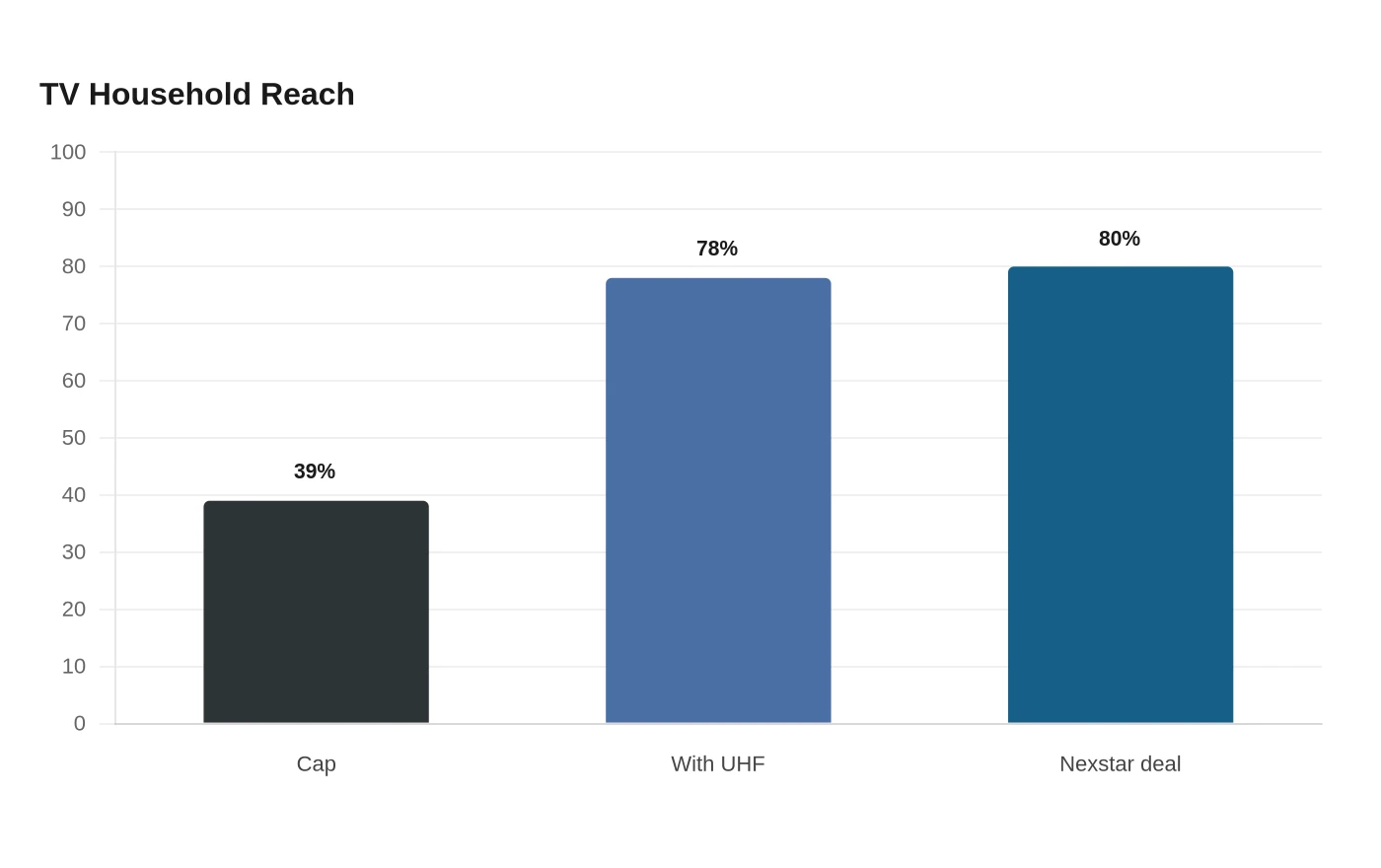
In March, the FCC approved Nexstar Media Group’s $3.54 billion purchase of Tegna by waiving the cap, a deal that would push Nexstar’s footprint to about 80% of U.S. TV households if it survives legal challenge. Carr’s allies say larger groups are necessary to compete with national programmers and digital platforms that can reach viewers everywhere. Opponents, including FCC Commissioner Anna M. Gomez, say the plan would strip local newsrooms, weaken community reporting and raise the cost of the stations people still rely on for breaking news and emergency alerts.
Sources
- [1]usnews.com
- [2]docs.fcc.gov
- [3]congress.gov
- [4]law.justia.com
- [5]nab.org
- [6]cnbc.com