Health
FDA seeks updated testosterone therapy warnings after new evidence review
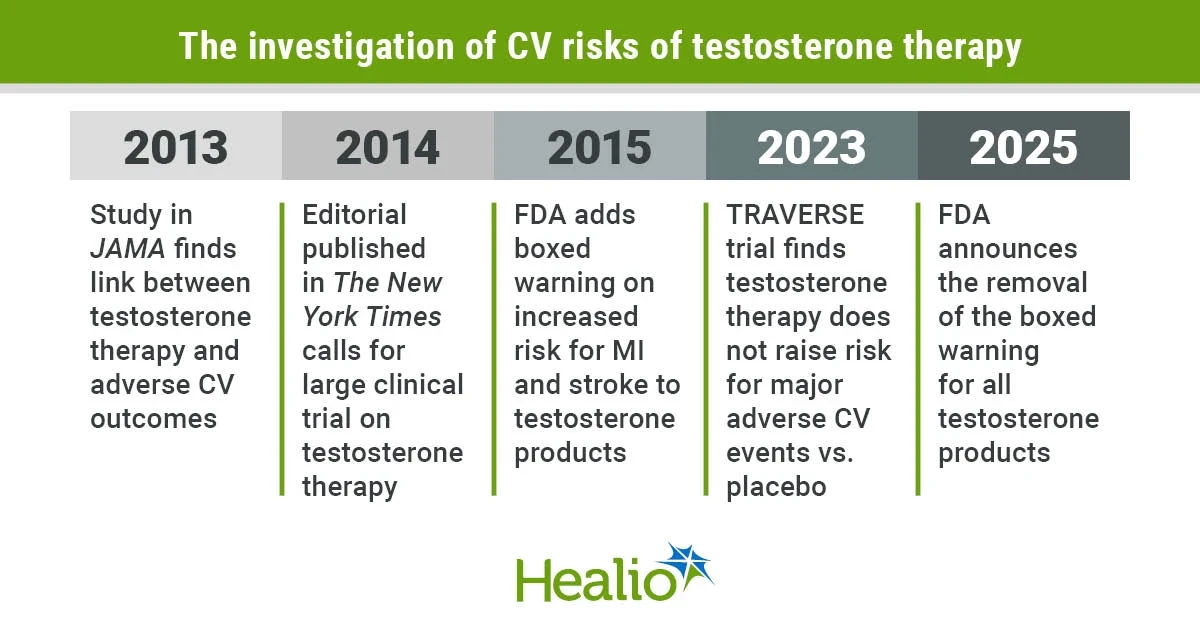
Men taking testosterone therapy could soon see label changes that matter at the pharmacy counter and in the exam room. The U.S. Department of Health and Human Services said on June 18 that the FDA is requesting updated prescribing information for testosterone replacement products after reviewing newer clinical data and existing evidence, including a large trial that found no meaningful rise in major heart events.
The proposed revisions would remove a longstanding limitation saying safety and effectiveness had not been established for men with age-related hypogonadism. They would also narrow a prostate-cancer restriction so testosterone would be contraindicated only in men with metastatic prostate cancer, rather than under the broader warning now in place. HHS said the move was part of a Men’s Health Month effort to put science back at the center of treatment decisions, with Secretary Robert F. Kennedy Jr. saying the updates would give patients and doctors clearer information and Brian J. Christine, assistant secretary for health, saying prescribing information should reflect the best available science.

The new request builds on a 2025 FDA labeling overhaul and on evidence from the TRAVERSE trial, published in 2023 in the New England Journal of Medicine. That study enrolled 5,246 men ages 45 to 80 with symptoms of hypogonadism and either preexisting cardiovascular disease or high cardiovascular risk. Each participant had two fasting testosterone levels below 300 ng/dL and received either daily transdermal 1.62% testosterone gel or placebo. The trial found testosterone was noninferior to placebo for major adverse cardiovascular events, including heart attack and stroke.
The FDA had already moved in a different direction last year by recommending that TRAVERSE results be added to testosterone labels while keeping the age-related hypogonadism limitation at that time and removing boxed-warning language about increased cardiovascular risk. Regulators also required ambulatory blood pressure monitoring studies, first ordered in 2018, and those studies later confirmed class-wide blood pressure increases. That leaves doctors with a more nuanced picture: the strongest signal from TRAVERSE lowers concern about major cardiac events, but blood-pressure monitoring still matters, and researchers continue to watch for possible signals involving venous thromboembolism, atrial fibrillation and acute kidney injury.

The broader policy shift lands in a market where testosterone is already widely used. The American Urological Association says testing and prescriptions have nearly tripled in recent years, and the Endocrine Society reported at ENDO 2026 in Chicago that only a small number of men prescribed testosterone received guideline-concordant diagnostic testing. FDA had also held an expert panel on testosterone replacement therapy for men on Dec. 10, 2025, and the Endocrine Society submitted comments in February, signaling that the agency has been weighing both access and misuse as it redraws the rules around a therapy that remains medically useful, politically charged and still closely watched.
Sources
- [1]hhs.gov
- [2]fda.gov
- [3]pubmed.ncbi.nlm.nih.gov
- [4]nejm.org
- [5]endocrine.org
- [6]auanet.org