Politics
Fed Faces Uncertainty as Powell's Term Nears End
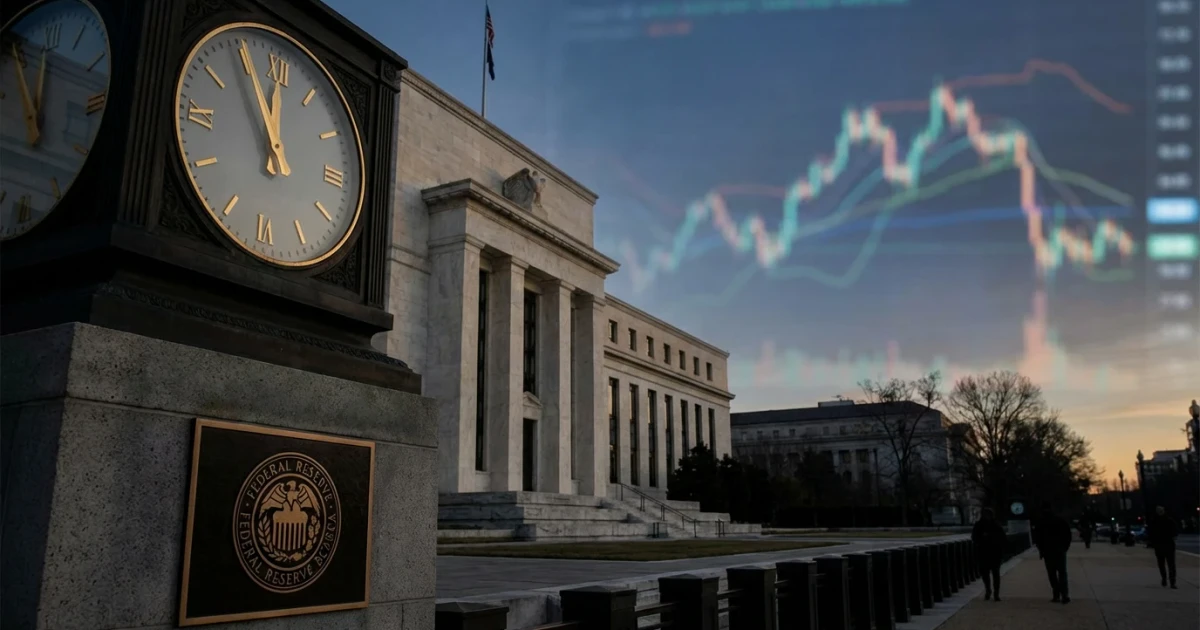
Jerome Powell’s tenure as Chair of the Federal Reserve is in its final months, with the central bank’s leadership transition process facing mounting uncertainty. As the official biography shows, Powell has held the top role since 2018, guiding U.S. monetary policy through tumultuous periods, including the COVID-19 pandemic and a prolonged fight against inflation. Now, with the clock ticking toward his term’s expiration, the path to his replacement remains unclear, raising concerns about policy continuity and market confidence.
Leadership Succession in the Spotlight
According to Reuters, the process for selecting the next Fed Chair is on "shaky ground," with no clear successor or public nomination from the White House as Powell’s term winds down. The uncertainty is unusual for the U.S. central bank, where smooth transitions are typically favored to assure financial markets and maintain policy coherence. The Federal Reserve's structure calls for the President to nominate a candidate, who must then be confirmed by the Senate—a process that can take months.
- Powell’s current term as Chair ends in early 2026, though he may remain a Board member if not reappointed.
- There has been no official announcement regarding reappointment or a new nominee, even as the term end approaches.
- Market participants and lawmakers are increasingly vocal about the need for clarity on succession plans.
Powell’s Performance and the Stakes for Transition
During Powell’s leadership, the Fed undertook aggressive rate hikes to combat inflation, raising the Federal Funds Rate to levels not seen in decades. The central bank’s June 2024 FOMC statement reaffirmed its commitment to price stability, a hallmark of Powell’s approach. However, as monetary policy enters a potentially new phase—with inflation cooling but economic growth showing mixed signals—the question of who will guide the Fed is of particular importance.
Reuters notes that the lack of a clear succession plan has led to speculation about whether Powell might be reappointed, or if a new leader with a different policy stance could shift the Fed’s direction. Delays or uncertainty in the nomination process can unsettle markets, particularly given the Fed’s outsized role in shaping global financial conditions.
Implications for Policy and Markets
The Federal Reserve’s FOMC meeting calendars show several key policy decisions scheduled before the leadership change. If the transition process remains unresolved, it could introduce volatility as investors try to anticipate the next Chair’s approach to interest rates, inflation targets, and bank regulation. The Congressional Research Service notes that uncertainty in Fed leadership is uncommon but not unprecedented, and typically resolved through swift executive action to avoid prolonged ambiguity.
- The central bank’s credibility relies on clear leadership and transparent communication.
- Prolonged ambiguity could complicate economic policymaking at a sensitive juncture.
- Global markets closely track U.S. Fed leadership for cues on the future path of monetary policy.
What Comes Next?
With Powell’s term ending soon, all eyes are on the White House and Senate for signals about the future of the Fed’s leadership. As Reuters emphasizes, the stakes are high for both the U.S. economy and international markets. Whether the administration reappoints Powell, nominates a new face, or extends the process, the outcome will shape the central bank’s trajectory for years to come.
If history is a guide, a resolution is likely before the term formally expires, but the current lack of clarity is a break from tradition. For now, investors, economists, and policymakers await a decision that will reverberate well beyond Washington.