Business
Fed meeting may leave mortgage rates stuck in mid-6% range

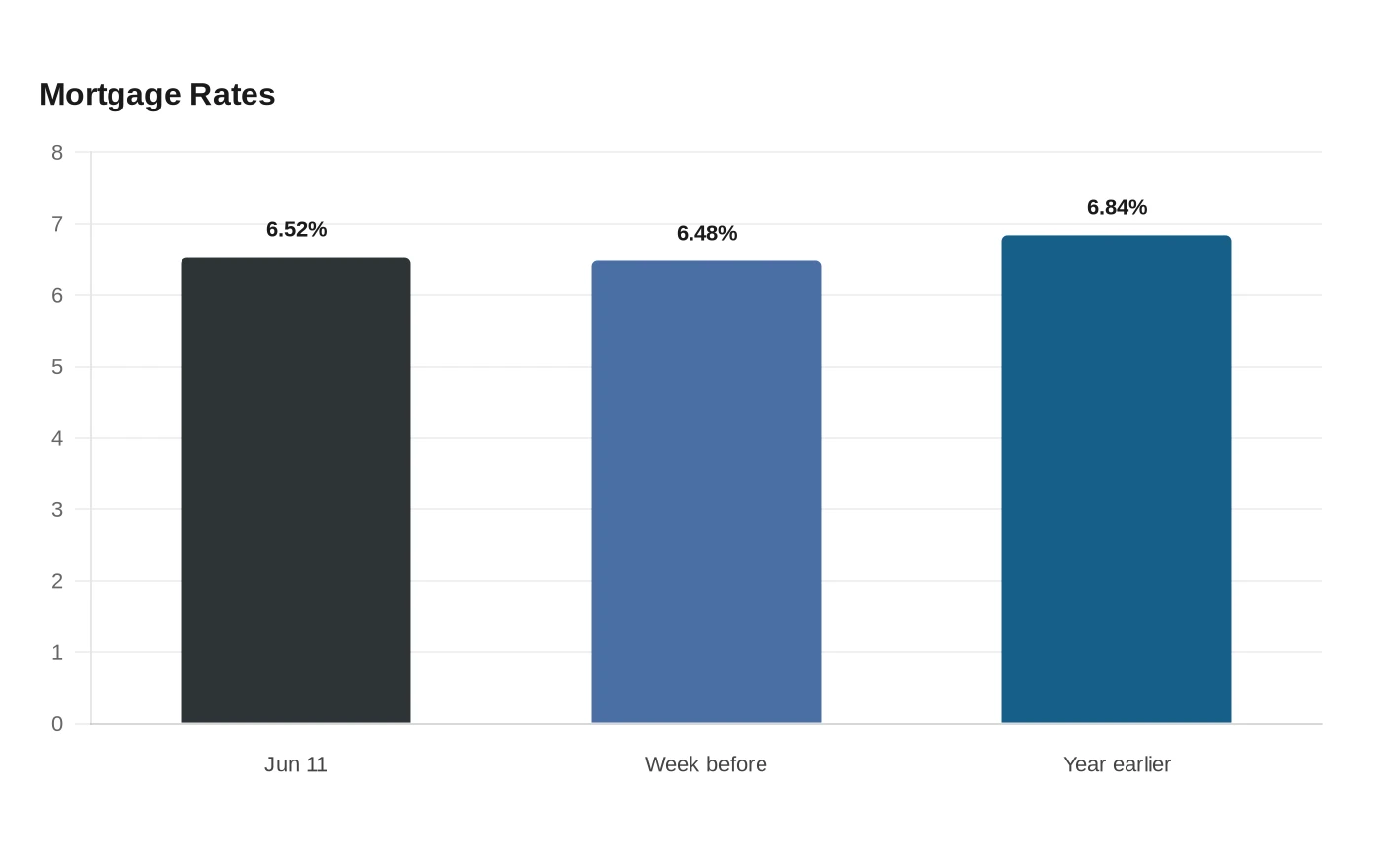
Mortgage shoppers headed into the Federal Reserve’s June 16-17 meeting with little sign of relief. Freddie Mac said the average 30-year fixed mortgage stood at 6.52% on June 11, only slightly below the recent 6.57% area and still high enough to keep affordability under pressure for homebuyers and refinancers.
The latest reading was up from 6.48% the week before and down from 6.84% a year earlier, a reminder that mortgage costs have eased only gradually even as inflation has cooled from its peaks. Freddie Mac’s weekly survey, released on Thursdays, is based on rates collected from thousands of loan applications submitted through its Loan Product Advisor system. Sam Khater, Freddie Mac’s chief economist, said, “The 30-year fixed-rate mortgage averaged 6.52% this week.”

The bigger issue for borrowers is that the Federal Reserve does not directly set long-term fixed mortgage rates. Those rates move more with bond markets and inflation expectations than with the fed funds target, which is why mortgages can stay elevated even if the central bank holds rates steady or trims them. The Federal Open Market Committee meets eight times a year, and the minutes from regularly scheduled meetings are released three weeks after each policy decision, giving markets more time to parse the Fed’s thinking than mortgage borrowers typically have.

That disconnect is why a policy pause, or even a cut, would not automatically translate into cheaper home loans. Recent trading has already shown how narrow the day-to-day swings can be, with 30-year rates moving between about 6.48% and 6.57% in recent days. A material drop would likely require a clearer shift in Treasury yields, a stronger move lower in inflation expectations, or both, rather than a single Fed announcement.
The stakes are larger than monthly mortgage payments. Analysis from the Dallas Federal Reserve says mortgage rates affect housing demand, home sales and refinancings, making them one of the central channels through which monetary policy reaches the real economy. Freddie Mac’s archive, which goes back to 1971, shows that today’s rates remain far below historic highs even if they still feel punishing to many buyers. For the housing market, the key number is not just what the Fed does this week, but whether the broader bond market finally starts to price in a durable decline.