Business
Federal Judge Halts Nexstar-Tegna Merger Amid Antitrust Concerns
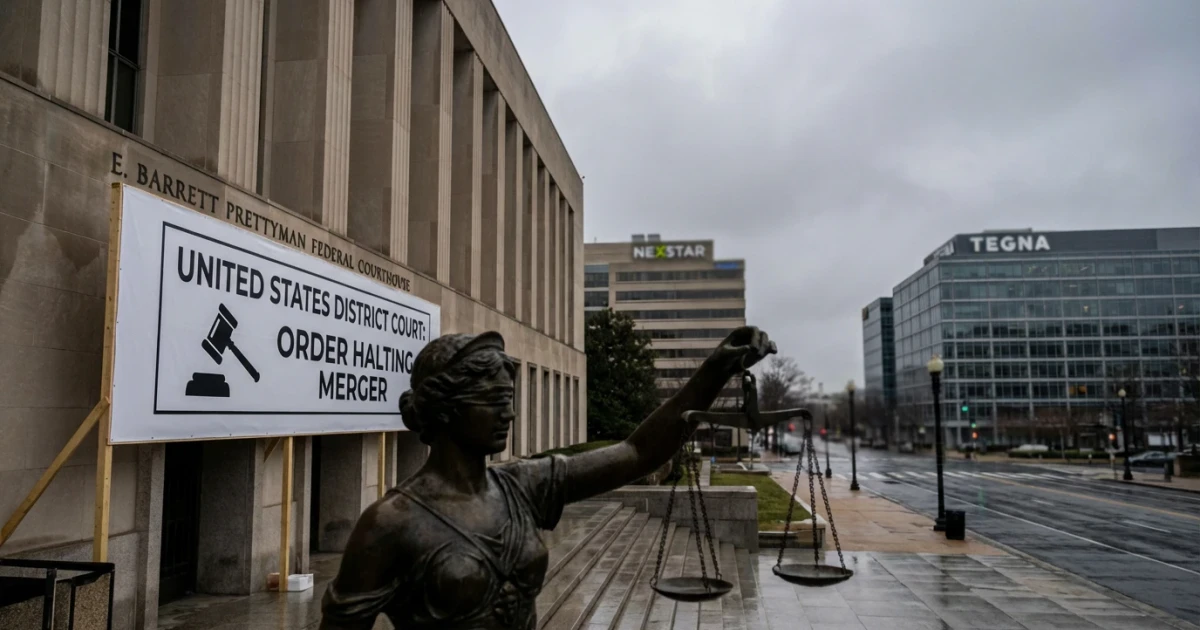
Nexstar Media Group’s planned $6 billion merger with Tegna Inc. was put on hold this week after a federal court issued a temporary injunction, marking a significant pause in one of the broadcasting industry’s largest proposed consolidations. The decision, which follows heightened antitrust scrutiny, raises new questions about the future landscape of U.S. local television ownership.
Court Decision Puts Deal on Hold
The New York Times reported that a federal judge issued an order temporarily blocking the Nexstar-Tegna deal, which would have combined two of the nation’s largest local TV station owners into a single powerhouse. The merger, valued at $6 billion, has drawn close attention from regulators and industry analysts concerned about market concentration and competition.
- Nexstar is already the largest local television station owner in the United States, with Statista data showing it manages more stations than any other group.
- Tegna holds a significant portfolio itself, owning dozens of stations in major markets across the country.
- The combined company would have controlled an unprecedented share of local news programming and advertising in key regions.
Regulatory and Antitrust Scrutiny
According to official U.S. Department of Justice antitrust case filings, the merger has been under review due to concerns that it could reduce competition, increase advertising costs, and limit diversity of viewpoints in local news coverage. The Federal Communications Commission (FCC) has also examined the deal’s potential impacts, referencing rules on media ownership and regulation designed to prevent excessive market concentration.
Industry Impact and Context
The freeze comes at a time when the U.S. local TV industry is already highly consolidated. According to the FCC’s 2022 Communications Marketplace Report, fewer companies now own a greater share of stations, amplifying concerns about local journalism’s independence and diversity. Nexstar and Tegna, for instance, collectively control hundreds of affiliates in all major networks—including ABC, CBS, NBC, and FOX.
- The proposed merger would have made the combined group responsible for serving millions of American households with local news, sports, and syndicated content.
- Critics argue that such consolidation risks homogenizing coverage and reducing the range of voices on air.
Next Steps and Industry Reactions
The temporary injunction means that the deal cannot proceed until further court review, and regulatory agencies may impose additional conditions or even block the merger outright. Both Nexstar and Tegna have said they are evaluating their options and remain committed to demonstrating the deal’s public interest benefits.
The outcome of this case could have broad implications for future media mergers in the United States, as regulators weigh the value of scale against the risks to competition and localism.
Looking Ahead
While the court’s freeze is not a final ruling, it signals that regulators and the judiciary are taking a more skeptical stance toward large-scale media consolidations. Industry observers will be watching closely for the next legal and regulatory steps, which could reshape not just this merger, but the rules governing all U.S. broadcast ownership.