Technology
Federal Quantum Science Investment Faces Funding Uncertainty
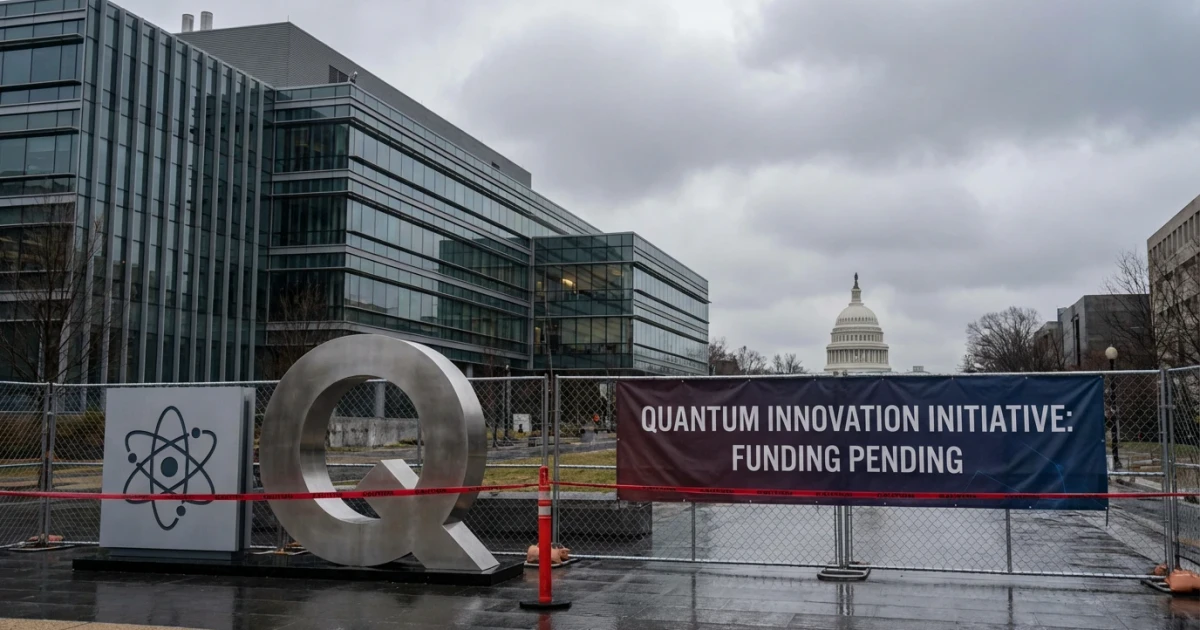
The federal government’s recent $293 million commitment to quantum science is facing significant spending challenges, raising the stakes for U.S. scientific leadership and innovation. The ambitious funding, announced under the Trump administration, aims to bolster research and development in quantum information science—a field considered critical for national security, advanced technology, and economic competitiveness. However, as reported by Tech Policy Press, the path to fully realizing these investments is complicated by fiscal constraints and competing budget priorities.
Background: The National Quantum Initiative
The federal investment follows the passage of the National Quantum Initiative Act, which outlines a coordinated, multi-agency approach to supporting quantum research and workforce development. The law authorizes substantial federal appropriations and sets strategic goals for agencies such as the National Institute of Standards and Technology (NIST), the Department of Energy, and the National Science Foundation.
According to the FY 2021 Administration Research and Development Budget Priorities, quantum information science remains a top priority, with the $293 million allocation supporting everything from basic research to the development of quantum computers and secure communications systems. This investment is intended to keep pace with global competitors, notably China and the European Union, who are also ramping up spending in this domain.
Budgetary Headwinds Threaten Momentum
Despite the bipartisan enthusiasm that accompanied the announcement, the new funding is running into obstacles as it moves through the federal budget process. Tech Policy Press notes that current fiscal pressures—including competing demands on discretionary spending and ongoing debates over the federal deficit—could constrain the actual dollars reaching quantum science programs.
- Federal agencies must navigate complex appropriations processes to secure the full $293 million for quantum initiatives.
- Some lawmakers and policy analysts warn that, without sustained and predictable funding, the U.S. risks falling behind in critical areas of quantum research and commercialization.
According to the National Science Foundation’s FY 2021 budget request, funding for quantum information science is distributed across several programs, including basic research, technology transfer, and education. Any reductions or delays in appropriations could impact the pace of discovery and the ability to translate breakthroughs into practical applications.
Why Quantum Science Matters
Quantum information science is seen as a foundation for future technologies, including ultra-secure communications, powerful new computers, and advanced sensors. The Department of Energy’s Office of Science describes quantum research as essential to “maintaining U.S. leadership in science and technology.” Federal investments support:
- Expanding research centers and partnerships with industry
- Developing a highly skilled quantum workforce
- Accelerating the commercialization of new quantum devices
Data from the federal quantum investment dashboard shows that the U.S. has steadily increased funding over the past five years, but the current $293 million remains subject to annual appropriations and political negotiation.
Looking Ahead: Balancing Ambition with Fiscal Reality
As the U.S. strives to maintain its competitive edge in quantum information science, the outcome of the current budget cycle will be pivotal. Experts cited by Tech Policy Press emphasize that consistent and robust federal support is required to achieve the goals set out in the Congressional record for the National Quantum Initiative. If spending headwinds persist, key research centers and innovation pipelines may face delays or disruptions.
Whether the full $293 million is ultimately appropriated will reveal much about the nation’s priorities for science and technology—and its capacity to compete in the emerging quantum era. Stakeholders across government, academia, and industry are watching closely as budget negotiations progress, recognizing that the results will shape the trajectory of quantum innovation for years to come.