Science
Female Anglerfish Show Remarkable Evolutionary Adaptations
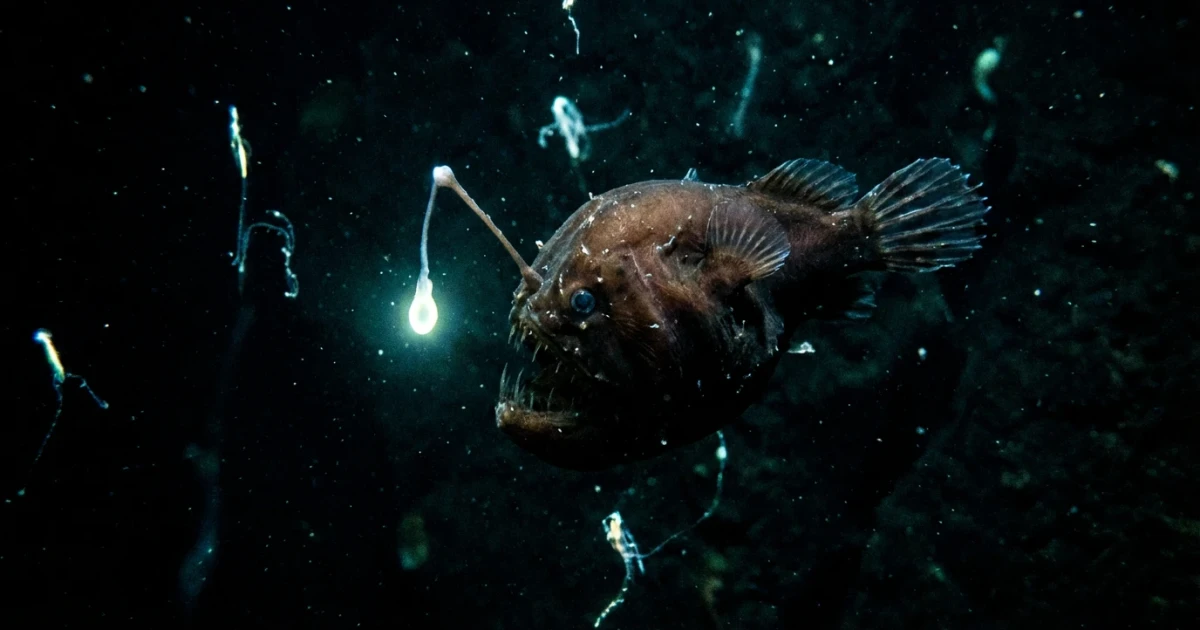
Female anglerfish have long fascinated scientists and the public alike, thanks to their unusual appearance and extraordinary evolutionary traits. Recent research, as highlighted by The New York Times and Discover Magazine, has shed new light on the origins of their fishing-rod-like lure and the remarkable adaptations that help these deep-sea predators thrive in some of the ocean’s most inhospitable environments.
Unique Adaptations in a Challenging Habitat
Anglerfishes, members of the order Lophiiformes, are renowned for their ability to survive in the deep sea, where light is scarce and prey is difficult to find. Perhaps their most iconic feature is the bioluminescent lure—an extension of the dorsal spine tipped with glowing bacteria—that they use to attract prey in the darkness. According to Discover Magazine, genetic and fossil evidence suggests that this lure evolved approximately 72 million years ago, a development that was pivotal for the anglerfish’s success in deep-sea environments.
The Origins of the Anglerfish Lure
The evolution of the anglerfish’s lure is a key example of adaptation to extreme environmental pressures. The evolutionary history of this feature shows that the lure appeared in the lineage before the major diversification of anglerfishes, suggesting it provided a significant survival advantage. The glowing bacteria within the lure form a symbiotic relationship with the fish, providing light in exchange for nutrients—a partnership crucial for hunting in perpetual darkness.
- The lure’s bioluminescence is produced by bacteria, not the fish itself.
- This adaptation allows anglerfish to attract prey close enough to be snatched with their large, expandable jaws.
- The development of the lure predates many modern anglerfish species, indicating its central role in their evolutionary history.
Extreme Sexual Dimorphism and Reproduction
Female anglerfish are also known for their dramatic sexual dimorphism and unique mating strategies. Females are much larger than males, often by an order of magnitude. Males, in contrast, are tiny and primarily exist to find a mate. In many species, the male will attach himself to a female, fusing bodies and essentially becoming a permanent sperm provider—a phenomenon known as sexual parasitism. This strategy ensures reproductive success in the vast, sparsely populated deep sea.
- Female anglerfish can be several times larger than males.
- Males latch onto females, fusing their tissues and bloodstreams.
- This adaptation allows females to reproduce whenever they encounter suitable conditions.
Immune and Physiological Adaptations
Recent studies have also highlighted the immune system adaptations that allow this intimate fusion without rejection—an unusual trait among vertebrates. The anglerfish’s immune system has evolved to tolerate the presence of genetically distinct tissue, an adaptation that supports their unique reproductive strategy.
Why Anglerfish Continue to Captivate Scientists
With more than 300 species of anglerfishes documented worldwide, their extraordinary biology continues to be a subject of fascination and research. Their distinct evolutionary path showcases the power of adaptation in overcoming extreme environmental challenges. As new studies delve deeper into their genetics, physiology, and ecology, anglerfish remain a vibrant example of how life can flourish in even the most unlikely places.
Looking ahead, ongoing research into anglerfish may shed further light on the evolution of deep-sea life and the complex relationships between organisms and their harsh environments. For readers interested in the frontiers of evolutionary biology, the anglerfish offers a window into nature’s most creative solutions.