Entertainment
Fender broadens Stratocaster legal fight, targets Yamaha over guitar shape
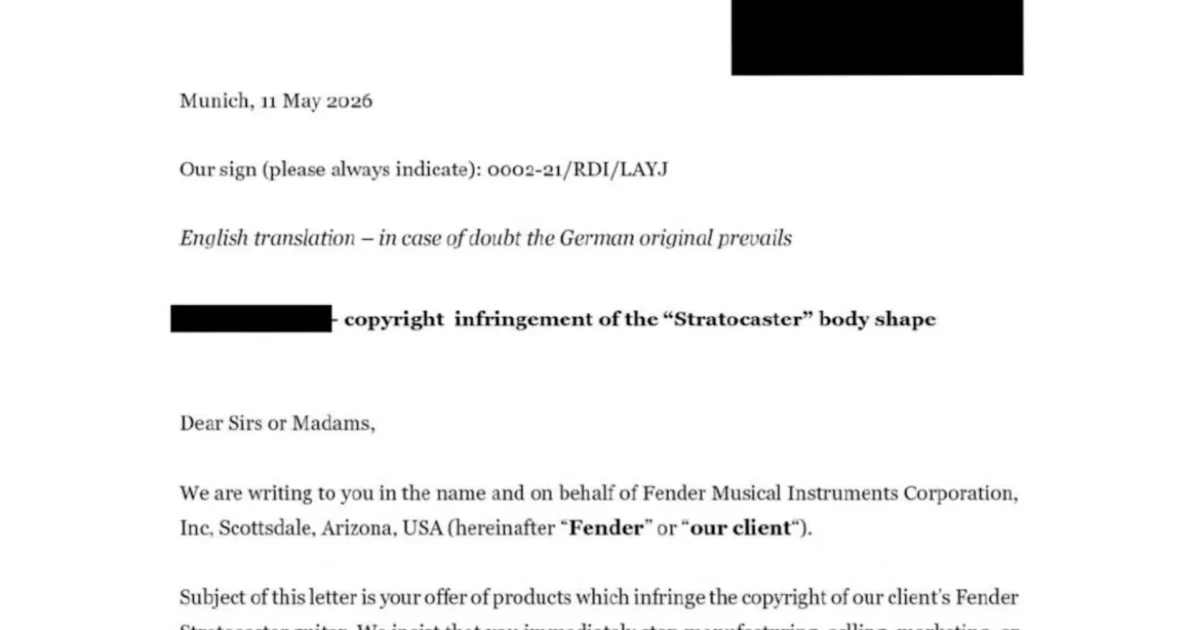
Fender has sent Yamaha a notice letter over the Stratocaster body shape, widening a legal campaign that has already rippled through guitar retail, import channels and small-scale instrument building. Yamaha received the letter in May and is reviewing which models were named. Because Yamaha is the world’s largest maker of musical instruments, the dispute now reaches a company with the scale to resist, a test that could matter even more for smaller rivals.
The campaign grew out of a March 9 ruling by the Regional Court of Düsseldorf, which found in Fender’s favor in a case against Chinese seller Yiwu Philharmonic Musical Instruments Co. over Stratocaster-style guitars sold through AliExpress. Fender has said the decision established the Stratocaster body as a copyrighted work of applied art under German and European Union law. After that ruling, Fender sent cease-and-desist letters to manufacturers and retailers in the region, telling them to stop producing and selling affected models.
Fender says it is trying to stop close copies, not every double-cutaway or S-style guitar. But the practical reach of the campaign has unsettled independent builders and industry critics, who see the move as an attempt to extend protection over a shape that has long sat inside the shared language of electric-guitar design. The Stratocaster, tied for decades to players such as Jimi Hendrix and Eric Clapton, is not just a model name but one of the most recognizable silhouettes in modern music gear. That makes the fight about more than nostalgia: it goes to who can market a familiar form, and under what legal theory.

The pressure on Fender has already spread beyond Yamaha. Thomann announced legal action against Fender on June 22, 2026, saying the dispute goes to the future of diversity, innovation and competition in the industry. The clash has put luthiers, importers and online sellers in the same line of fire as larger brands, because a broad reading of design protection could force them to change product lines or risk being treated as infringers.
The legal backdrop also matters. Fender tried in the United States to trademark the Stratocaster, Telecaster and Precision Bass body shapes, but the U.S. Trademark Trial and Appeal Board rejected those efforts in 2009 after opposition from multiple manufacturers and parts suppliers. That defeat still shapes skepticism around Fender’s current claims, especially among builders who argue that the Stratocaster has become part of the public vocabulary of guitar design rather than one company’s exclusive property.
Sources
- [1]money.usnews.com
- [2]thomann.de
- [3]vintageandrare.com
- [4]guitar.com
- [5]twobirds.com