Business
Ferrari and BMW switch to aluminium wiring as copper demand shifts
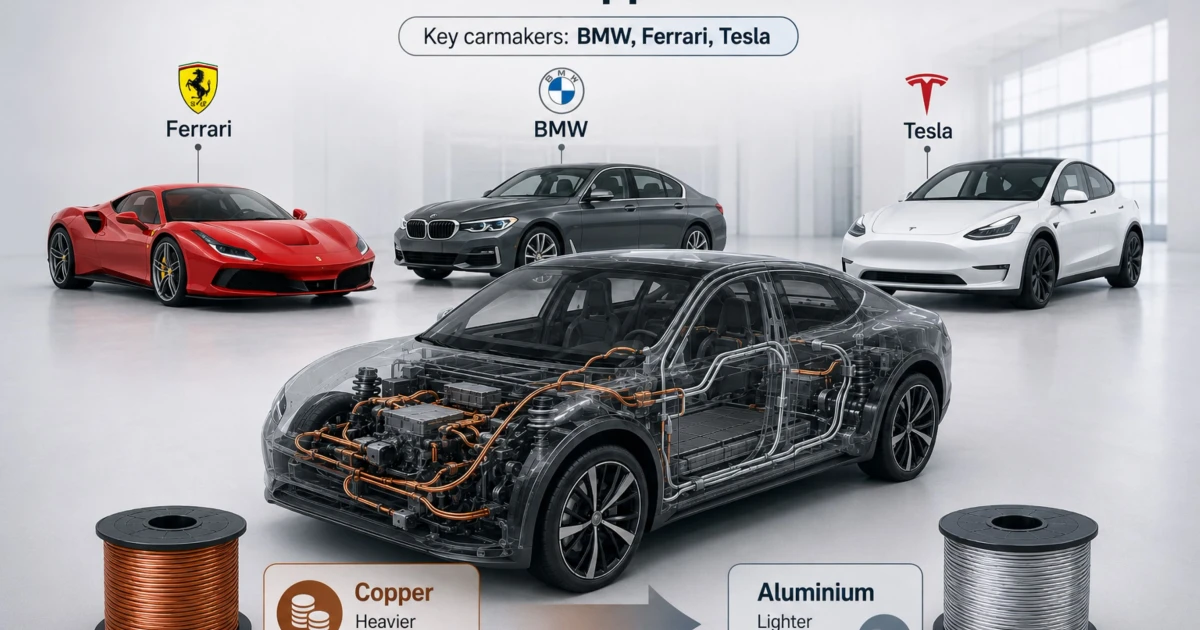
Ferrari and BMW are rolling out new models with aluminium wiring instead of copper, extending a material switch that has already spread from Tesla to Chinese electric-vehicle makers. The change is small inside the car, but large for metals markets: aluminium is cheaper, lighter and increasingly attractive as copper prices stay elevated.
Ferrari said it started using aluminium power cables on its 296 hybrid sports car last year and has since expanded the material into more models, including the Luce, its first electric vehicle, which launched last month. The company said aluminium wiring can cut as much as 20% of total wiring weight in certain vehicles. That matters for premium automakers that spend heavily to reduce mass, improve efficiency and preserve range in electric models.
BMW said it first used aluminium conductors in 2011 in the 1 Series and has steadily widened their use since then. The company’s latest eDrive EV technology uses aluminium cables in both high- and low-voltage systems, showing that the material has moved beyond an experiment and into core electrical architecture. The pattern is spreading beyond luxury cars as well, with Stellantis recently beginning to swap copper wiring for aluminium and cable makers and air-conditioning companies making similar calculations.
The economics are turning more favorable for substitution. Industry sources cited in the reporting put the copper-to-aluminium price ratio around 4.2, above the roughly 3.5 to 4.0 range where the switch starts to look attractive. Copper’s rally has sharpened that case: prices peaked near $15,000 per metric ton in late January, a level that underscored how tight supply, green-energy demand and data-center growth have pushed the metal higher.
JPMorgan analysts estimate the substitution trend could affect about 2% of global copper demand this year, with that share rising to around 6% by 2030. Zhuochuang analysts see as much as 25% to 30% of some copper components eventually being replaced by aluminium across power, auto and home sectors. For miners and smelters, that points to a slower growth path for copper demand than many had expected; for aluminium producers and cable makers, it opens a market that is being rewritten from the inside out.
China’s role is central to that shift because Chinese EV makers were among the first to normalize aluminium wiring at scale. As more automakers, suppliers and industrial buyers follow Ferrari and BMW, the balance of bargaining power moves toward lower-cost metals and the manufacturers that can redesign around them fastest.
Sources
- [1]money.usnews.com
- [2]cbtnews.com
- [3]qz.com
- [4]wifc.com
- [5]mining.com