Science
Fireball Lights Up Michigan Night Sky, Sparks Meteorite Hunt
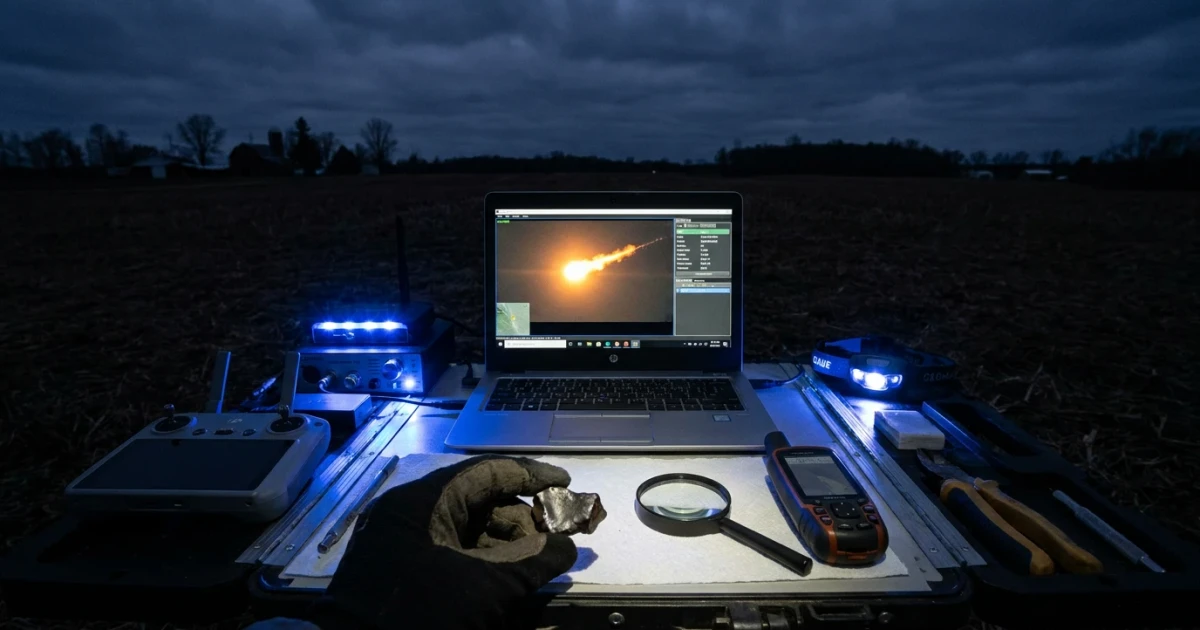
Michigan residents were captivated Monday night as a bright fireball blazed across the sky, sparking widespread reports and speculation about possible meteorite debris landing in yards across the state. The event, which occurred just after sunset, has prompted both amateur skywatchers and scientists to investigate its origins and aftermath.
Widespread Sightings and Community Response
According to American Meteor Society Fireball Event #2352-2024, dozens of eyewitnesses from cities such as Grand Rapids, Detroit, Lansing, and Ann Arbor reported seeing the fireball. The event was notable for its brightness and vivid colors, with many describing it as one of the brightest meteor events they've seen in recent years. The NASA CNEOS Fireball and Bolide Data recorded the event, estimating that the fireball's energy was sufficient to produce audible sonic booms, rattling windows and startling residents.
- Witnesses described a "brilliant streak" followed by a sudden flare and fragmentation.
- Some residents are actively searching their properties for meteorite fragments.
- No injuries or property damage have been reported, but local authorities are asking for debris reports.
Scientific Context and Meteorite Recovery
The American Meteor Society explains in its Fireball FAQ that fireballs are exceptionally bright meteors, often caused by space rocks entering Earth's atmosphere at high speeds. When a fireball is sufficiently luminous and slows down, it may drop meteorite fragments to the ground. The Meteoritical Bulletin Database lists several confirmed meteorite falls in Michigan's history, and scientists are urging residents to report any unusual rocks or metallic debris found after the event.
Experts advise that suspected meteorites should be handled carefully and documented with photos. Potential finds are often blackened, heavy, and may have a fusion crust, distinguishing them from ordinary rocks. Meteorite recovery provides valuable scientific insights, as these fragments can reveal details about the early solar system.
Fireball Frequency and Impact
NASA's Annual Fireball and Bolide Data Summary shows that fireballs like this are not uncommon over the U.S., though large events visible to many observers are relatively rare. The Michigan fireball's intensity suggests it was caused by a meter-sized asteroid, but more analysis is needed to determine its composition and trajectory.
- On average, dozens of fireballs are detected each year over North America.
- Major fireballs have led to meteorite recoveries in states such as Wisconsin, Indiana, and Michigan.
- Scientific teams may deploy to the region if credible debris reports are received.
What to Do If You Find Debris
Residents who believe they've found meteorite fragments are encouraged to consult the AMS Fireball FAQ for guidance. Reporting finds helps scientists track the event and improves understanding of meteorite fall patterns.
Looking Ahead
As investigation continues, Michigan's fireball event highlights public interest in celestial phenomena and the scientific importance of meteorite recovery. With dozens of reports submitted and social media buzzing with speculation, researchers hope to learn more about the fireball's origins and whether any fragments reached the ground. Residents are advised to stay alert for unusual rocks and to report any finds to scientific authorities for verification.