Business
FIS cuts outlook, shares slide as payments sector faces pressure

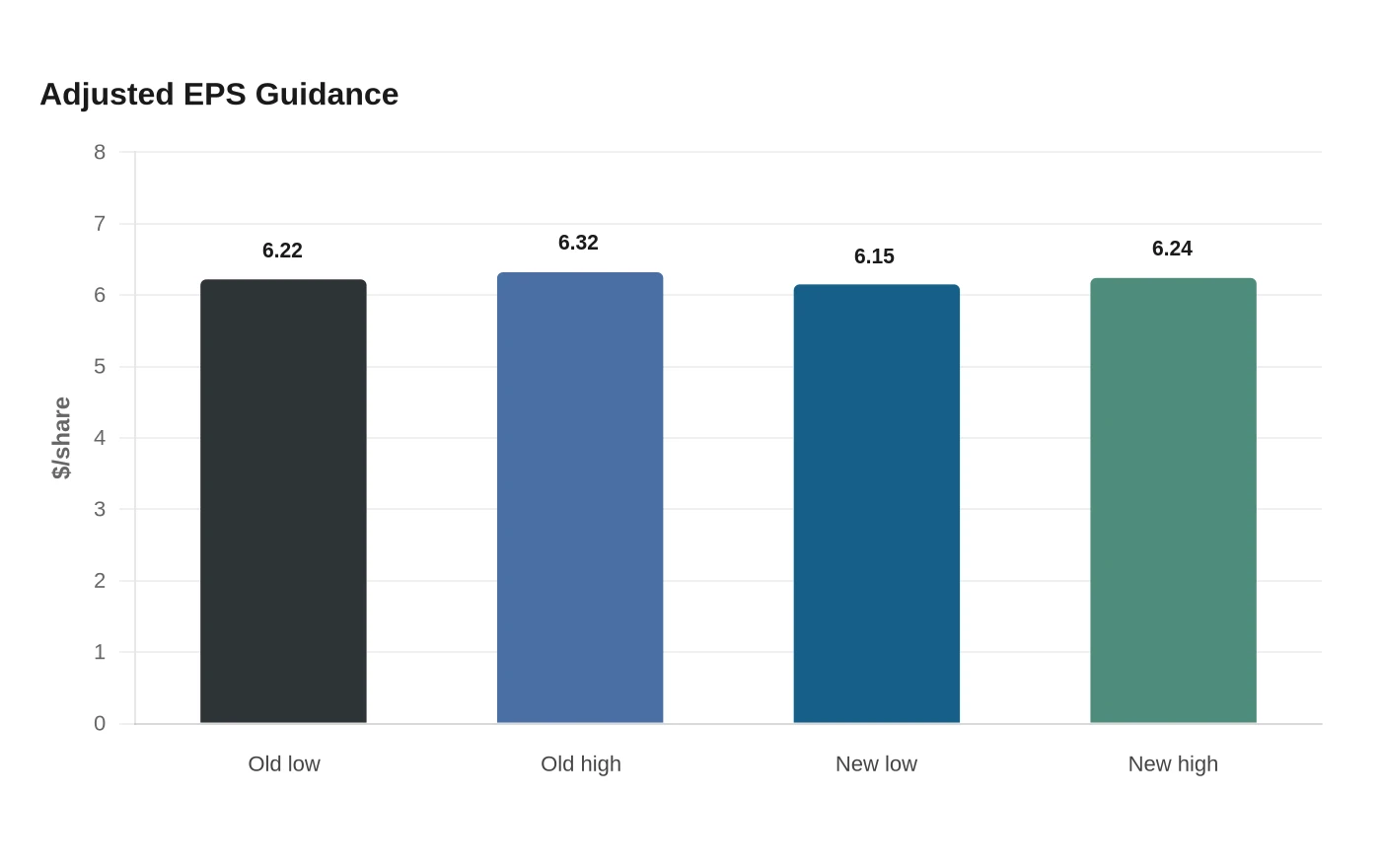
Fidelity National Information Services cut its 2026 revenue and profit forecasts on Aug. 4, sending its shares down more than 10% in premarket trading and sharpening investor scrutiny of the payments and financial-technology sector. The company also trimmed its adjusted earnings outlook to $6.15 to $6.24 per share from $6.22 to $6.32.
The revised guidance landed even as FIS posted second-quarter 2026 results that showed mixed momentum across the business. One earnings summary put revenue at about $3.4 billion, with free cash flow tripling to $525 million. Another summary said revenue rose 5.3% on a pro forma basis. The stronger headline cash generation did not offset concern about the path ahead, especially in a market that has been quick to punish weaker forecasts in transaction-driven businesses.
The details inside the quarter showed where pressure was building. Banking Solutions grew 6.1% at the high end of guidance, while Capital Markets grew only 3.2%. That split matters because FIS sits at the junction of consumer payments, bank technology and institutional trading systems, so slower growth in one line can hint at softer spending by financial clients or a more cautious trading environment.
Stephanie Ferris, FIS’s chief executive and president, said, “Our first half reflects the strength of the business we have built defined by durable recurring growth, expanding margins, and accelerating cash generation,” and added, “Banks are investing decisively behind modernization and AI, and they are choosing FIS as their partner.” Her comments underscored the company’s pitch that long-term demand for modernization remains intact even as the near-term outlook was pared back.
For investors, the bigger question is whether the cut was a company-specific stumble or an early warning for the broader sector. Payments processors and fintech infrastructure firms are often treated as real-time gauges of consumer spending, merchant activity and corporate technology budgets, because their revenue is tied to the flow of transactions and client investment cycles. A weaker forecast from a company of FIS’s size can therefore ripple beyond Jacksonville, Florida, where the company is based, and into peer valuations across the industry.
The stock reaction also fit FIS’s recent pattern of sharp swings when guidance disappoints. On Feb. 11, 2025, CNBC reported that the shares plunged their most since 2023 after fourth-quarter 2024 revenue disappointed and the company missed its guidance. FIS later reported stronger third-quarter 2025 results and raised its full-year outlook, showing how quickly sentiment can reverse when forecasts improve. This latest reset suggests investors are once again focused less on one quarter’s execution than on whether payments growth is slowing enough to pressure the next leg of earnings.
Sources
- [1]reuters.com
- [2]investor.fisglobal.com
- [3]markets.ft.com
- [4]finance.biggo.com
- [5]cnbc.com
- [6]fisglobal.com