World
Five Eyes Allies Unite to Warn on China Espionage
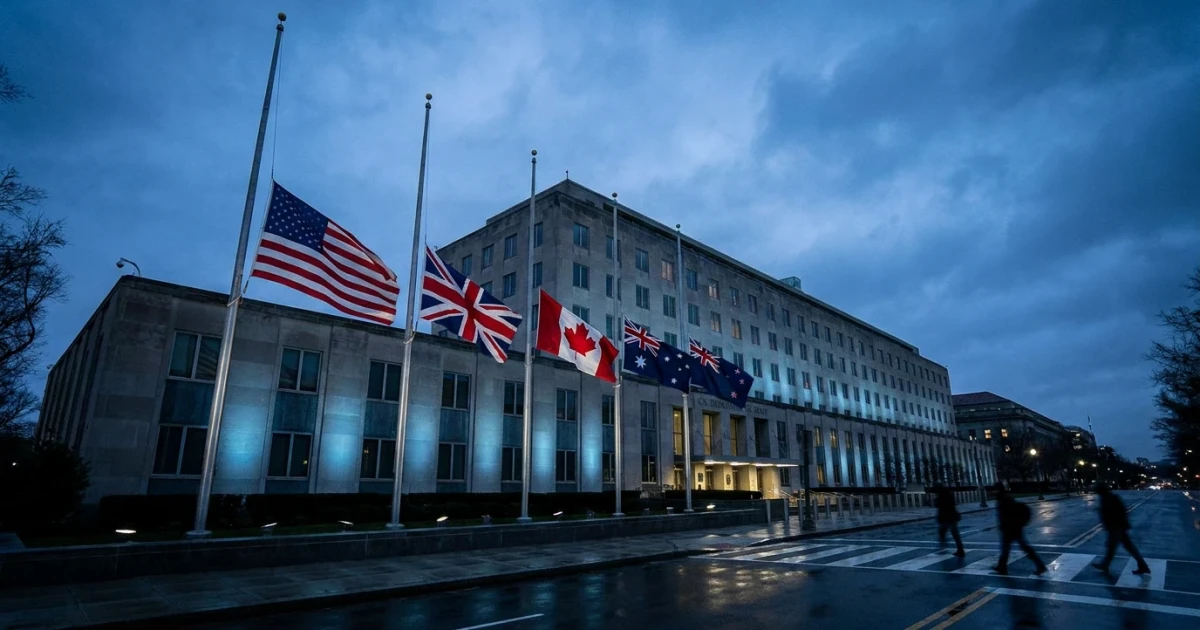
The United States and its close intelligence partners, collectively known as the Five Eyes alliance, have issued an uncommon joint warning highlighting the growing threat posed by Chinese espionage activities. The announcement, reported by The Washington Post and corroborated by Bloomberg, underscores both the urgency and unity among allied nations in responding to China’s expanding intelligence operations.
Coordinated Response From Five Eyes Nations
The Five Eyes alliance, comprising the U.S., United Kingdom, Canada, Australia, and New Zealand, rarely issues coordinated public statements on specific threats. This joint warning signals an elevated concern about China’s state-sponsored spying, which has increasingly targeted sensitive sectors including government, technology, and critical infrastructure.
- China’s espionage efforts are described as "unprecedented in scale," according to allied officials.
- The warning follows a series of intelligence briefings and recent incidents involving cyber intrusions and recruitment of insiders.
While the Five Eyes nations routinely share intelligence, public alignment is reserved for high-impact threats. The Washington Post notes that this collective action reflects a shift toward greater transparency and deterrence in counterintelligence operations.
Scope and Methods of Chinese Espionage
According to allied intelligence, China employs a broad spectrum of tactics, including cyberattacks, infiltration through academic and corporate partnerships, and recruitment of individuals with access to sensitive information. The U.S. government has previously reported an increase in cyber incidents attributed to Chinese actors, targeting both public and private entities.
- Recent cyber intrusions have exploited vulnerabilities in critical infrastructure and defense networks.
- Chinese intelligence services are accused of leveraging foreign agent networks to gather information and influence policy.
- Recruitment efforts often focus on individuals with access to proprietary technology and classified data.
Bloomberg highlights that these operations are not limited to digital attacks but also extend to traditional espionage, including the use of academic exchanges and business investments as cover for intelligence gathering.
Official Findings and Data
Official reports, such as the National Counterintelligence and Security Center Annual Report, have documented a steady rise in Chinese espionage incidents. The FBI’s counterintelligence program notes China as the "greatest long-term threat" to U.S. information security, responsible for a significant share of detected intrusions and attempted data theft.
- The NCSC report details dozens of cases in which Chinese operatives targeted U.S. research and government agencies.
- The FBI has prosecuted numerous cases involving theft of trade secrets and unauthorized access to classified materials.
Allied governments, including Australia and the UK, have also increased their vigilance. The Australian Cyber Security Centre Annual Cyber Threat Report and the UK National Cyber Security Centre Annual Review both identify China as a principal source of advanced persistent threats, noting a rise in attacks targeting political, commercial, and defense interests.
Implications for Policy and Security
The rare joint statement by the Five Eyes alliance is seen as a call to action for both governments and the private sector. Officials urge organizations to strengthen cyber defenses, review partnerships with Chinese entities, and implement robust insider threat programs. The coordinated warning also signals to Beijing that allied nations will not tolerate aggressive intelligence operations and are prepared to respond collectively.
Analysts believe this public alignment may usher in tighter controls on technology transfer, increased information sharing among allies, and expanded efforts to counter foreign influence. As The Washington Post and Bloomberg emphasize, the move reflects the evolving global security landscape, where information warfare and espionage have become central risks for democratic societies.
Looking Ahead
With China’s capabilities and ambitions continuing to grow, the Five Eyes warning marks a pivotal moment in allied counterintelligence strategy. The effectiveness of this collective response will depend on sustained vigilance, cross-border collaboration, and proactive measures to safeguard sensitive information. For readers seeking more details on the scope of Chinese espionage, official reports from the NCSC, FARA records, and ongoing analysis from the China Power Project offer deeper context and data.