Business
Food prices climb as war, tariffs and drought drive up groceries
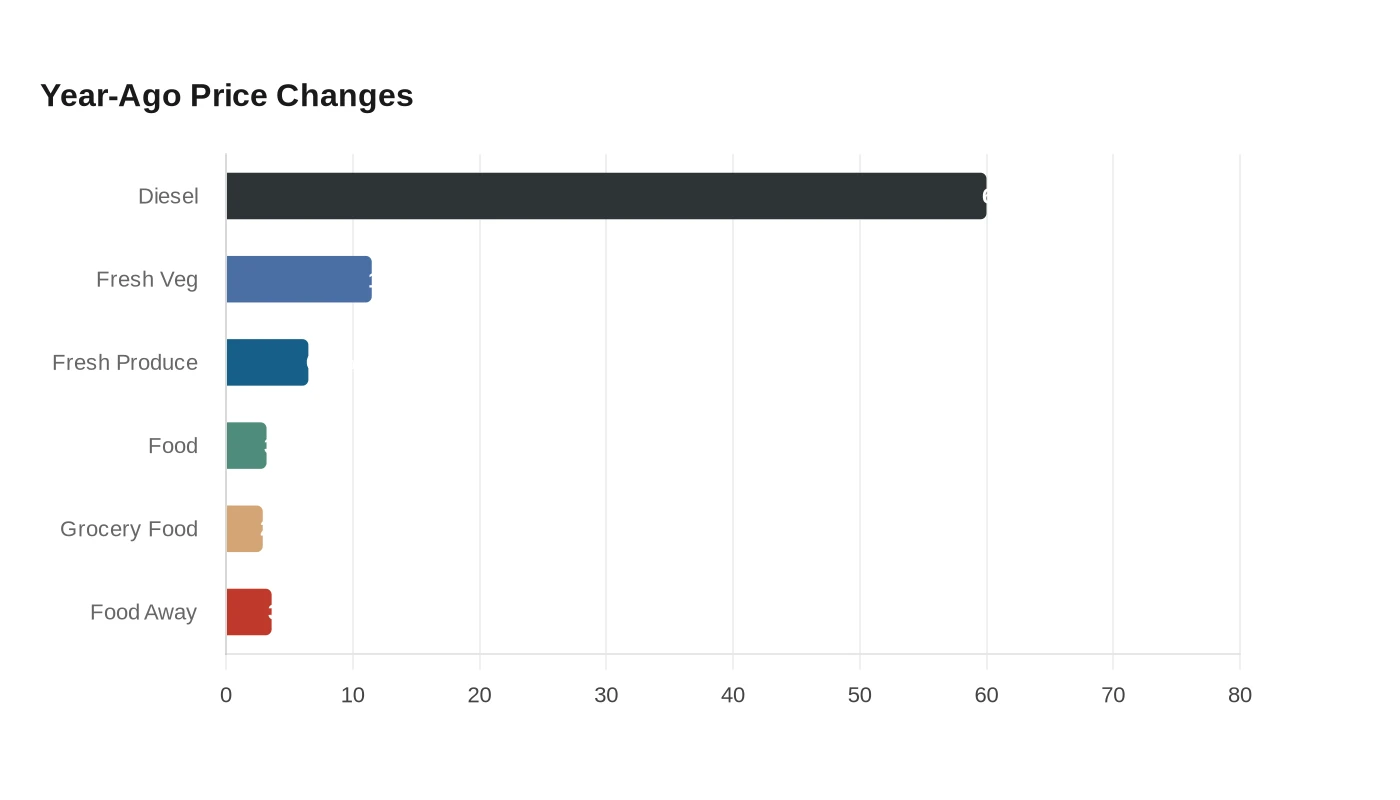
Grocery carts are feeling the squeeze first in the produce aisle and at the meat case. Tomatoes are running roughly 39% to 40% above a year ago, fresh vegetables are up 11.5%, and fresh produce overall is 6.5% more expensive than a year earlier, more than double the overall pace of food inflation. Beef, seafood and even bakery items are also climbing, turning a series of global shocks into a more expensive weekly shopping trip.
Federal data show food prices in April 2026 were 3.2% higher than a year earlier, while grocery-store food prices rose 2.9% and food-away-from-home prices climbed 3.6%. Within groceries, fresh vegetables rose 3.1% in April from March, beef and veal rose 3.1%, fish and seafood rose 1.5%, and fresh fruit gained 1.2%. The U.S. Bureau of Labor Statistics said food prices rose another 0.2% in May after a 0.5% increase in April, and the cereals and bakery products category moved higher too, keeping baked-goods inflation in the story.
The pressure is coming from several directions at once. Analysts say the war tied to Iran has jolted oil markets, lifting diesel and raising transportation costs across the food chain because diesel powers trucks, ships, tractors and fishing boats. The closure of the Strait of Hormuz, which carries about one-fifth of global oil supply, has sharpened those concerns. Diesel prices were about 60% higher than a year earlier in mid-May, a jump that raises the cost of moving food from farm to store and can take months to work its way into shelf prices.
Tariffs are adding another layer of cost, especially for imported goods such as tomatoes and coffee, while drought and other weather-related shortages are limiting supply of produce, beef and coffee. Purdue University economists Ken Foster and Bernhard Dalheimer say food costs are a lagging, sticky shock: higher costs can take three to six months to reach supermarket shelves, and once retail prices rise they tend to fall slowly. They estimate a sustained energy shock could add 3 to 6 percentage points to food-at-home inflation over 12 to 18 months.
Beef may be especially stubborn. USDA’s January 1, 2025 inventory put all cattle and calves at 86.7 million head, down 1% from a year earlier and the smallest January herd since 1951. With the herd historically tight, drought and high feed costs are likely to keep beef prices elevated. USDA projects all food prices will rise 3.4% in 2026, with food-at-home up 3.2%. For lower-income households, which spend a larger share of their income on food and have fewer trade-down options, that means the burden is already landing in the grocery basket.
Sources
- [1]washingtonpost.com
- [2]ers.usda.gov
- [3]abcnews.com
- [4]ag.purdue.edu
- [5]bls.gov
- [6]release.nass.usda.gov