US News
Forgotten founder James Wilson, signer, justice and debtor on the run
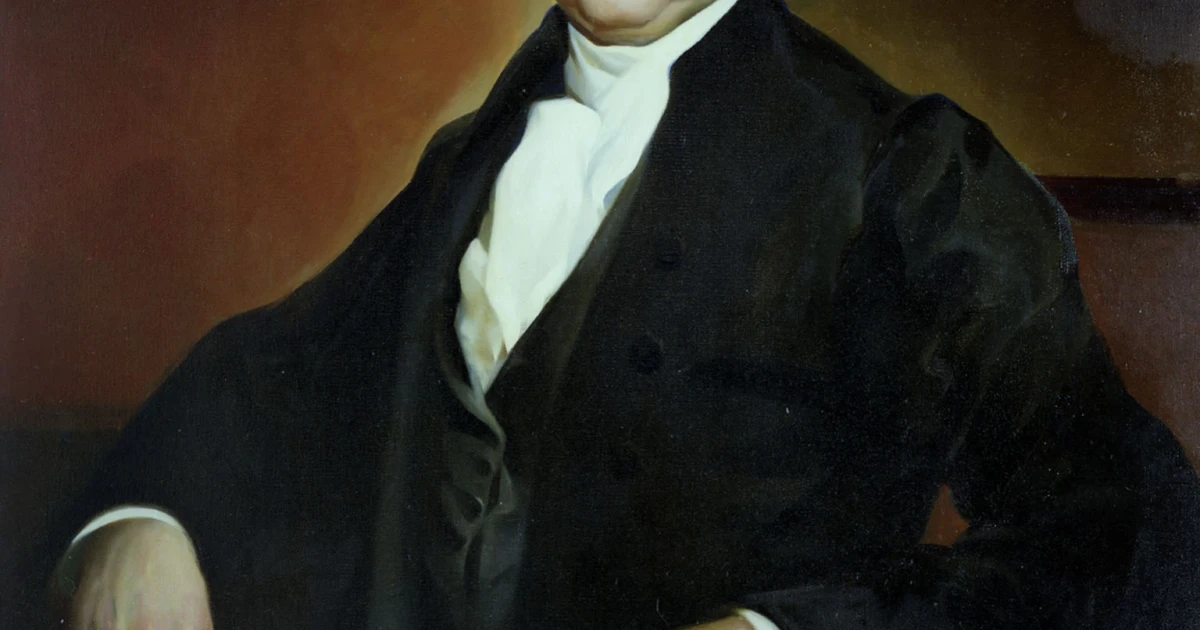
James Wilson was one of the most consequential minds at the nation’s birth, yet his name sits far below the marquee of Washington, Jefferson and Franklin. Jesse Wegman’s book uses that gap to challenge the tidy version of American founding history, showing how a signer of both the Declaration and the Constitution could also become a largely forgotten justice, a debtor, and a man on the run.
The founder who should not have disappeared
Wilson’s life began far from the stage on which he would help shape a new country. He was born on September 14, 1742, in Fife, Scotland, and emigrated to North America in 1765. In Philadelphia, he taught Greek and rhetoric at the College of Philadelphia, then studied law under John Dickinson, building the legal and political knowledge that would make him one of the era’s sharpest constitutional thinkers.
That combination of education, ambition and political instinct put him in the small circle of men who signed both the Declaration of Independence in 1776 and the U.S. Constitution in 1787. He later became one of the few figures to do both and then serve on the Supreme Court of the United States, a distinction that should have secured a permanent place in civic memory. Instead, Wilson became a reminder that the nation often remembers symbols more readily than architects.
A constitutional force with outsized reach
Wilson’s importance was not ceremonial. During the Constitutional Convention, he emerged as a major force in shaping the structure of the federal government. The Library of Congress preserves a delegate’s judgment that “Government seems to have been his peculiar study,” a line that fits the record of a man who thought deeply about power, legitimacy and the design of institutions.
He helped advance the idea of a unitary executive elected through an electoral college system, a concept that would become central to the presidency. George Washington’s Mount Vernon says he also negotiated the Three-Fifths Compromise, one of the most morally fraught bargains in the Constitution’s making, and one that exposed how the new republic fused lofty principles with concessions to slavery. Wilson’s influence was not hidden in the margins; it was embedded in the machinery of American governance.
His reputation had already begun to grow years before the Convention through a 1774 pamphlet, Considerations on the Nature and Extent of the Legislative Authority of the British Parliament. The work challenged Parliament’s authority over the colonies and helped establish Wilson as a serious legal theorist at a time when resistance to British rule was moving from argument to revolution.
The first Justice fully vested on the Court
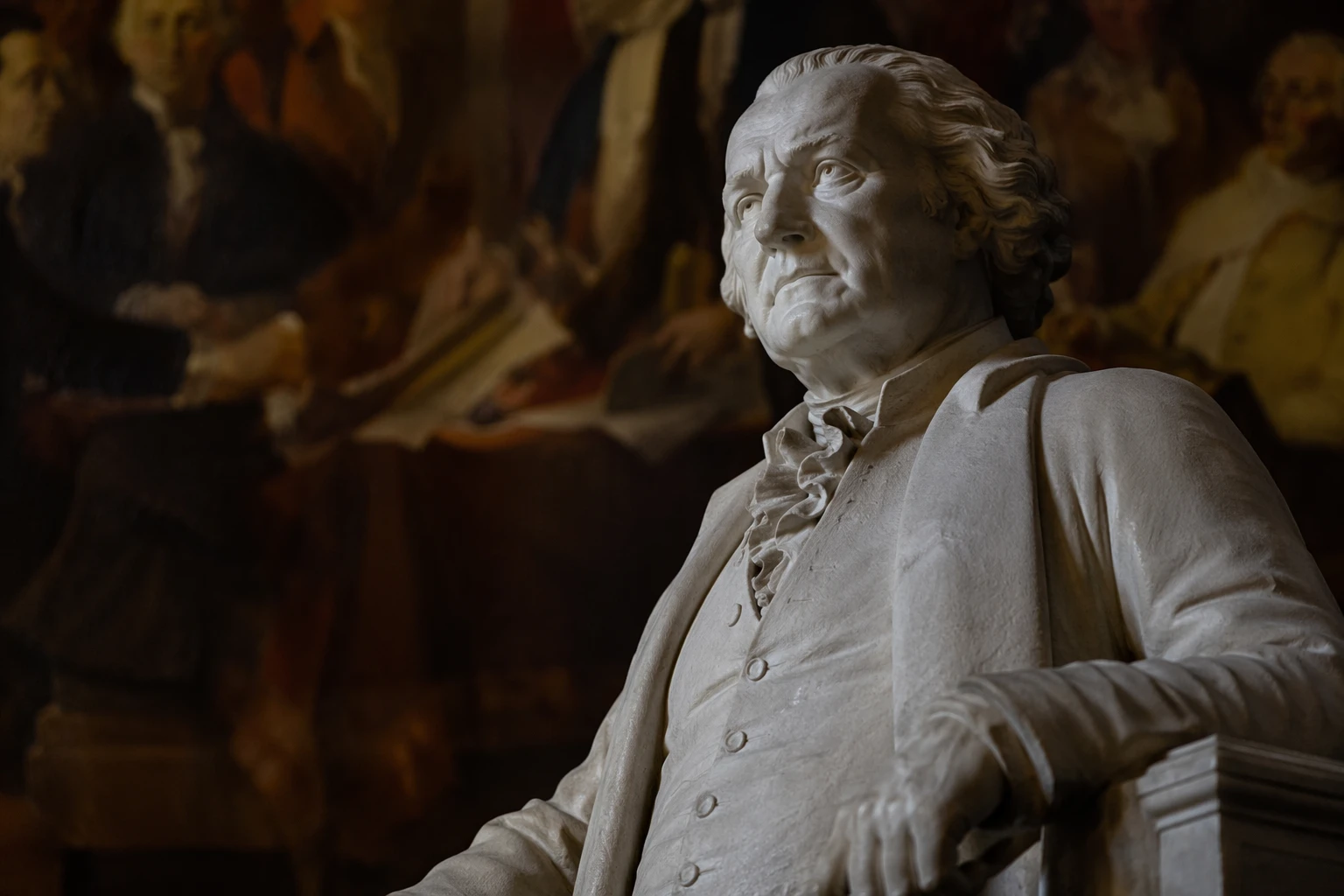
When the Supreme Court took shape under the new Constitution, Wilson was there at the start. He took his judicial oaths on October 5, 1789, becoming the first Justice fully vested as a member of the Court. That detail matters because it places him not just among the founders, but among the founders of the judiciary itself, as the new government began turning constitutional theory into practice.
Wilson’s standing on the bench reflected the breadth of his public career. He was not merely a signer who later drifted into office. He was a theorist, a delegate, a justice and, for a time, one of the most important constitutional minds in the republic. That a figure with that record could fade from common memory says as much about historical storytelling as it does about Wilson himself.
Debt, panic and the collapse of status
Wilson’s final years were defined by financial ruin. An economic panic in 1796 and 1797 reversed his fortunes and left him deeply in debt. The collapse was not abstract: he was briefly imprisoned in a debtors’ prison in New Jersey, a brutal reminder that elite rank offered no permanent shield against the law of creditors.
The details of his decline are especially stark because they show how quickly the status of a founding father could evaporate. After his son paid one debt, Wilson fled to Burlington, New Jersey, to avoid other creditors. Contemporary and later accounts say he was jailed for debt more than once, including a later arrest tied to Pierce Butler, underscoring how thoroughly his finances had unraveled.
He died on August 21, 1798, in Edenton, North Carolina, while still serving on the Supreme Court. That made him the first Justice to die in office, closing a life that had moved from constitutional triumph to personal desperation in barely a decade.

Why Wilson’s story belongs in the center, not the footnotes
Wilson’s obscurity is not just a quirk of memory. It reflects the way civic history often narrows itself around a few easily marketable heroes while sidelining the figures who did the harder, messier work of building institutions. The result is a founding narrative that can feel simpler than the reality: cleaner, more patriotic, and less honest about the compromises and contradictions that shaped the republic.
Revisiting Wilson also means confronting how power is remembered. He was brilliant enough to help shape the executive branch, consequential enough to influence the Constitution, and visible enough to serve on the Court, yet he remains much less known than many men with thinner records. That imbalance invites a larger question: who gets preserved as a founder, and who gets reduced to a footnote?
What the archives are revealing
Wilson is being reexamined not only through biography but through archives. The Historical Society of Pennsylvania holds James Wilson papers spanning 1710 to 1877, with bulk material from 1775 to 1794. Those records preserve financial and legal documents that help reconstruct a life often flattened by textbook summaries, revealing the practical pressures and institutional realities behind the constitutional myth.
Recent scholarship on his natural-law thinking and constitutional vision has added to that reassessment. Rather than treating Wilson as a minor signer who later became a justice, this work places him where he belongs: at the center of the founding debate over authority, representation and federal power. The fuller picture is not more flattering in a simple sense, but it is more truthful.
Wilson’s story makes the founding look less like a parade of familiar names and more like a contested struggle over who would define the new nation. That is why his life still matters. It shows how a republic can be built by people it later forgets, and how historical memory often rewards the most legible myths instead of the most consequential actors.
Sources
- [1]npr.org
- [2]britannica.com
- [3]mountvernon.org
- [4]loc.gov
- [5]supremecourt.gov
- [6]constitutioncenter.org
- [7]www2.hsp.org
- [8]nps.gov