Politics
Former Olympic canoeist indicted over Reflecting Pool vandalism
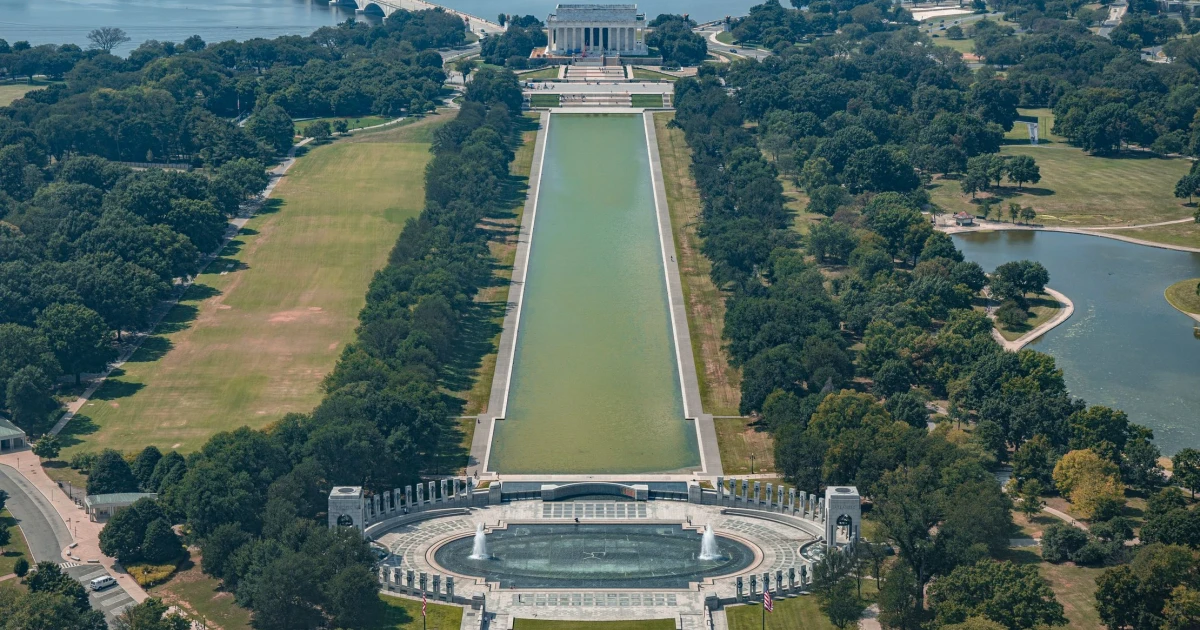
A federal grand jury in Washington indicted former Olympic canoeist David Hearn, 67, of Bethesda, Maryland, on July 2 in connection with alleged vandalism at the Lincoln Memorial Reflecting Pool. Prosecutors said the case involves property destruction tied to an incident on June 19, and court reporting said the charge carries a maximum penalty of 10 years in prison if Hearn is convicted.
The indictment alleges more than $1,000 in damage, which pushed the case into felony territory rather than a minor offense. Hearn has been described in coverage as a three-time U.S. Olympian and former canoe racer, a detail that has sharpened public attention on a case already centered on one of Washington’s most visible landmarks.
The dispute unfolded against the backdrop of a troubled renovation of the Reflecting Pool under the Trump administration. Reporting tied the work to preparations for the nation’s 250th anniversary, with the project dogged by algae, peeling paint and sealant, and repeated closures. The National Park Service said the work includes cleaning the pool, repairing joints and installing lining material, while closures around the pool and the area between the Lincoln Memorial and Washington Monument were expanded or continued beginning June 18.

That setting gives the case a larger political edge: a symbolic public space, a renovation promoted as part of a national celebration, and a prosecutorial response that now places a former Olympian at the center of a felony case. The Lincoln Memorial was dedicated in 1922, the Reflecting Pool was completed in 1924, and the site was designed as part of the McMillan Plan’s ceremonial Mall axis, making it one of the most closely watched stretches of federal property in the capital.
Hearn’s own account adds another layer. ABC News reported that he said police arrested him after he touched a partially detached piece of blue coating at the bottom of the pool. He described himself as a “curious, concerned citizen” and said his background in materials science made him want to inspect the problem after reading about the algae and peeling paint. That account places the indictment at the intersection of protest, public property, and prosecutorial discretion in a city where symbolic spaces can quickly become criminal cases.
Sources
- [1]news.google.com
- [2]justice.gov
- [3]nytimes.com
- [4]espn.com
- [5]nbcnews.com
- [6]abcnews.com
- [7]nps.gov
- [8]parkplanning.nps.gov