Science
Fossil Evidence Suggests Giant Octopuses Once Dominated Seas
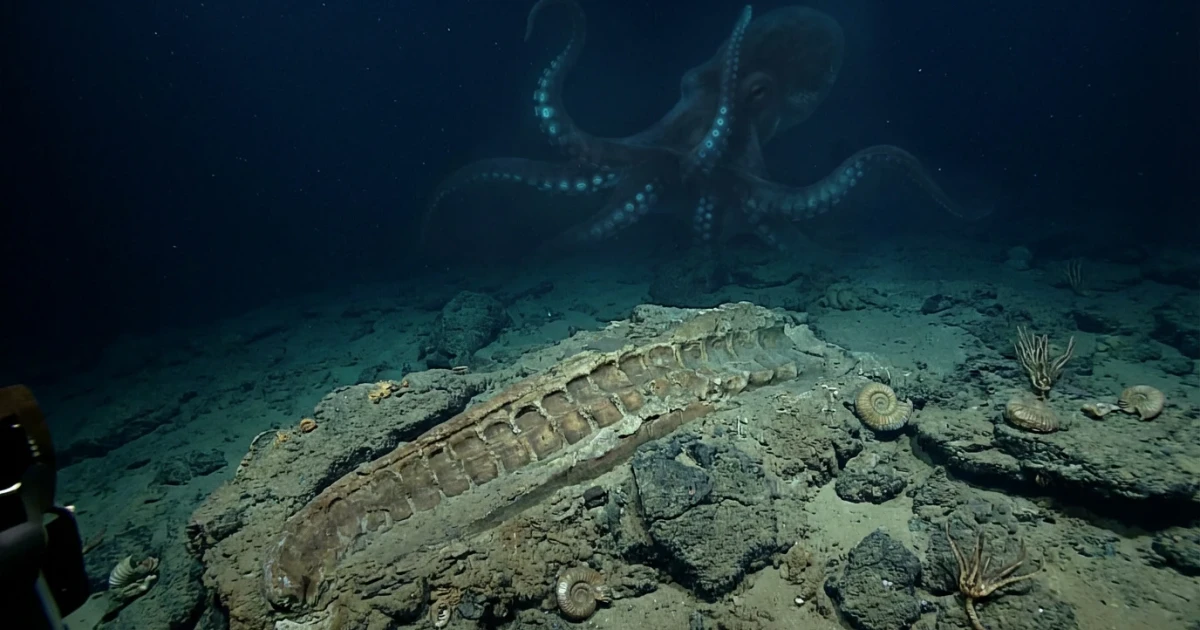
Recent fossil discoveries are challenging long-held assumptions about ancient marine predators, with new evidence suggesting that giant octopuses may have played a dominant role in the oceans roughly 100 million years ago. These findings, highlighted by Phys.org and echoed by multiple scientific outlets, paint a picture of cephalopods as formidable hunters rivaling the era's best-known marine reptiles.
Uncovering a Lost Apex Predator
For decades, paleontologists believed that marine reptiles like Mosasaurus and Pliosaur species held exclusive reign at the top of the Cretaceous food chain. However, the recent discovery of exceptionally well-preserved octopus fossils is forcing scientists to reconsider that narrative. According to Phys.org, these fossilized remains reveal not only the remarkable size of these ancient cephalopods but also anatomical features suggesting powerful predatory adaptations.
Data compiled in the Paleobiology Database and detailed further in Fossilworks show that octopod fossils from the Early Cretaceous period have been uncovered in several locations worldwide, indicating a broad distribution during this era.
What the Fossils Reveal
- Some fossil specimens suggest octopuses reaching lengths of several meters, far larger than most modern relatives.
- Site data, including collection numbers and stratigraphic context, confirm the taxonomic identification as true octopods.
- Fossilized beak structures and sucker imprints indicate these animals were capable of gripping and subduing large prey.
According to the American Museum of Natural History's fossil invertebrate collection, the preservation of soft-bodied cephalopods is rare, making these finds particularly valuable for understanding their ancient ecology.
Competing with Marine Reptiles
While octopuses are often associated with stealth and intelligence today, fossil evidence points to large Cretaceous octopods occupying a role akin to apex predators. Phys.org reports that some of these animals may have hunted in competition with marine reptiles, preying on fish, crustaceans, and possibly even smaller marine reptiles. This scenario is supported by bite marks and feeding traces found on contemporaneous fossil shells and bones.
The octopus fossil record is notoriously sparse due to their soft bodies, but the recent finds provide new insights into their evolutionary history, suggesting an earlier and more prominent rise of cephalopod predators than previously believed.
Implications for Marine Evolution
These discoveries are prompting paleontologists to reconsider the dynamics of Cretaceous marine ecosystems. The notion that giant octopuses may have been apex predators challenges the traditional view that only reptiles dominated these environments. As more fossil evidence comes to light, researchers anticipate a broader understanding of how cephalopods contributed to ancient ocean food webs and how their predatory strategies influenced the evolution of marine life.
Looking ahead, continued exploration of Cretaceous fossil beds and advances in imaging technology may yield further details about these enigmatic giants. Such discoveries not only reshape our understanding of the past but also offer fresh perspectives on the adaptability and ecological roles of modern cephalopods.