Sports
France and Spain advance, but both carry troubling flaws
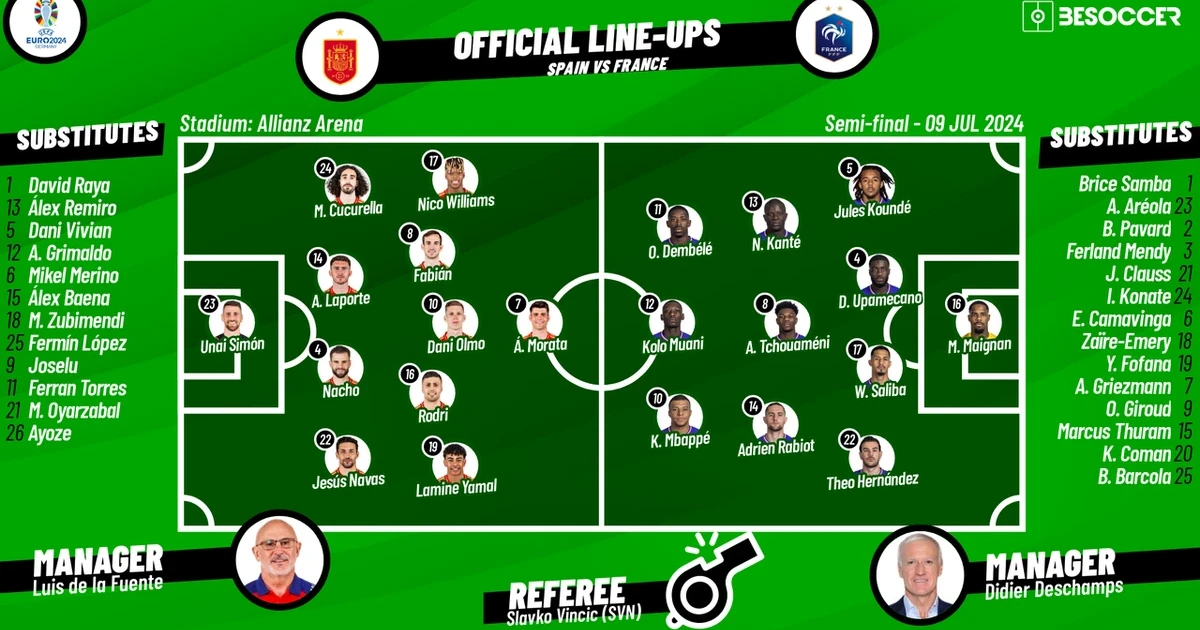
France and Spain arrived in Munich with records that invited confidence, but the underlying evidence was less reassuring. France had scraped through long stretches without creating much, while Spain had won every group game and still looked different from the side that once controlled matches by sheer possession. In a tournament decided by fine margins, both teams were advancing with flaws that could not be polished away.
France’s results masked a fragile attack
France’s route to the semifinal was efficient, but rarely commanding. Didier Deschamps’ team beat Austria 1-0, drew 0-0 with the Netherlands and 1-1 with Poland, then edged Belgium 1-0 and survived Portugal on penalties after 120 minutes without a goal. UEFA pointed out that France struggled to produce clear chances in several stretches of the tournament, and the pattern was visible in the scorelines as much as in the performances.
The sharpest worry centered on Kylian Mbappé. He took a heavy blow to the nose in the opener against Austria, had to wear a mask, and faced uncertainty around his availability for key matches. France 24 said on 20 June 2024 that France “remains hugely reliant” on its captain, a blunt assessment of a team with depth in theory but a much narrower margin for error in practice. Adrien Rabiot tried to calm the alarm by insisting the squad had enough quality to cover for him, yet the tournament had already shown how often France’s attack thinned out when Mbappé was not fully decisive.
That is the hidden vulnerability behind the results. A side can survive on organization, set pieces, and penalty shootouts for a while, but the knockout stages reward teams that can generate repeated danger against a settled defense. France reached Munich without proving it could do that consistently.
Spain’s perfect group stage still raised doubts
Spain’s numbers looked cleaner than France’s, but the football was not as straightforward as the standings suggested. Luis de la Fuente’s team was the only side to win all three group matches without conceding a goal, finished first in Group B with nine points, and beat Croatia 3-0, Albania 1-0, and Italy in a run that made the table look lopsided in their favor. Even so, the tactical picture was more complicated than the clean sheet column implied.
The Croatia opener was the clearest sign that Spain had changed shape. They won 3-0 with only 47 percent possession, and ESPN noted that it was the first time since the Euro 2008 final that Spain’s opponents had more of the ball in an official match. That mattered because it challenged a basic assumption about what Spain must look like to be elite. De la Fuente’s side could now win without monopolizing possession, but that also meant the team was no longer imposing the same kind of control that once made Spain feel inevitable.
There was another warning buried in the rotation policy. De la Fuente made heavy changes, and he also played down the favorites tag even after a flawless group stage. That caution fit the evidence on the field: Spain were getting results, but they were not yet forcing the same kind of authority that their record suggested. A team can be the only one to win every group match and still leave the sense that the machine is running on a different, less familiar logic.
The rivalry made the semifinal feel larger than the bracket
The matchup carried a history that made every flaw harder to ignore. Before the semifinal, Spain and France had met 36 times, with Spain holding 16 wins to France’s 13, plus seven draws. Spain had also beaten France in the Euro 2012 quarterfinals, while France had taken the Nations League final in 2021 through a Mbappé goal. The balance of the rivalry meant neither side could lean on reputation alone.
UEFA described the semifinal in Munich as a heavyweight contest between the tournament’s joint-highest scorers and its lowest scorers left in the competition. That framing captured the paradox perfectly. Spain’s attack had been productive enough to top the group, but the team had done it without fully convincing observers that it still owned the ball or the game in the old Spanish way. France, meanwhile, had survived the bracket but kept showing the same blunt edge in attack and the same dependence on one player’s physical condition.
The history added pressure, but it also sharpened the skepticism. Spain’s 2012 win over France was still a useful reminder that tactical control can dismantle bigger names. France’s 2021 Nations League triumph, driven by Mbappé, was the reminder that one elite forward can still break a match wide open. In Munich, both truths were in play at once.
The semifinal confirmed that the doubts were real
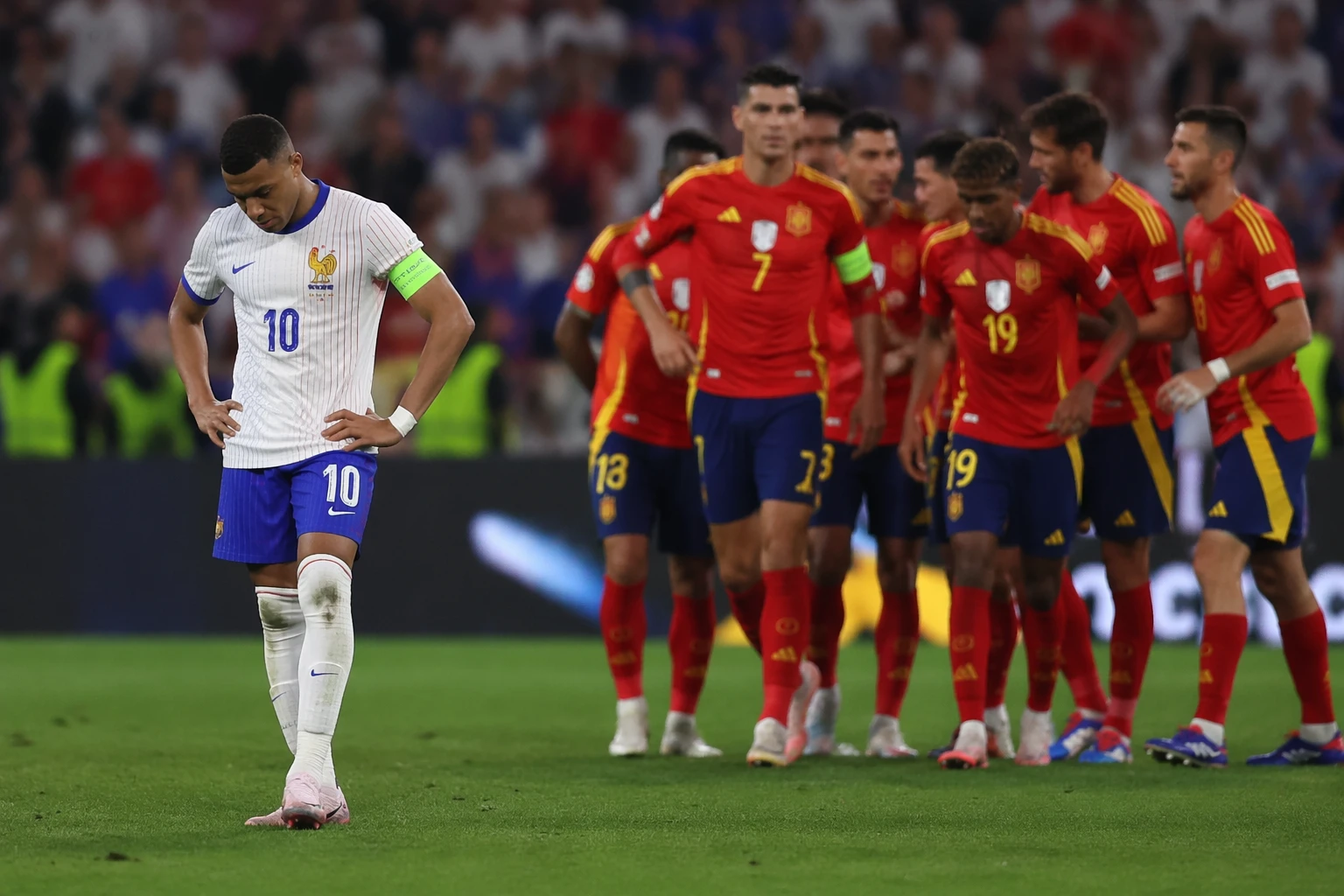
The final proof came on 9 July 2024, when Spain beat France 2-1 in the semifinal in Munich. Randal Kolo Muani gave France the lead, but Lamine Yamal and Dani Olmo turned the match around. The comeback said more than the scoreline did: Spain had enough variation to recover when possession was not in their favor, and France’s familiar reliance on narrow margins finally ran out.
For France, the tournament exposed a team that could defend, absorb pressure, and survive penalties, but not reliably manufacture chances when the game tightened. For Spain, the group-stage perfection concealed a side that had improved in pragmatism without fully silencing doubts about whether the new style was as convincing as the old one. The semifinal did not just advance Spain to the final. It showed that the more polished record belonged to the team that had already learned how to win without looking dominant.
Sources
- [1]telemundo.com
- [2]uefa.com
- [3]france24.com
- [4]espn.com
- [5]hindustantimes.com