World
France debt set to top 3.6 trillion euros, audit office warns

France’s debt is on track to pass 3.6 trillion euros in 2026, and its public audit office says the cost of carrying that burden is rising fast. The Cour des comptes warned that interest payments are expected to reach about 77.4 billion euros next year, a level that would deepen pressure on a government already struggling to calm bond investors and protect growth.
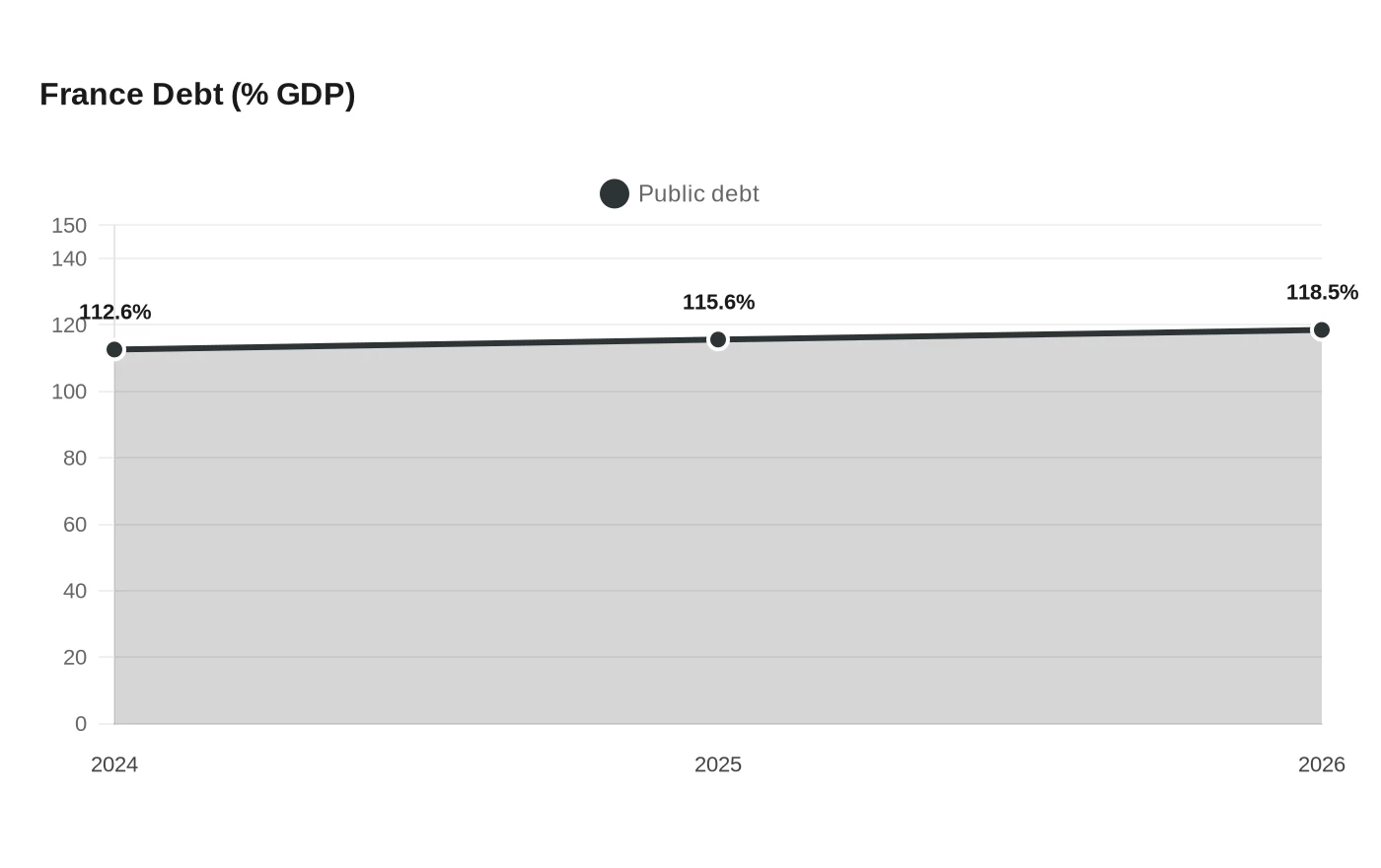
The audit office said France’s debt should rise by more than 160 billion euros in 2026 to about 118.5% of gross domestic product. Its February 2026 assessment also said France’s public finances were not stabilizing and that the effort needed to fix them had been delayed for years. The country is now the third most indebted in the euro area, behind Greece and Italy, leaving it with little room to absorb another shock.
New national-accounts data from INSEE later showed a slightly lower 2025 deficit than the audit office had projected, at 5.1% of GDP and 152.5 billion euros, with public debt at 115.6% of GDP after 112.6% in 2024. Even with that revision, the direction remained the same: borrowing kept climbing, and the debt ratio kept moving higher. The Cour des comptes had said France’s 2025 deficit target was relaxed, pushing much of the adjustment into 2026.
That political strain matters as much as the arithmetic. The July 2024 legislative elections produced a hung parliament with no absolute majority in the National Assembly, making budgets harder to pass and forcing minority governments to negotiate every major fiscal move. With a presidential election due in April 2027, the prospects for sharp tax increases or spending cuts remain limited.
The audit office said the government’s goal of reducing the deficit to 5.0% of GDP was far from guaranteed because of weaker growth, geopolitical uncertainty and inflation risks. Senior auditor Carine Camby urged a clear multi-year plan to bring the deficit below 3% of GDP by 2029, the threshold that would make France’s debt path more sustainable.
For U.S. markets, the warning goes beyond Paris. France is the euro zone’s second-largest economy, and sustained doubts about its fiscal credibility can lift borrowing costs across Europe, squeeze room for defense and social spending, and unsettle global investors already balancing higher rates and slower growth. When confidence weakens in a core ally, the pressure rarely stays local.
Sources
- [1]money.usnews.com
- [2]ccomptes.fr
- [3]insee.fr
- [4]vie-publique.fr
- [5]reuters.com