Politics
Francesca Hong tests whether democratic socialism can win Wisconsin statewide

Wisconsin state Rep. Francesca Hong is running for governor in 2026 as a self-described democratic socialist, setting up a direct test of whether a left economic message can travel beyond Madison and into a battleground state. The Democratic primary is scheduled for Aug. 11, 2026, and Hong has argued that Wisconsinites care more about “solutions than labels.”
Her campaign enters a moment when democratic socialists have already logged wins in New York City, Washington, D.C. and Denver over the last month, but Wisconsin poses a harder political map. The state has swung in recent presidential and statewide contests, and Hong’s bid is forcing Democrats to confront a familiar question: should the nominee speak first to the general electorate or mobilize the party’s base? That tension sharpened as Milwaukee County Executive David Crowley reentered the race with Gov. Tony Evers’ endorsement, giving establishment Democrats another lane in a primary that is already taking shape around ideological contrast.

Labor is also part of the calculation. The Wisconsin State AFL-CIO has published its 2026 fall election endorsements, a reminder that union-backed voters and organizers will matter not only in the primary but in the statewide fight that follows. Hong’s argument is that housing costs, health care and labor rights can unite renters, union households and younger voters who have been slow to turn out in off-year elections. Her challenge is to do that without sounding so left-wing that suburban moderates and swing voters close the door before the general election begins.
Wisconsin gives Hong a historical opening that few other battlegrounds can claim. The state has a long and complicated relationship with socialism, including the Social-Democratic Party of Wisconsin and an early 20th-century period of pragmatic socialist influence that reshaped municipal and state politics. A Cambridge Core article described a “Golden Age of Wisconsin Socialism” from 1919 to 1937, a period that still hangs over the state’s political identity and gives Hong a local lineage to invoke.
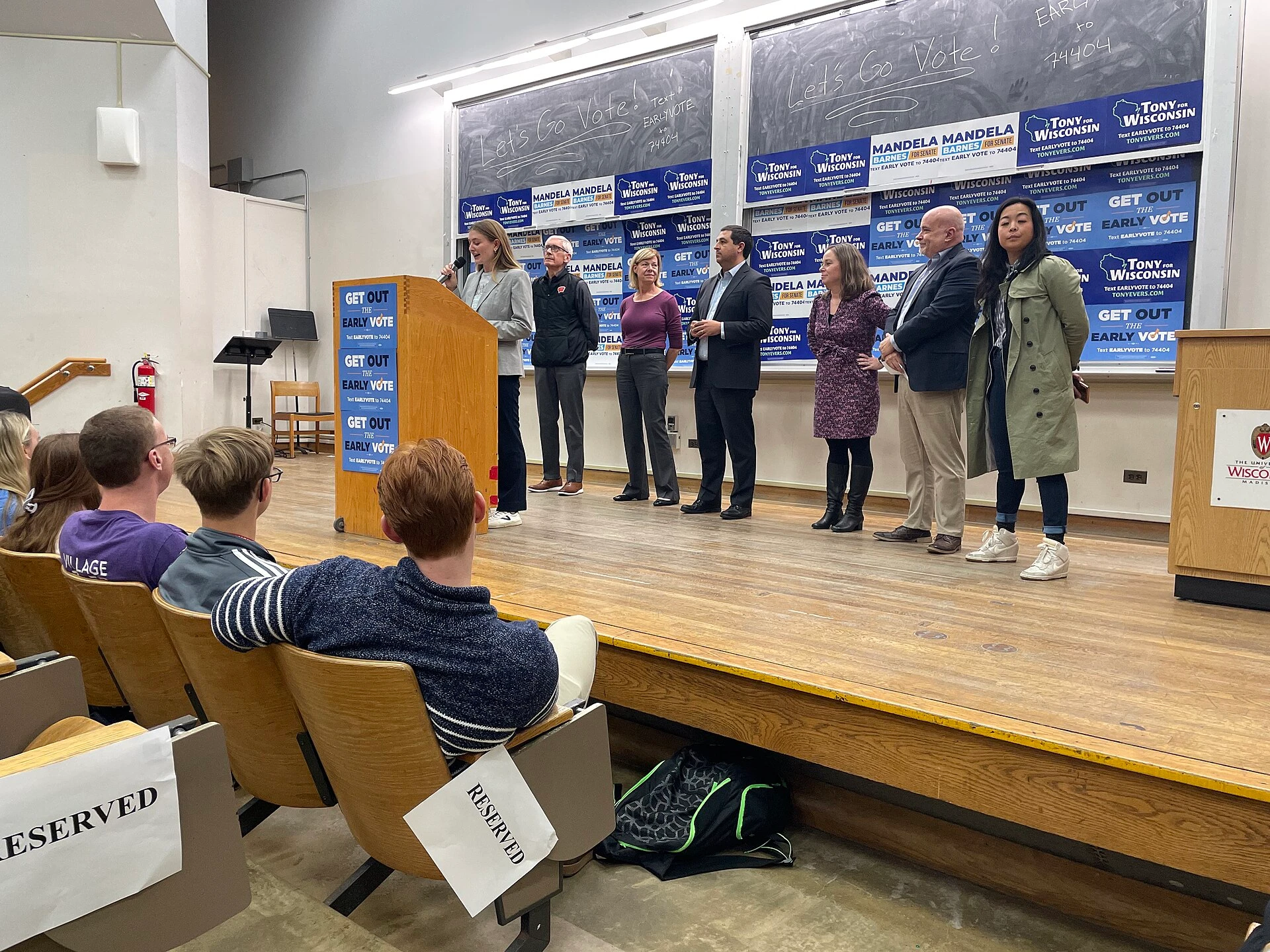
That history does not guarantee a modern statewide win, and the current race will test whether the word socialist still carries more risk than promise outside deep-blue cities. Hong is betting that Wisconsin voters will hear a housing, health care and labor agenda before they hear a label. The August primary will show whether that message can expand the Democratic coalition in a state that often decides national power by the slimmest of margins.
Sources
- [1]abcnews.com
- [2]pbs.org
- [3]wisconsinexaminer.com
- [4]wpr.org
- [5]wisaflcio.org
- [6]en.wikipedia.org
- [7]cambridge.org
- [8]nbcnews.com
- [9]ballotpedia.org